The advance of allied forces sorry, MOOCs across Europe.
This week I am mostly at EMOOCs conference in Mons. Although I’m supposed to be talking about MOOCs I keep getting slightly sidetracked into history conversations.
I’m thinking of The Europeana project 1914-18: untold stories & official histories of WW1. Europeana enables people to explore the digital resources of Europe’s galleries, museums, libraries, archives and audiovisual collections. With such a resource at our fingertips (much of it OER) it is very tempting to keep mentioning the War.
Image copyright: Peter Stubbs peter.stubbs@edinphoto.org.uk Used with permission.
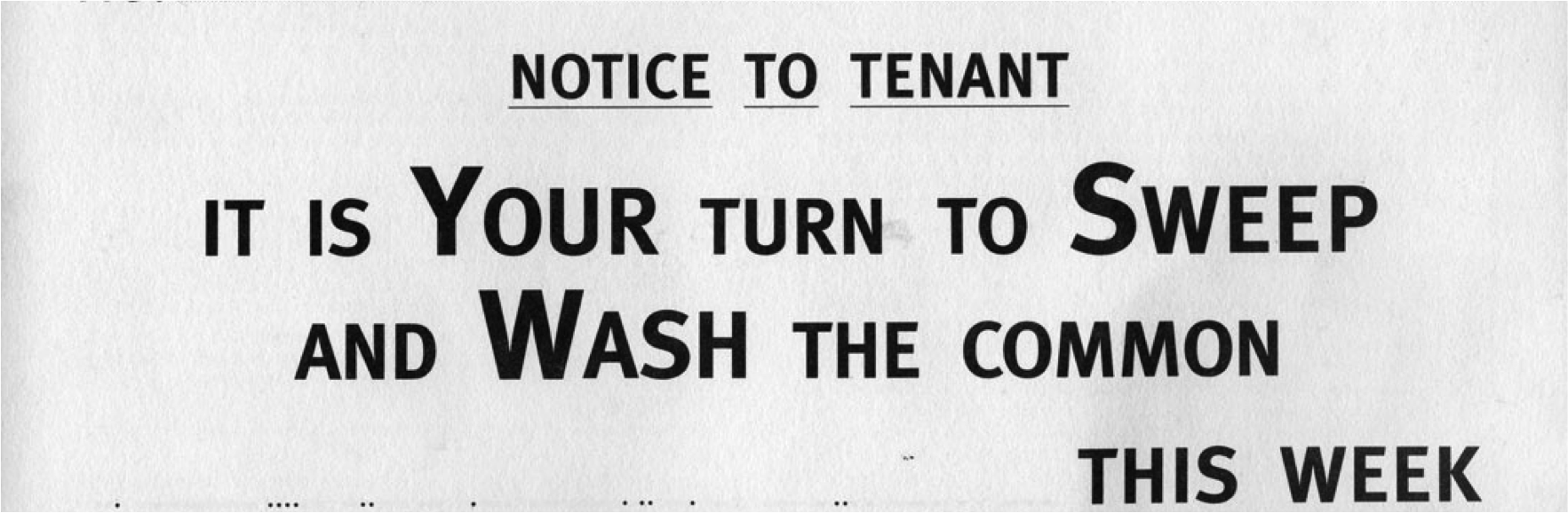
Our staff and students experience our physical estate and our digital estate. In the city of Edinburgh much of the housing stock is flats. Flats in a common stair. Some of these flats are large, grand and very elegant. Nevertheless they have equal shares and responsibility in common.
The experience of communal living in a shared common stair relies on a shared commitment to hygiene: knowing when and where to put out your rubbish and taking turns to wash and clean the common. Taking the time makes the place better for all. Each year, all across the city- notably in Marchmont and the southside- new households of students move into flats and the permanent residents begin again educating them on the mores of communal living.
Universities have large transient populations: new students and new staff each year. If it weren’t for the local community taking care of each other the whole place would fall into disrepair.
I expect you can see where I am going with this…. <whispers> it’s abit like that with OER.
Me trying to find a book on technical debt. Photo credit: LTW, University of Edinburgh CC-BY
Three weeks ago, while preparing my presentation for e-learningforum@ed conference I was musing on the similarities between ‘technical debt’ and what one might call ‘ copyright debt’.
I was thinking about institutional risks of not being open. Institutional risks are sometimes legal, sometimes reputational, sometimes financial. Mostly, at IT directors’ meetings we talk about the need to mitigate risks early on, and avoid risks in the future.
Generally, the risks of not engaging with open practice are reputational: Other institutions are doing it; we might miss out on this good thing; we should be seen to be bold in digital education and leading edge in our open research. There is a risk to our reputation if colleagues do not seem to be up to-date-on licensing and refer to online materials or data as ‘open’ when they are not. But most of those risks are easily hidden under a smear of open-washing and a vagueness about the definition of open in different contexts.
These are not risks which will ever convince a VP Finance and Resources to invest.
If you want to convince an IT director or a CIO to invest in systems which have built-in open-licensing workflows, protecting the institution against the risk of expensive copyright debt may be the way forward.
My definition of ‘copyright debt’ is based on my understanding of ‘technical debt’. Technical debt is a metaphor often used in IT to explain why it costs so much to replace IT systems. I use it to explain why rather than spending my budget on new exciting learning and teaching functionality, I am having to spend it to replace something we thought we already had.
You can ready about technical debt on Wikipedia. It’s the cost of not doing something properly in the first place. From the moment you build a system poorly, without due attention to software code rigour and process, you begin to accrue debt and then interest on that debt. From the moment you don’t fix, patch and maintain the code, the same thing happens. At some point you are going to have to go back and fix it, and the longer you leave it the more expensive it will be*.
From the moment a colleague tells you that they don’t have time, or don’t care about the copyright licensing and metadata on their teaching materials and load them up into a VLE, online course environment, departmental website, online course-pack, lecture power-point slides, whatever, you start to accrue ‘copyright debt’.
Someone will have to go back to those materials at some point to check them, figure out who made them and when and check for 3rd party content. The longer time passes (or staff change) between the original materials being uploaded in to the VLE the harder it will be to find the original source.
The cost will hit at the moment that you migrate from one VLE to another, or from one website to another, or from one media asset management system to another. At that point lecturers and departmental administrators will be asked to confirm that they have copyright permission for the materials they are migrating, and they will say ‘ I have no idea, in fact I don’t even remember/know where all the bits came from’.
They will suggest that someone in a central service (usually the library) should do the checking, and that is where the cost hits. No-one in the library is super-human enough ( unless you pay them a lot) to check all the hundreds of teaching and learning materials in your VLE, so most of it will just be binned and colleagues will be outraged that they have to make it all again.
I’d suggest the common causes of copyright debt include (a combination of):
Business pressures, where the business considers getting something released sooner before all of the necessary copyright searches are complete.
Lack of process or understanding, where the businesse is blind to the concept of copyright debt, and make decisions without considering the implications.
Lack of flexible components, where materials are not openly licensed, the re-use permissions are not flexible enough to adapt to changes in course content.
Lack of time, which encourages colleagues to do quick google searches and take materials they find without checking the license.
Lack of metadata, where content is created without necessary supporting metadata. That work to create the supporting metadata represents a debt that must be paid.
Lack of collaboration, where knowledge of open practice isn’t shared around the organization and business efficiency suffers, or junior learning technologists are not properly mentored.
Parallel development at the same time on two or more VLEs can cause the build up of copyright debt because of the work that will eventually be required to move content from one to another. The more content developed in isolation without clear licensing , the more debt that is piled up.
Delayed reformatting – the formats which were used for creating learning objects quickly becomes obsolete. Without clear permission to make adaptations it is hard for older TEL materials to be converted to new formats. The longer that reformatting is delayed, and the more content is written to use the older format, the more debt that piles up that must be paid at the time the conversion is finally done.
Lack of alignment to standards, where industry standard features, frameworks, open technologies are ignored. Eventually, integration with standards will come, doing it sooner will cost less.
Lack of knowledge, when the content creator simply doesn’t know how or why to use open materials.
The challenge in all this of course, is that the individual academics making the materials don’t care about the longer term cost to the central services of this debt. This argument won’t persuade them to take the time to change their practice, so we must build rigour for open practice into the workflows of our enterprise-wide systems and services as soon as we possibly can, making it easy for colleagues to make positive choices.
Or else we risk a whole heap of copyright debt.
*Basically it is the software equivalent of ‘ a stitch in time saves nine’.
(While I was doing this thinking, I bumped into a session at #OER15 called ‘the cost of not going open‘ by Viv Rolfe which also looked to quantify costs. Viv’s approach is to look at costs and savings around academic time spent creating materials, which complements my thinking rather nicely.)
Open shelving, University of Edinburgh Main Library.
I spent some of last week in sunny Cardiff at OER15. The conference was very good. Lorna and I have agreed to host it in Edinburgh next year. It’ll be a wonderful chance to gather like-minded folks together in our own town to discuss open culture and cultures of openness.
Edinburgh will be hosting a veritable festival of digital education conferences around that time since the international learning analytics conference (LAK16) and Learning@Scale will be here too!
Martha Lane Fox By The Cabinet Office [OGL (http://www.nationalarchives.gov.uk/doc/open-government-licence/version/1/)], via Wikimedia CommonsBaroness Martha Lane-Fox delivered the 39th annual Dimbleby Lecture from London’s Science Museum on March 30, 2015. I delivered a short welcome speech at Elearing@ed forum at Edinburgh University on April 23. I took the opportunity to quote her.
In her lecture she quoted Aaron Swartz “It’s not ok not to understand the Internet anymore.”*
I talked about Creative Commons.
Creative Commons has changed the way the Internet works in higher education.
Therefore, it is not ok not to understand Creative Commons anymore.
As it happens, the day before , on April 22, I saw Baroness Oona King of Bow speak. Baroness Lane Fox name-checked Ada Lovelace, who was of course, Countess King in her own day, but I think that is just co-incidence.
*She also said “get more women involved in technology.”
The University’s mission is the creation, dissemination and curation of knowledge. As a world-leading centre of academic excellence we aim to: Enhance our position as one of the world’s leading research and teaching universities and to measure our performance against the highest international standards; Provide the highest quality learning and teaching environment for the greater wellbeing of our students; Make a significant, sustainable and socially responsible contribution to Scotland, the UK and the world, promoting health and economic and cultural wellbeing.
As a great civic university, Edinburgh …. will continue to look to the widest international horizons, enriching both itself and Scotland. (University Mission)
‘Educators worldwide are developing a vast pool of educational resources on the Internet, open and free for all to use. These educators are creating a world where each and every person on earth can access and contribute to the sum of all human knowledge. They are also planting the seeds of a new pedagogy where educators and learners create, shape and evolve knowledge together, deepening their skills and understanding as they go.’ (Capetown Open Education Declaration)
During academic year 2013-14 an OER Short-Life Task Group was established to explore possible ways to take forward an OER strategy for University of Edinburgh and to report findings and recommendations to Learning and Teaching Committee. This paper includes a proposed vision, policy, guidance and support level.
The sharing of open educational materials is in line not only with University of Edinburgh’s mission but also with a global movement in which research- led institutions play a significant role. The proposed OER vision for University of Edinburgh has three strands, each building on our history of the Edinburgh Settlement, excellent education, research collections, enlightenment and civic mission.
‘For the common good’:
Teaching and learning materials exchange to enrich the University and the sector.
To put in place the support frameworks to enable any member of University of Edinburgh to publish and share online as OER teaching and learning materials they have created as a routine part of their work at the University (e.g handouts, teaching materials, lesson plans, recorded lectures, research seminar content, blended-learning content, datasets, problem sheets and tools).
To support members of University of Edinburgh to find and use high quality teaching materials developed within and without the University.
‘Edinburgh at its best’:
Showcasing openly the highest quality learning and teaching:
To identify collections of high quality learning materials within each school department and research institute to be published online for flexible use, to be made available to learners and teachers as open courseware (e.g. recorded high profile events, noteworthy lectures, MOOC and DEI course content).
To enable the discovery of these materials in a way that ensures that our University’s reputation is enhanced.
‘Edinburgh’s treasures’:
Making available online a significant collection of unique learning materials available openly to Scotland, the UK and the world, promoting health and economic and cultural well-being.
To identify a number of major collections of interdisciplinary materials, archives, treasures, museum resources to be digitised, curated and shared for the greater good and significant contribution to public engagement with learning, study and research (e.g. archive collections drawn from across disciplines, e.g. History of Medicine/Edinburgh as the birthplace of medicine/Scottish history/social change).
To put in place policy and infrastructure to ensure that these OER collections are sustainable and usable in the medium to longer term.
DISCUSSION
The expertise to deliver each of these strands exists within the University through partnership between Schools and Information Services. This vision builds upon work, custom and practice already in place within the University but offers an opportunity to take a strategic approach to publishing open educational resources at scale.
The delivery of this vision is contingent on several areas of activity. The University is well placed to adopt an open licencing approach to learning and teaching materials for which the copyright is already held within the University.
Information Services currently offer a limited copyright advisory service to academic colleagues and students, with additional resourcing this service could be enriched to provide an OER service including training, staff development and guidance to support colleagues in making informed decisions about licencing options for their OER.
It is proposed that the service is resourced by IS for 2 years in the first instance. Once the support service is in place the ‘Common Good’ activity will be supported as part of business as usual though guidance and training.
A new short-life task group will be established to consider the resource needed to deliver the other two strands of the vision.
RISK ASSESSMENT
Establishing a clear vision for OER at University of Edinburgh will mitigate the reputational risk which may follow as a result of colleagues referring to online learning materials as ‘open’ when they are available under closed or unclear licence.
The new support service in IS will mitigate the risk that colleagues are unclear about the decisions they should make regard to the licencing, sharing and use of online materials.
EQUALITY AND DIVERSITY
OER contribute to sector-wide initiatives on openness, access, equality and diversity by enriching the knowledge commons and promoting sharing and reuse.
University of Edinburgh Digital Image Collections CC BY-NC-ND 3.0
This week I’ll be at OER15 in Cardiff. It will be lovely to see so many OER colleagues again.
The conference theme is ‘Mainstreaming Open Education’ and I’ll be talking about the development of OER policy at University of Edinburgh, which has been student-led from the start.
As 2014 opened, the EUSA vice president for academic affairs challenged University senior managers to explore how learning materials could be made open, not only for students within the University, but across Scotland and to the wider world.
These were heady days, the University was riding the wave of global interest in MOOCs, an NUS report was published to champion OER, there was an upcoming independence referendum and many in Scotland saw a strategic opportunity to contribute to a fairer society via open educational practice. A high level task group was established, including key opinion shapers, from around the University of Edinburgh.
By the close of 2014 the referendum opportunity had passed, but the impetus to push forward with OER policy remained. The University now has a strategic lead on Open Education with a vision, policy, support framework, and task groups focused on delivering more. There remains a lot of work to be done.
In this presentation for OER15 Dash, Stuart and I will draw on best practise, describe the process of linking OER to institutional mission and aims and explore the challenges of multispeed approaches; working with student leadership, University senior management, educational developers and academic innovators to deliver sustainable OER in a research institution.
‘Poulterer, Buenos Aires [Argentina]’. Photograph of a poulterer standing with his horse carrying cages of poultry on a street in Buenos Aires, Argentina in the early 20th century. Next to him is a man carrying a milk cannister, a man carrying two baskets of fruit and another man smoking a cigarette. http://images.is.ed.ac.uk/luna/servlet/s/19g4jxUniversity of Edinburgh’s new Chook MOOC will explain the general principles of chicken behaviour that can be used to assess welfare in chickens in hobby flocks or commercial farms. The focus is primarily on laying hens and meat chickens (broilers). The main course is likely to be of interest to people who own chickens as pets or keep a small hobby flock, commercial egg and chicken meat producers, veterinarians and vet nurses. You know who you are.
Picture taken at The Oakland Museum. No rights reserved by me.
I am spending much of International Womens Day this year on an international flight. I have been in California for a week buzzing about at various meetings and gathering good ideas.
This year at work, in my new role and new division I am involved in a new set of gender equality initiatives. I am the only female Director in Information Services, I am a mentor within the department and an Aurora role model for the Leadership Foundation. Information Services is exploring approaches to using an Athena Swan-like framework to improve the working environment for all and my teams are working hard to figure out how we can usefully make it a success.
In the last few weeks we have carried out a staff survey in my division to gather feedback from colleagues. I am very pleased to say that despite having gone through a number of restructuring experiences and quite a bit of change, the majority of LTW staff say they are are satisfied with their jobs; receive appropriate praise and recognition; are treated with equality and respect and understand their role within the organisation.
In my new role I have been at pains to ensure that I do not send email to my staff outside of working hours. This is a deliberate attempt to send a signal that balancing work with family or home commitments is expected and ok. When I travel I keep my wrist watch tuned to UK time to help me remember what time it is at home and to ensure that the experience of working for, or with, me is one based on mutual respect. I admit I have lapsed occasionally, mostly by mistake because the email conversation is interesting, so I apologise to my team leaders for that.
I feel like I am continuing to do my bit to ‘Make it Happen’. Do you?
Last week I was contributing to face to face (at Open Educational Practice Scotland OEPS steering group) and online discussions (comments on How Sheila Sees it) about the difference between open educational practice (OEP) and open educational resource practice (OERP). I imagine it will come up again this week when I am speaking at the Coursera Partners Conference.
The challenge for me, is that in discussions of OEP the ‘open’ seems very ill defined. It can encompass a full range of open approaches and does not necessarily involve any consideration of content licencing.
What I liked about the early JISC OER projects was the explicit challenge to release a significant amount of content from within your institution, and ideally for that process to become mainstreamed and sustainable. It meant the technologists and content owners ( academics) worked together with the lawyers and librarians/collections to release stuff at scale, either old stuff or really new stuff mostly.
Academic staff development people always tell me that teaching and learning isn’t about content, but I kinda think it is. That’s why we have libraries full of published content, and reading lists, and course packs, and slides, and handouts, and recordings,and datasets and we constantly produce and publish more as we research and teach. And we get promoted because of it. Our students produce a bunch too, and sometimes we assess it.
As an ex- academic staff developer myself, I’d say academic staff development people don’t produce much discipline content and are notoriously bad at using each others’ so they are not big OER producers. They are more into OEP now which is such a wide concept that their expertise is needed to develop it as an area of practice.
I like OER practice. I like the rigour of defining and working within something that ‘is’, knowing what ‘is not’. I think it is really interesting and challenging to help people to find , make and use resources, and to be literate in their use of open content. And I like to mainstream it in ways which lower the barrier to participation in OER production as much as possible. I like to put systems and workflows in place. The more wonderful, unique stuff gets out there on an open licence, the more there will be for me and others to use.
During Innovative Learning Week, we ran the first of our ‘Making open courses using open resources’ workshops at Edinburgh. In theory that task should be much easier than it was 5 years ago. There are 900 million Creative Commons-licensed works, up from 400 million in 2010.



!['Poulterer, Buenos Aires [Argentina]'. Photograph of a poulterer standing with his horse carrying cages of poultry on a street in Buenos Aires, Argentina in the early 20th century. Next to him is a man carrying a milk cannister, a man carrying two baskets of fruit and another man smoking a cigarette. http://images.is.ed.ac.uk/luna/servlet/s/19g4jx](http://thinking.is.ed.ac.uk/melissa/wp-content/uploads/sites/4/2015/03/0053040c.jpg)

