Supporting the University of Edinburgh's commitments to digital skills, information literacy, and sharing knowledge openly

Tag: Wikipedia Page 7 of 8

COMING SOON: Wikidata & Wikisource Showcase for Repo-Fringe

Wikisource logo

Wikisource logo

Wikidata logo

Wikidata logo

For Repo-Fringe 2016, myself and Histropedia’s Navino Evans will be co-presenting a showcase of two of Wikipedia’s sister projects: Wikisource, the free content library, and Wikidata, the structured data knowledge base. With both projects, it is not about what they hold in their repositories so much as what that knowledge means to the user able to access it; be it the experience of being able to commune with the past through Wikisource for those authentic ‘shiver-inducing’ moments of digital contact with library & archival materials or being able to manipulate & visualise structured data through Wikidata, actually querying & utilising information on Wikipedia, as never before in myriad ways. The possibilities for both projects are endless and highlight the importance of curating & safeguarding repositories of open knowledge such as these.

Hence our showcase event, as part of Repository Fringe 2016 on 2nd August at the John McIntyre Conference Centre in Edinburgh, will focus on this and provide practical demonstrations of how to engage with the past, present & future with these two projects.

Consequently, the English teacher part of me has opted for a title which attempts to sum this up:

“It’s not what you do. It’s what it does to you.”

Wikidata and Wikisource Showcase – 2nd August 2016

Engaging with the past, present & future with Wikipedia’s sister projects.

This is a nod to Simon Armitage’s poem, ‘It ain’t what you do, it’s what it does to you‘, a hymn of praise to the experiential.


It ain’t what you do, it’s what it does to you


I have not bummed across America
with only a dollar to spare, one pair
of busted Levi’s and a bowie knife.
I have lived with thieves in Manchester.

I have not padded through the Taj Mahal,
barefoot, listening to the space between
each footfall picking up and putting down
its print against the marble floor. But I

skimmed flat stones across Black Moss on a day
so still I could hear each set of ripples
as they crossed. I felt each stone’s inertia
spend itself against the water; then sink.

I have not toyed with a parachute cord
while perched on the lip of a light-aircraft;
but I held the wobbly head of a boy
at the day centre, and stroked his fat hands.

And I guess that the tightness in the throat
and the tiny cascading sensation
somewhere inside us are both part of that
sense of something else. That feeling, I mean.

In addition, I am reminded of another poem on the power of the experiential:

The famous aviation poem written in 1941 by 19-year-old Pilot Officer John Gillespie Magee Jr, three months before he was killed.

Oh! I have slipped the surly bonds of earth,
And danced the skies on laughter-silvered wings;
Sunward I’ve climbed, and joined the tumbling mirth
Of sun-split clouds, –and done a hundred things
You have not dreamed of –Wheeled and soared and swung
High in the sunlit silence. Hov’ring there
I’ve chased the shouting wind along, and flung
My eager craft through footless halls of air…
Up, up the long, delirious, burning blue
I’ve topped the wind-swept heights with easy grace
Where never lark or even eagle flew —
And, while with silent lifting mind I’ve trod
The high untrespassed sanctity of space,
Put out my hand, and touched the face of God.

A little light Summer reading – Wikipedia & the PGCAP course

I was pleased we were able to host a week themed on ‘Wikimedia & Open Knowledge’ as part of the University of Edinburgh’s Postgraduate Certificate of Academic Practice.

Participants on the course were invited to think critically about the role of Wikipedia in academia.

In particular, to read, consider, contrast and discuss four articles:

  • The first by Dr. Martin Poulter, Wikimedian in Residence at the University of Oxford, is highly recommended in terms of articulating Wikipedia & its sister projects role in allowing digital ‘shiver-inducing’ contact with library & archival material;
Search Failure: The Challenge of Modern Information Retrieval in an age of information explosion.

Search Failure: The Challenge of Modern Information Retrieval in an age of information explosion.

In addition – RECOMMENDED reading on Wikipedia’s role in academia.


  1. https://wikiedu.org/blog/2014/10/14/wikipedia-student-writing/ – HIGHLY RECOMMENDED
  2. https://outreach.wikimedia.org/wiki/Education/Reasons_to_use_Wikipedia
  3. http://www.theatlantic.com/technology/archive/2016/05/people-love-wikipedia/482268/
  4. https://medium.com/@oiioxford/wikipedia-s-ongoing-search-for-the-sum-of-all-human-knowledge-6216fb478bcf#.5gf0mu71b  RECOMMENDED
  5. https://wikiedu.org/blog/2016/01/14/wikipedia-15-and-education/
  6. https://www.refme.com/blog/2016/01/15/wikipedia-the-digital-gateway-to-academic-research

This was my response to the reading (and some additional reading).

Title:

Search failure: the challenges facing information retrieval in an age of information explosion.


Abstract:

This article takes, as its starting point, the news that Wikipedia were reportedly developing a ‘Knowledge Engine’ and focuses on the most dominant web search engine, Google, to examine the “consecrated status” (Hillis, Petit & Jarrett, 2013) it has achieved and its transparency, reliability & trustworthiness for everyday searchers.


Introduction:

The purpose of this article is to examine the pitfalls of modern information retrieval & attempts to circumnavigate them, with a focus on the main issues surrounding Google as the world’s most dominant search engine.


“Commercial search engines dominate search-engine use of the Internet, and they’re employing proprietary technologies to consolidate channels of access to the Internet’s knowledge and information.” (Cuthbertson, 2016)


On 16th February 2016, Newsweek published a story entitled ‘Wikipedia Takes on Google with New ‘Transparent’ Search Engine’. The figure applied for, and granted by the Knight Foundation, was a reported $250,000 dollars as part of the Wikimedia Foundation’s $2.5 million programme to build ‘the Internet’s first transparent search engine’.

The sum applied for was relatively insignificant when compared to Google’s reported $75 billion revenue in 2015 (Robinson, 2016). Yet, it posed a significant question; a fundamental one. Just how transparent is Google?


Two further concerns can be identified from the letter to Wikimedia granting the application: “supporting stage one development of the Knowledge Engine by Wikipedia, a system for discovering reliable and trustworthy public information on the Internet.”(Cuthbertson, 2016). This goes to the heart of the current debate on modern information retrieval: transparency, reliability and trustworthiness? How then are we faring in these three measures?


  1. Defining Information Retrieval

Informational Retrieval is defined as “a field concerned with the structure, analysis, organisation, storage, searching, and retrieval of information.” (Salton in Croft, Metzler & Strohman, 2010, p.1).

Croft et al (2010) identify three crucial concepts in information retrieval:

  • Relevance – Does the returned value satisfy the user searching for it.
  • Evaluation  – Evaluating the ranking algorithm on its precision and recall.
  • Information Needs  – What needs generated the query in the first place.

Today, since the advent of the internet, this definition needs to be understood in terms of how pervasive ‘search’ has become. “Search is the way we now live.” (Darnton in Hillis, Petit & Jarrett, 2013, p.5). We are all now ‘searchers’ and the act of ‘searching’ (or ‘googling’) has become intrinsic to our daily lives.


  1. Dominance of one search engine


When you turn on a tap you expect clean water to come out and when you do a search you expect good information to come out” (Swift in Hillis, Petit & Jarrett, 2013)


With over 60 trillion pages (Fichter and Wisniewski, 2014) and terabytes of unstructured data to navigate, the need for speedy & accurate responses to millions of queries has never been more important.


Navigating the vast sea of information present on the web means the field of Information Retrieval necessitates wrestling with, and constantly tweaking, the design of complex computer algorithms (determining a top 10 list of ‘relevant’ page results through over 200 factors).


Google, powered by its PageRank algorithm, has dominated I.R. since the early 1990s, indexing the web like a “back-of-the-book” index (Chowdhury, 2010, p.5). While this oversimplifies the complexity of the task, modern information retrieval, in searching through increasingly multimedia online resources, has necessitated the addition of newer more sophisticated models. Utilising ‘artificial intelligence’ & semantic search technology to complement the PageRank algorithm, Google now navigates through the content of pages & generates suggested ‘answers’ to queries as well as the 10 clickable links users commonly expect.


According to 2011 figures in Hillis, Petit & Jarrett (2013), Google processed 91% of searches internationally and 97.4% of the searches made using mobile devices. This undoubted & sustained dominance has led to accusations of abuse of power in two recent instances.


Nicas & Kendall (2016) report that the Federal Trade Commission along with European regulators are examining claims that Google has been abusing its position in terms of smartphone companies feeling they had to give Google Services preferential treatment because of Android’s dominance.


In addition, Robinson (2016) states that the Authors Guild are petitioning the Supreme Court over Google’s alleged copyright-infringement; going back a decade ago when over 20 million library books were digitised without compensation or author/publisher permission. The argument is that the content taken has since been utilised by Google for commercial gain to generate more traffic, more advertising money and thus confer on them market leader status. This echoes the New Yorker article’s response to Google’s aspiration to build a digital universal library: “Such messianism cannot obscure the central truth about Google Book Search: it is a business” (Toobin in Hillis, Petit & Jarrett, 2013).


  1. PageRank

Google’s business is powered, like every search engine, by its ranking algorithm. For Cahill et al (2009), Google’s “PageRank is a quantitative rather than qualitative system”.  PageRank works by ranking pages in terms of how well linked a page is, how often it is clicked on and the importance of the page(s) that links to it. In this way, PageRank assigns importance to a page.


Other parameters are taken into consideration including, most notably, the anchor text which provides a short descriptive summary of the page it links to. However, the anchor text has been shown to be vulnerable to manipulation, primarily from bloggers, by the process known as ‘Google bombing’. Google bombing is defined as “the activity of designing Internet links that will bias search engine results so as to create an

inaccurate impression of the search target” (Price in Bar-Ilan, 2007).  Two famous examples include when Microsoft came as top result for the query ‘More evil than Satan’ and when President Bush ranked as first result for ‘miserable failure’. Bar-Ilan (2007) suggests google bombs come about for a variety of reasons: ‘fun, ‘personal promotion’, ‘commercial’, ‘justice’, ‘ideological’ and ‘political’.


Although reluctant to alter search results, the reputational damage google bombs were having necessitated a response. In the end, Google altered the algorithm to defuse a number of google bombs. Despite this, “spam or joke sites still float their way to the top.”(Cahill et al, 2009) so there is a clear argument to be had about Google, as a private corporation, continuing to ‘tinker’ with the results delivered by its algorithm and how much its coders should, or should not, arbitrate access to the web in this way. After all, the algorithm will already bear hallmarks of their own assumptions without any transparency on how these decisions are arrived at. Further, Google Bombs, Byrne (2004) argues, empower those web users whom the ranking system, for whatever reason, has disenfranchised.


Just how reliable & trustworthy is Google?


Easy, efficient, rapid and total access to Truth is the siren song of Google and the culture of search. The price of access: your monetizable information.”(Hillis, Petit & Jarrett, 2013, p.7)

For Cahill et al (2009), Google has made the process of searching too easy and searchers have becoming lazier as a result; accepting Google’s ranking at face value. Markland in van Dijck (2010) makes the point that students favouring of Google means they are dispensing with the services libraries provide. The implication being that, despite library information services delivering a more relevant & higher quality search result, Google’s quick & easy ‘fast food’ approach is hard to compete with.

This seemingly default trust in the neutrality of Google’s ranking algorithm also has a ‘funnelling effect’ according to Beel & Gipp (2009); narrowing the sources clicked upon 90% of the time to just the first page of results with a 42% click through on the first choice alone. This then creates a cosy consensus in terms of the fortunate pages clicked upon which will improve their ranking while “smaller, less affluent, alternative sites are doubly punished by ranking algorithms and lethargic searchers.” (Pan et al. in van Dijck, 2010)


While Google would no doubt argue that all search engines closely guard how their ranking algorithms are calibrated to protect them from aggressive competition, click fraud and SEO marketing, the secrecy is clearly at odds with principles of public librarianship. Further, Van Dijck (2010) argues that this worrying failure to disclose is concealing how knowledge is produced through Google’s network and the commercial nature of Google’s search engine. After all, search engines greatest asset is the metadata each search leaves behind. This data can be aggregated and used by the search engine to create profiles of individual search behaviour and collective profiles which can then be passed on to other commercial companies for profit. That is not to say it always does but there is little legislation to stop it in an area that is largely unregulated. The right to privacy does not, it seems, extend to metadata and ‘in an era in which knowledge is the only bankable commodity, search engines own the exchange floor.’ (Halavais in van Dijck, 2010)


  1. Scholarly knowledge and the reliability of Google Scholar

When considering the reliability, transparency & trustworthiness of Google and Google Scholar it is pertinent to look at its scope and differences with other similar sites. Unlike Pubmed and Web of Science, Google Scholar is not a human-curated database but is instead an internet search engine therefore its accuracy & content varies greatly depending on what has been submitted to it.  Google Scholar does have an advantage is that it searches the full text of articles therefore users may find searching easier on Scholar compared to WoS or Pubmed which are limited to searching according to the abstract, citations or tags.

Where Google Scholar could be more transparent is in its coverage as some notable publishers have been known, according to van Dijck (2010), to refuse to give access to their databases. Scholar has also been criticised for the lack of completeness of its citations, as well as its covering of social science and humanities databases; the latter an area of strength for Wikipedia according to Park (2011). But the searcher utilising Google Scholar would be unaware of these problems of scope when they came to use it.

Further, Beel & Gipp (2009) state that the ranking system on Google Scholar, leads to articles with lots of citations receiving higher rankings, and as a result, receive even more citations because of this. Hence, while the digitization of sources on the internet opens up new avenues for scholarly exploration, ranking systems can be seen to close ranks on a select few to the exclusion of others.

As Van Dijck (2010) points out: “Popularity in the Google-universe has everything to do with quantity and very little with quality or relevance.” In effect, ranking systems determine which sources we can see but conceal how this determination has come about. This means that we are unable to truly establish the scope & relevance of our search results. In this way, search engines cannot be viewed as neutral, passive instruments but are instead active “actor networks” and “co-producers of academic knowledge.” (van Dijck, 2010).

Further, it can be argued that Google decides which sites are included in its top ten results. With so much to gain commercially, from being discoverable on Google’s first page of results, the practice of Search Engine Optimising (SEO), or manipulating the algorithm to get your site in the top ten search results, has become widespread. SEO techniques can be split into ‘white hat’ (legitimate businesses with a relevant product to sell) and ‘black hat’ (sites who just want clicks and tend not to care about the ‘spamming’ techniques they employ to get them). As a result, PageRank has to be constantly manipulated, as with Google bombs, to counteract the effects of increasingly sophisticated ‘black hat’ techniques. Hence, the need for an improved vigilance & critical evaluation of the searches returned by Google has become a crucial skill in modern information retrieval.


  1. The solution: Google’s response to modern information retrieval – Answer Engines

Google is the great innovator and is always seeking newer, better ways of keeping users on its sites and improving its search algorithm. Hence, the arrival of Google Instant in 2010 to autofill suggested keywords to assist searchers. This was followed by Google’s Knowledge Graph (and its Microsoft equivalent Bing Snapshot). These new services seek not just to provide the top ten links to a search query but also to ‘answer’ it by providing a number of the most popular suggested answers on the page results screen (usually showing an excerpt of the related Wikipedia article & images along the side panel), based on, & learning from, previous users’ searches on that topic.

Google’s Knowledge Graph is supported by sources including Wikipedia & Freebase (and the linked data they provide) along with a further innovation, RankBrain, which utilises artificial intelligence to help decipher the 15% of queries Google has not seen before. As Barr (2016) recognises: “A.I. is becoming increasingly important to extract knowledge from Google’s sea of data, particularly when it comes to classifying and recognizing patterns in videos, images, speech and writing.”

Bing Snapshot does much the same. The difference being that Bing provides links to the sources it uses as part of the ‘answers’ it provides. Google provides information but does not attribute it. Without this, it is impossible to verify their accuracy. This seems to be one of the thorniest issues in modern information retrieval; link decay and the disappearing digital provenance of sources. This is in stark contrast to Wikimedia’s efforts in creating Wikidata: “an open-license machine-readable knowledge base” (Dewey 2016) capable of storing digital provenance & structured bibliographic data. Therefore, while Google Knowledge Panels are a step forward, there are issues again over its transparency, reliability & trustworthiness.

Moreover, the 2014 EU Court ruling onthe right to be forgotten’, which Google have stated they will honour, also muddies the waters on issues of transparency & link decay/censorship:

Accurate search results are vanishing in Europe with no public explanation, no real proof, no judicial review, and no appeals processthe result is an Internet riddled with memory holes — places where inconvenient information simply disappears.”(Fioretti, 2014).

The balance between an individual’s “right to be forgotten” and the freedom of information clearly still has to be found. At the moment, in the name of transparency, both Google and Wikimedia are posting notifications to affected pages that they have received such requests. For those wishing to be ‘forgotten’ this only highlights the matter & fuels speculation unnecessarily.


  1. The solution: Wikipedia’s ‘transparent’ search engine: Discovery

Since the setup of the ‘Discovery’ team in April 2015 and the disclosure of the Knight Foundation grant, there have been mixed noises from Wikimedia with some claiming that there was never any plan to rival Google because a newer ‘internal’ search engine was only ever being developed in order to integrate Wikimedia projects through one search portal.

Ultimately, a lack of consultation between the board and the wider Wikimedia community members reportedly undermined the project & culminated in the resignation of Lila Tretikov, Executive Director of the Wikimedia Foundation, at the end of February and the plans for Discovery were shelved.

However, Sentance (2016) reveals that, in their leaked planning documents for Discovery, the Foundation were indeed looking at the priorities of proprietary search engines, their own reliance on them for traffic and how they could recoup traffic lost to Google (through Google’s Knowledge Graph) at the same time as providing a central hub for information from across all their projects through one search portal. Wikipedia results, after all, regularly featured in the top page of Google results anyway – why not skip the middle man?

Quite how internet searchers may have taken to a completely transparent, non-commercial search engine we’ll possibly never know. However, it remains a tantalizing prospect.


  1. The solution: Alternatives Engines

An awareness of the alternative search engines available for use and their different strengths and weaknesses is a key component of the information literacy needed to navigate this sea of information. Bing Snapshot, for instance, makes greater use of providing the digital provenance for its sources than Google at present.

Notess (2016) serves notice that computational searching (e.g. Wolfram Alpha) continues to flourish along with search engines geared towards data & statistics (e.g. Zanran, DataCite.org and Google Public Data Explorer).

However, knowing about the existence of these differing search engines is one thing but knowing how to successfully navigate them is quite another as Notess (2016) himself concludes where “Finding anything beyond the most basic of statistics requires perseverance and experimenting with a variety of strategies.”

Information literacy, it seems, is key.


  1. The solution: The need for information literacy

Given that electronic library services are maintained by information professionals, “values such as quality assessment, weighed evaluation & transparency” (van Dijck, 2010) are in much greater evidence than in commercial search engines. That is not to say that there aren’t still issues in library OPAC systems: whether it be in terms of the changes in the classification system used over time or the differing levels of adherence by staff to these classification protocols; or the communication to users of best practice in utilising the system.

The use of any search engine, requires literacy among the user group. The fundamental problem remains the disconnect between what a user inputs and what they can feasibly expect at the results stage. Understanding the nature of the search engine being used (proprietary or otherwise) a critical awareness of how knowledge is formed through its network and the type of search statement that will maximise your chances of success are all vital. As van Dijck (2010) states “Knowledge is not simply brokered (‘brought to you’) by Google or other search engines… Students and scholars need to grasp the implications of these mechanisms in order to understand thoroughly the extent of networked power”(Dijck, 2010).

Educating users of this broadens the search landscape, and defuses SEO attempts to circumvent our choices. Information literacy cannot be left to academics or information professionals alone, though they can play a large part in its dissemination. As mentioned at the beginning, we are all ‘searchers’. Therefore, it is incumbent on all of us to become literate in the ways of ‘search’ and pass it on, creating our own knowledge networks. Social media offers us a means of doing this; allowing us to filter information as never before and filtering is “transforming how the web works and how we interact with our world.” (Swanson, 2012)


Conclusion

Google may never become any more transparent. Hence, its reliability & trustworthiness will always be hard to judge. Wikipedia’s Knowledge Engine may have offered a distinctive model more in line with these terms but it is unlikely, at least for now, to be able to compete as a global crawler search engine.


Therefore, it is incumbent on searchers not to presume neutrality or assign any kind of benign munificence on any one search engine. Rather by educating themselves as to the merits & drawbacks of Google and other search engines, users will then be able to formulate their searches, and their use of search engines, with a degree of information literacy. Only then can they hope the returned results will match their individual needs with any degree of satisfaction or success.

Bibliography

  1. Arnold, A. (2007). Artificial intelligence: The dawn of a new search-engine era. Business Leader, 18(12), pp. 22.
  2. Bar‐Ilan, Judit (2007). “Manipulating search engine algorithms: the case of Google”. Journal of Information, Communication and Ethics in Society 5 (2/3): 155–166. doi:1108/14779960710837623. ISSN1477-996X.
  3. Barr, A. (2016). WSJ.D Technology: Google Taps A.I. Chief To Replace Departing Search-Engine Head. Wall Street Journal. ISSN 00999660.
  4. Beel, J.; Gipp, B. (2009). “Google Scholar’s ranking algorithm: The impact of citation counts (An empirical study)”. 2009 Third International Conference on Research Challenges in Information Science: 439–446. doi:1109/RCIS.2009.5089308.
  5. Byrne, S. (2004). Stop worrying and learn to love the Google-bomb. Fibreculture, (3).
  6. Cahill, Kay; Chalut, Renee (2009). “Optimal Results: What Libraries Need to Know About Google and Search Engine Optimization”. The Reference Librarian 50 (3): 234–247. doi:1080/02763870902961969. ISSN0276-3877.
  7. Chowdhury, G.G. (2010). Introduction to modern information retrieval. Facet. ISBN 9781856046947.
  8. Croft, W. Bruce; Metzler, Donald; Strohman, Trevor (2010). Search Engines: Information Retrieval in Practice. Pearson Education. ISBN9780131364899.
  9. Cuthbertson, A. (2016)“Wikipedia takes on Google with new ‘transparent’ search engine”. Available at: http://europe.newsweek.com/wikipedia-takes-google-new-transparent-search-engine-427028. Retrieved 2016-05-08.
  10. Dewey, Caitlin (2016). “You probably haven’t even noticed Google’s sketchy quest to control the world’s knowledge”. The Washington Post. ISSN0190-8286. Retrieved 2016-05-13.
  11. Fichter, D. and Wisniewski, J. (2014). Being Findable: Search Engine Optimization for Library Websites. Online Searcher, 38(5), pp. 74-76.
  12. Fioretti, Julia (2014). “Wikipedia fights back against Europe’s right to be forgotten”. Reuters. Retrieved 2016-05-02.
  13. Foster, Allen; Rafferty, Pauline (2011). Innovations in Information Retrieval: Perspectives for Theory and Practice. Facet. ISBN9781856046978.
  14. Gunter, Barrie; Rowlands, Ian; Nicholas, David (2009). The Google Generation: Are ICT Innovations Changing Information-seeking Behaviour?. Chandos Publishing. ISBN9781843345572.
  15. Halcoussis, Dennis; Halverson, Aniko; Lowenberg, Anton D.; Lowenberg, Susan (2002). “An Empirical Analysis of Web Catalog User Experiences”. Information Technology and Libraries 21 (4). ISSN0730-9295.
  16. Hillis, Ken; Petit, Michael; Jarrett, Kylie (2012). Google and the Culture of Search. Routledge. ISBN9781136933066.
  17. Hoffman, A.J. (2016). Reflections: Academia’s Emerging Crisis of Relevance and the Consequent Role of the Engaged Scholar. Journal of Change Management, 16(2), pp. 77.
  18. Kendall, Susan. “LibGuides: PubMed, Web of Science, or Google Scholar? A behind-the-scenes guide for life scientists.  : So which is better: PubMed, Web of Science, or Google Scholar?”. libguides.lib.msu.edu. Retrieved 2016-05-02.
  19. Koehler, W.C. (1999). “Classifying Web sites and Web pages: the use of metrics and URL characteristics as markers”. Journal of Librarianship and Information Science 31 (1): 21–31. doi:1177/0961000994244336. ISSN0000-0000.
  20. LaFrance, Adrienne (2016). “The Internet’s Favorite Website”. The Atlantic. Retrieved 2016-05-12.
  21. Lecher, Colin (2016). “Google will apply the ‘right to be forgotten’ to all EU searches next week”. The Verge. Retrieved 2016-04-29.
  22. Mendez-Wilson, D (2000). ‘Humanizing The Online Experience’, Wireless Week, 6, 47, p. 30, Business Source Premier, EBSCOhost, viewed 1 May 2016.
  23. Milne, David N.; Witten, Ian H.; Nichols, David M. (2007). “A Knowledge-based Search Engine Powered by Wikipedia”. Proceedings of the Sixteenth ACM Conference on Conference on Information and Knowledge Management. CIKM ’07 (New York, NY, USA: ACM): 445–454. doi:1145/1321440.1321504. ISBN9781595938039.
  24. Moran, Wes & Tretikova, Lila (2016). “Clarity on the future of Wikimedia search – Wikimedia blog”. Retrieved 2016-05-10.
  25. Nicas, J. and Kendall, B. (2016). “U.S. Expands Google Probe”. Wall Street Journal. ISSN 00999660.
  26. Notess, G.R., (2013). Search Engine to Knowledge Engine? Online Searcher, 37(4), pp. 61-63.
  27. Notess, G.R. (2016). SEARCH ENGINE update. Online Searcher, 40(2), pp. 8-9.
  28. Notess, G.R., (2016). SEARCH ENGINE update. Online Searcher, 40(1), pp. 8-9.
  29. Notess, G.R., (2014). Computational, Numeric, and Data Searching. Online Searcher, 38(4), pp. 65-67.
  30. Park, Taemin Kim (2011). “The visibility of Wikipedia in scholarly publications”. First Monday 16 (8). doi:5210/fm.v16i8.3492. ISSN1396-0466.
  31. Price, Gary (2016). “Digital Preservation Coalition Releases New Tech Watch Report on Preserving Social Media | LJ INFOdocket”. www.infodocket.com. Retrieved 2016-05-01.
  32. Ratfcliff, Chris (2016).“Six of the most interesting SEM news stories of the week” | Search Engine Watch”. Retrieved 2016-05-10.
  33. Robinson, R. (2016) How Google Stole the Work of Millions of Authors. Wall Street Journal. ISSN 00999660.
  34. Rowley, J. E.; Hartley, Richard J. (2008). Organizing Knowledge: An Introduction to Managing Access to Information. Ashgate Publishing, Ltd. ISBN9780754644316.
  35. Sandhu, A. K.; Liu, T. (2014). “Wikipedia search engine: Interactive information retrieval interface design”. 2014 3rd International Conference on User Science and Engineering (i-USEr): 18–23. doi:1109/IUSER.2014.7002670
  36. Sentance, R. (2016). “Everything you need to know about Wikimedia’s ‘Knowledge Engine’ so far | Search Engine Watch. Retrieved 2016-05-02.
  37. Simonite, Tom (2013).“The Decline of Wikipedia”. MIT Technology Review. Retrieved 2016-05-09.
  38. Swanson, Troy (2012). Managing Social Media in Libraries: Finding Collaboration, Coordination, and Focus. Elsevier. ISBN9781780633770.
  39. Van Dijck, José (2010). “Search engines and the production of academic knowledge”. International Journal of Cultural Studies 13 (6): 574–592. doi:1177/1367877910376582. ISSN1367-8779.
  40. Wells, David (2007). “What is a library OPAC?”. The Electronic Library 25 (4): 386–394. doi:1108/02640470710779790. ISSN0264-0473.


Bibliographic databases utilised
 

COMING SOON: Edinburgh Gothic editathon: Sat 12th November

By Count Girolamo Nerli (Italian, 1863 - 1926) [Public domain], via Wikimedia Commons

Robert Louis Stevenson     By Count Girolamo Nerli (Italian, 1863 – 1926) [Public domain], via Wikimedia Commons


On Saturday 12th November 2016, the University’s Information Services team are partnering with the National Library of Scotland to run a Wikipedia edit-a-thon to celebrate Robert Louis Stevenson Day 2016. Full Wikipedia editing training will be given in the morning before a break for lunch. Thereafter the afternoon’s editathon will focus on improving the quality of articles about all things gothic.

Working together with liaison librarians, archivists & academic colleagues we will provide training on how to edit and participate in an open knowledge community. Participants will be supported to develop articles covering areas which could stand to be improved; gothic art, gothic architecture, gothic literature, gothic film, gothic music, gothic history etc.

We also invite participants from around the world with an interest in all things Gothic to join in & contribute remotely; either through supplying ideas for our hitlist of Wikipedia articles to create/improve prior to the event or through remote editing during the event or even arranging your own simultaneous editathon events.

Details to follow but keep the date and come along to learn about how Wikipedia works and contribute a greater understanding of Gothic history!

The event page is here.

COMING SOON: Ada Lovelace Day – 11th October 2016

Ada Lovelace Alfred Edward Chalon [Public domain], via Wikimedia Commons

Ada Lovelace
Alfred Edward Chalon [Public domain], via Wikimedia Commons

This is just a gentle reminder that Ada Lovelace Day 2016 will be coming up on Tuesday 11th October 2016 and we will be looking to reconvene a working group to prepare for an Ada Lovelace day of events; incorporating a Wikipedia editathon celebrating the achievements of women in science, technology, engineering and maths (STEM).


http://findingada.com/

Ada Lovelace Day | Celebrating the achievements of women …

findingada.com

Ada Lovelace Day is an international celebration of the achievements of women in science, technology, engineering and maths (STEM). Ada Lovelace Day in 2016 will be …

At this moment in time, I am looking for expressions of interest in being involved in this event once more and Wikipedia pages we should look to create and improve related to Women in STEM.


NB: The focus might shift a little this year to female mentors given that Mary Somerville is to grace the £10 note this year so with an extra focus on women in maths too.


If you know of someone who would like to be involved then please feel free to forward on the event details and let them know I’d love to hear from them.


https://en.wikipedia.org/wiki/Wikipedia:University_of_Edinburgh/Events_and_Workshops/Ada_Lovelace_Day_2016

I’ve created the Wikipedia event page accordingly so that we can populate it over the next few months with some notable women in STEM.


Other projects are in development too. If you would like to be involved in them then email me.

https://en.wikipedia.org/wiki/Wikipedia:University_of_Edinburgh#Projects_in_Development


Whisky (and Projects) Galore!

The residency so far

The residency so far

As the dust settled after the hectic days of Spy Week 2016 and OER16 came to a close and the university exam period came and went, I was left thinking… what’s next?

Projects in development (from the University of Edinburgh Wikimedia residency page)

  • History of Veterinary Medicine edit-a-thon – Event for Royal (Dick) School of Veterinary Studies staff to research & create articles relating to the history of veterinary medicine. 4th July 2016
  • Euro Stem Cell Editathon at Centre for Regenerative Medicine, Edinburgh. Editathon for UoE staff and Eurostemcell partner labs in Europe & at the Wellcome Library.
  • Wikidata (& WikiSource) Showcase (with Pauline Ward & Histropedia’s Navino Evans) at the John McIntyre Conference Centre JMCC – 1st & 2nd August 2016
  • Reproductive Medicine Edit-a-thon (with Dr. Chris Harlow) – 21 September and 28 September. Partnering with West Virginia University.
  • Vet School Wikipedia research session – Edit-a-thon event for Royal (Dick) School of Veterinary Studies students to research & create new Wikipedia articles on Veterinary Medicine. Proposed for October 5th 2016.
  • International Alumni project – Celebrating the international students who studied at Edinburgh University and gone on to have a huge impact abroad (including simultaneous editathons, hopefully, in Singapore & Hong Kong to create a global edit-a-thon). Mooted for early October 2016 for Black History Month.
  • Ada Lovelace Day – Tuesday 11th October 2016 – celebrating the achievements of Women in STEM with a particular focus on female mentors given that Mary Somerville will grace the new £10 note. Truly noteworthy.
  • Day of the Dead editathon – Monday 31st October 2016 – using the obituaries from Scottish & UK newspapers to recognise & celebrate the lives of those sadly passed away.
  • Edinburgh Gothic (agreed a partnership with the National Library of Scotland) – Saturday 12th November. Marking the day before Robert Louis Stevenson Day, the National Library of Scotland will join us to celebrate the best of Edinburgh Gothic, releasing Robert Louis Stevenson images into the public domain to Wikicommons (wherever possible) and any additional material not yet transcribed onto Wikisource. Looking to see if we can combine efforts in gothic art, gothic history, gothic costume design, gothic music, gothic film, gothic literature etc. to fill any gaps on Wikipedia… in the most macabre way.
  • The Kelvin Hall relaunch (in Glasgow) – mooted for late November / early December 2016 (again in collaboration with the National Library of Scotland). The idea is to create an edit-a-thon based on the Moving Image Archive by showing participants short films from the archive on the Video Wall there, creating Wikipedia articles for the films & filmmakers, and showing a longer film afterwards at the Hunterian cinema.
  • Translate-a-thon – Reaching out to bilingual and multi-lingual students to translate articles from English Wikipedia to their own native language Wikipedia (& vice versa) using Wikipedia’s new Content Translation tool.
  • Festival of Architecture 2016 – An architecture-themed editathon to celebrate the achievements of architects for the Festival of Architecture 2016.
Whisky Galore

Whisky Galore

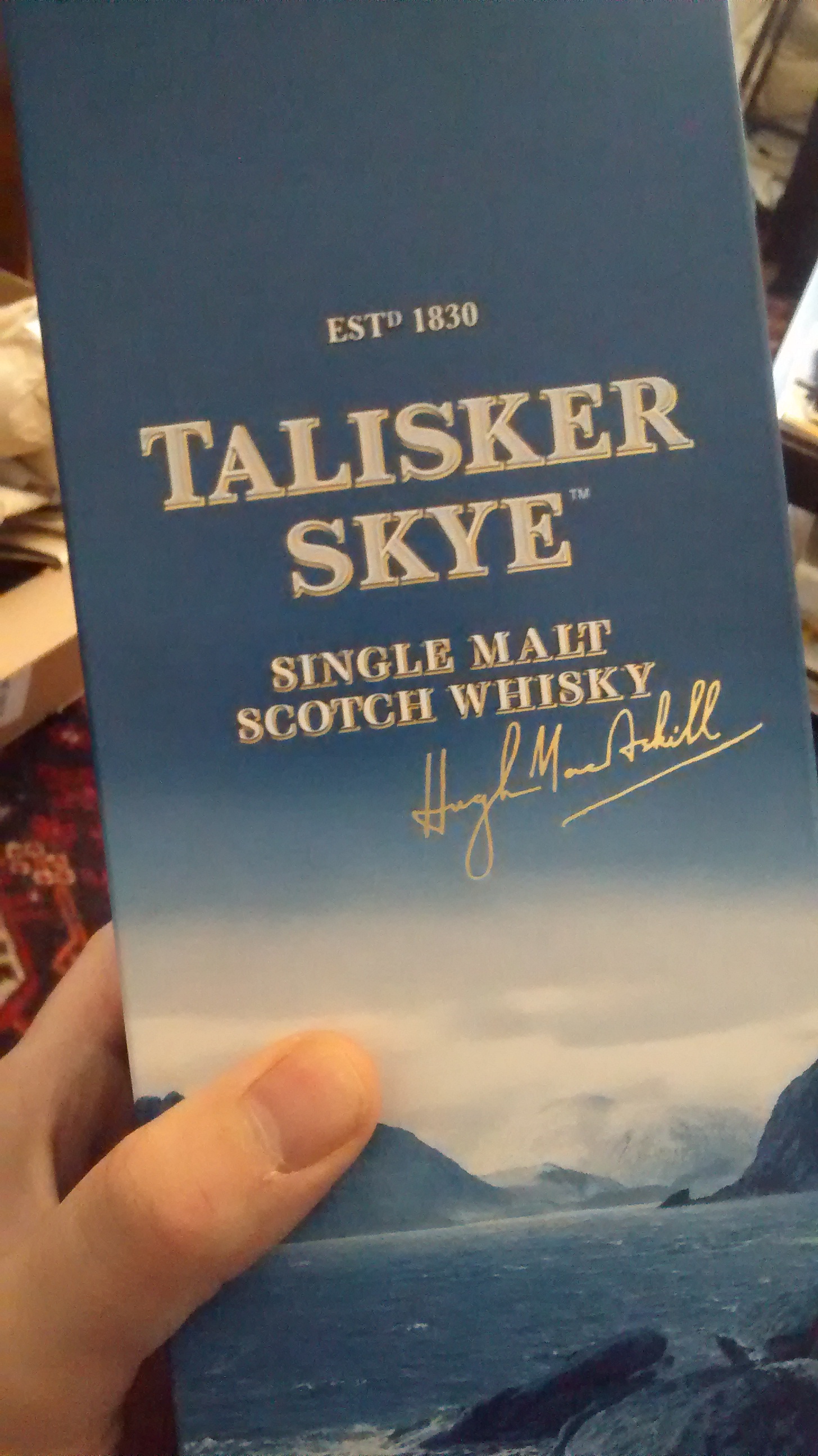
And the whisky? It seems my less than unsubtle hints following my trip to Skye in April resulted in my getting a fair few bottles for my birthday.

Projects and whisky galore. Lots to be excited about and lots to get on with!


A river runs through it – Wikimedia at OER16

Edinburgh Castle on April 19th 2016

Edinburgh Castle on April 19th 2016

Co-chair, Lorna Campbell, welcoming attendees to Edinburgh for OER16. By Stinglehammer (Own work) [CC BY-SA 4.0 (http://creativecommons.org/licenses/by-sa/4.0)], via Wikimedia Commons

Co-chair, Lorna Campbell, welcoming attendees to Edinburgh for OER16.
By Stinglehammer (Own work) [CC BY-SA 4.0 (http://creativecommons.org/licenses/by-sa/4.0)], via Wikimedia Commons

Wikimedia at OER16

Wikimedia at OER16

“A river runs through it” 

Apologies for the naming of this blog article BUT it did seem that there was a common (Wikimedia) thread running through a great many of the sessions at the 7th Open Education Resources Conference this year.

View the Storify of Wikimedia at OER16 in pics & tweets

Hosted by the University of Edinburgh, we were blessed with some surprisingly good weather (not a cloud in the sky) and some stellar keynote speakers; all progressing the case for OER and examining what it means to be ‘open’.

Jim Groom at OER16

Jim Groom at OER16


  • Jim Groom, Reclaim Hosting – an independent web hosting company focused on the higher education community.

Can we imagine tech Infrastructure as an Open Educational Resource? Or, Clouds, Containers, and APIs, Oh My!

Watch Jim Groom’s presentation on Media Hopper.

IMG_5667


  • Catherine Cronin – An educator and researcher at the National University of Ireland, Galway, Catherine has worked as an open educator for many years.

“If ‘open’ is the answer, what is the question?”

Watch Catherine Cronin’s keynote presentation on Media Hopper

Emma Smith at OER16 By Stinglehammer (Own work) [CC BY-SA 4.0 (http://creativecommons.org/licenses/by-sa/4.0)], via Wikimedia Commons

Emma Smith at OER16 By Stinglehammer (Own work) [CC BY-SA 4.0 (http://creativecommons.org/licenses/by-sa/4.0)], via Wikimedia Commons

  • Emma Smith –At the University of Oxford, Dr Emma Smith’s research combines a range of approaches to Shakespeare and early modern drama. She is a fellow of Hertford College and a Professor of Shakespeare studies. She was also one of the first academic colleagues to  champion the use and creation of OER at University of Oxford through her involvement in the Jisc funded Open Spires and Great Writers Inspire projects. Her OER licensed lectures reach an international audience and she continues to produce, publish and share cultural resources online.

Free Willy: Shakespeare and OER”

Watch Emma Smith’s keynote presentation on Media Hopper.

IMG_20160419_170142176_HDR

  • John Scally – National Library for Scotland. John started his library career in 1993 when he was appointed as a curator in the British Antiquarian Division at the National Library. He joined the University of Edinburgh 10 years later as Director of University Collections and Deputy Director of Library, Museums and Galleries.

Postcards from the Open Road

Watch John Scally’s keynote presentation on Media Hopper

Conference co-chair, Melissa Highton, welcomes attendees to Edinburgh at the 7th Open Education Resources conference.

Conference co-chair, Melissa Highton, welcomes attendees to Edinburgh at the 7th Open Education Resources conference.


  • Melissa Highton. University of Edinburgh. Melissa leads the University of Edinburgh’s strategic priorities for open educational resources, digital and distance learning on global platforms, MOOCs, blended learning, virtual learning environments, technology enhanced learning spaces, digital skills  and use of the web for outreach and engagement.

Open with care” – Watch Melissa Highton’s keynote presentation on Media Hopper

IMG_5678

Unexpected outcomes

  • Emma Smith very kindly attended the Wikipedia editing training session I ran at lunchtime that first day of the conference (also my birthday so a double boon) and suggested she may like to collaborate with the Wikimedian at the Bodleian Library, Martin Poulter, upon her return.
  • John Scally referenced the sterling work undertaken by the first Wikimedian in Residence in Scotland, Ally Crockford, during her 17 months at the National Library of Scotland in releasing a considerable amount of the National Library of Scotland’s collections on open licenses to Wikimedia Commons.
  • Melissa Highton both presented a session on the research undertaken following the ‘Women in Science & Scottish History’ Wikipedia edit-a-thon  and then later closed the conference with her ‘Open with Care‘ keynote which eloquently expressed how to give those holding the purse strings at an institutional level something they can say ‘Yes‘ to  when it comes to the move towards openness where ‘not being open is a risk and not being open costs us money‘.
  • Jim Groom summing up Wikipedia as: The single greatest Open Education Resource the world has ever seen“.

My Wikimedia colleague, Martin Poulter, turned to me at this point, conspiratorially, to say that previous OER conferences had not had this level of Wikimedia involvement throughout so there had definitely been a shift in emphasis & in thinking over the years.

Given Wikimedia’s added focus on education this year, it just felt that Wikimedia and Open Education was an idea whose time had come.

Wikimedia at OER16

In addition to our keynote speakers, we ran a number of other Wikimedia sessions for OER delegates to attend.

Wikimedia at OER16

Wikimedia at OER16

Beyond this we had a number of Wikimedia related speakers taking part in OER16.

  • Martin Poulter – Wikimedian in Residence at the Bodleian Library, Oxford University.

IMG_5692

Martin Poulter, Wikimedian in Residence at the Bodleian Library. By Stinglehammer (Own work) [CC BY-SA 4.0 (http://creativecommons.org/licenses/by-sa/4.0)], via Wikimedia Commons

Watch Martin Poulter on Media Hopper (from 21 minutes on)

Martin’s presentation was a critical look inside some of Wikipedia’s sister projects: “Wikibooks as a platform and community for creating open textbooks, Wikidata as a source of open data for educational resources and Wikisource as a way to add educational value to historic texts. All these sites have “Edit” buttons and depend on users to build, evaluate, and repurpose open content.”

  • Lucy Crompton-Reid: CEO Wikimedia UK

Lucy Crompton-Reid, CEO Wikimedia UK. By Stinglehammer (Own work) [CC BY-SA 4.0 (http://creativecommons.org/licenses/by-sa/4.0)], via Wikimedia Commons

Lucy Crompton-Reid, CEO Wikimedia UK. By Stinglehammer (Own work) [CC BY-SA 4.0 (http://creativecommons.org/licenses/by-sa/4.0)], via Wikimedia Commons.

Lucy’s presentation focused on the ways in which Wikimedia UK is working with libraries, archives and museums to ensure greater access to educational content online, with a particular focus on the Wales collaboration but drawing on experience in other settings.

Watch Lucy Crompton-Reid’s presentation on Media Hopper.

  • Sara Thomas – Wikimedian in Residence at Museums & Galleries Scotland.

Sara Thomas at OER16 By Stinglehammer (Own work) [CC BY-SA 4.0 (http://creativecommons.org/licenses/by-sa/4.0)], via Wikimedia Commons

Sara Thomas at OER16
By Stinglehammer (Own work) [CC BY-SA 4.0 (http://creativecommons.org/licenses/by-sa/4.0)], via Wikimedia Commons

In contrast to most residencies, where the resident is embedded with just one institution, Sara was tasked with working with the entire Scottish museums sector, with the aim of increasing open knowledge capacity and beginning to effect culture change with regard to open knowledge in a cultural context. Her presentation reflected on what can (and can’t) be achieved in a year, offers provocations with regard to the challenges faced by the museums sector, and suggestions as to the best direction for future activity.

Watch Sara’s presentation on Media Hopper

  • Subhashish Panigrahi – Cultural Institution aka GLAM for more OER

Subhashish Panigrahi at OER16. By Stinglehammer (Own work) [CC BY-SA 4.0 (http://creativecommons.org/licenses/by-sa/4.0)], via Wikimedia Commons

Subhashish Panigrahi at OER16.
By Stinglehammer (Own work) [CC BY-SA 4.0 (http://creativecommons.org/licenses/by-sa/4.0)], via Wikimedia Commons

GLAM is a global initiative for making cultural data open targeting galleries, libraries, archives and museums in particular. Subhashish’s presentation was around the best practices of several GLAM initiatives and how these projects could lead to create useful OERs.

Watch Subhashish’s presentation on Media Hopper

  • Antoni Meseguer-Artola – Open University of Catalonia

Learning Effectiveness and Perceived Value of Wikipedia as a Primary Course Resource at OER16. By Stinglehammer (Own work) [CC BY-SA 4.0 (http://creativecommons.org/licenses/by-sa/4.0)], via Wikimedia Commons

Learning Effectiveness and Perceived Value of Wikipedia as a Primary Course Resource at OER16.
By Stinglehammer (Own work) [CC BY-SA 4.0 (http://creativecommons.org/licenses/by-sa/4.0)], via Wikimedia Commons

Melissa Highton introducing Antoni Meseguer-Artola at OER16. By Stinglehammer (Own work) [CC BY-SA 4.0 (http://creativecommons.org/licenses/by-sa/4.0)], via Wikimedia Commons

Melissa Highton introducing Antoni Meseguer-Artola at OER16.
By Stinglehammer (Own work) [CC BY-SA 4.0 (http://creativecommons.org/licenses/by-sa/4.0)], via Wikimedia Commons

Antoni’s presentation examines a case study where Wikipedia was used as a primary learning resource, and it was appropriately integrated with the existing learning materials.

Results support the idea that the student’s perceptions about Wikipedia change across knowledge areas, and also depend on the student’s academic profile. Added to this, we have found evidence confirming the hypotheses that Wikipedia has a positive effect on the student’s academic performance, and that the magnitude of this influence ranges from one course to another.”

Watch Antoni Meseguer-Artola’s presentation here.

  • Allison Littlejohn and Melissa Highton – Learning to Develop Open Knowledge
Melissa Highton - Learning to Develop Open Knowledge

Melissa Highton – Learning to Develop Open Knowledge

An editathon is “an event where people develop open knowledge around a specific topic” (Cress & Kimmerle, 2008; Kosonen & Kianto, 2009). Melissa & Allison’s presentation explores learning in an editathon.

All respondents reported that the editathon had a positive influence on their professional role. They were keen to integrate what they learned into their work in some capacity and believed participation had increased their professional capabilities… Overall, the editathon provided opportunity for professional learning, enabling people to learn a range of different types of knowledge useful for work.

Watch Melissa and Allison’s presentation here.

In addition, Martin Poulter ran a successful lunchtime session illustrating how to engage with Wikisource, Wikimedia’s free content library.

Martin Poulter delivering a Wikisource demonstration at OER16. By Stinglehammer (Own work) [CC BY-SA 4.0 (http://creativecommons.org/licenses/by-sa/4.0)], via Wikimedia Commons

Martin Poulter delivering a Wikisource demonstration at OER16.
By Stinglehammer (Own work) [CC BY-SA 4.0 (http://creativecommons.org/licenses/by-sa/4.0)], via Wikimedia Commons

Wikisource demonstration at OER16. By Stinglehammer (Own work) [CC BY-SA 4.0 (http://creativecommons.org/licenses/by-sa/4.0)], via Wikimedia Commons

Wikisource demonstration at OER16.
By Stinglehammer (Own work) [CC BY-SA 4.0 (http://creativecommons.org/licenses/by-sa/4.0)], via Wikimedia Commons

Wikisource demonstration at OER16. By Stinglehammer (Own work) [CC BY-SA 4.0 (http://creativecommons.org/licenses/by-sa/4.0)], via Wikimedia Commons

Wikisource demonstration at OER16.
By Stinglehammer (Own work) [CC BY-SA 4.0 (http://creativecommons.org/licenses/by-sa/4.0)], via Wikimedia Commons

Finally, given that Josie Fraser, Wikimedia trustee and educationalist, has accepted the baton and agreed to co-host OER17 (themed on the ‘Politics of Openness’) next year, the future looks extremely bright.
Who knows which ‘waterbody type‘ Wikimedia might end up being compared to next time….
Wikimedia's Josie Fraser at OER16. By Stinglehammer (Own work) [CC BY-SA 4.0 (http://creativecommons.org/licenses/by-sa/4.0)], via Wikimedia Commons

Wikimedia’s Josie Fraser at OER16.
By Stinglehammer (Own work) [CC BY-SA 4.0 (http://creativecommons.org/licenses/by-sa/4.0)], via Wikimedia Commons


Shhh! Spies…

Spy Week 2016

Edinburgh Spy Week returned for a third year with an exciting programme of events exploring the secret worlds of spies and espionage in fiction and in fact. If you didn’t attend, here’s what you missed!

Click here to view the story of Spy Week 2016 in pics and tweets.

Penny Fielding talking about Spy Week at the Women in Espionage edit-a-thon

Penny Fielding talking about Spy Week at the Women in Espionage edit-a-thon

Programme

Sunday 10 April onwards

Monday 11 April

Tuesday 12 April

Wednesday 13 April

Thursday 14 April

Friday 15 April

Spy Week was organised by the University of Edinburgh, the Institute for Advanced Studies in the Humanities, the National Library of Scotland, and Edinburgh Filmhouse, and Blackwell’s Bookshop.

Spyweek poster by Ewan McAndrew (own work)

Spyweek poster by Ewan McAndrew (own work)

Women in Espionage

What was new for this year’s Spy Week was that the University of Edinburgh’s Information Services and Wikimedia UK organised a Wikipedia edit-a-thon focused on Women in Espionage on the afternoons of 13-14 April 2016 with Penny Fielding, Grierson Chair of English Literature at the University of Edinburgh, as our guest speaker.

The edit-a-thon then continued as a worldwide virtual event in collaboration with WikiProject Women in Red as, approximately, only 16% of the biographies on Wikipedia relate to notable women and WikiProject Women in Red’s aim is to add to and improve the coverage of individuals, events and resources related to women on Wikipedia. The aim of our edit-a-thon therefore was to do this with a focus on women in espionage.

Outcomes

5 new pages were created and 15 pages were edited by our attendees over the two afternoons on 13th & 14th April which was mightily impressive for two short afternoons’ work. It was great to see our editors uncover the incredible lives of these extraordinary women. It  was also terrific to be able to use Wikipedia’s Content Translation tool to translate articles in other languages.

What was truly amazing was the volume of work that Wikiproject Women in Red achieved over the next week running the Women in Espionage edit-a-thon (from 13th April until the 20th of April) alongside their pre-planned events for April on Women Writers and Welsh Women.

An incredible 828 pages edited and 155 new pages created.*

*The figures include all Wikiproject Women in Red events for 13-20th April.

DSC_0091

View all the pictures from the Spy Week 2016: Women in Espionage Wikipedia Edit-a-thon

Articles created

Here are the new articles created related to Women in Espionage.

Some truly fascinating stories:

  • Eileen Burgoyne – a Cold War Spy who worked for the British Government after the Second World War. Information about Eileen Burgoyne’s life as a spy emerged only after her death when weapons were found by builders at her former home sparked a bomb scare leading to an evacuation of her street. Police later found possessions and documents which revealed her involvement in the intelligence services.
  • Jessie Jordan – a Scottish hairdresser who was found guilty of spying for the German Abwehr on the eve of World War II.
  • Rozanne Colchester – joined Bletchley Park as a decoder. Post war she held an undisclosed role with the Secret Intelligence Service. Serving in Cairo and Istanbul where she helped investigate the double agent Kim Philby.
  • Luisa Zeni – an Italian secret agent and writer.
  • Marie Meyer – an American linguist and spy who worked for the National Security Agency from 1943-60. She was assigned to the Venona project and is credited with making some of the first recoveries of the Venona codebook. She studied eight foreign languages and was the first person to receive the NSA’s Meritorious Civilian Service Award.
  • Magda Fontanges – also known as Madeleine Coraboeuf, was a French actress, journalist and a spy for the Germany Secret Service between 1940 and 1943. Fontanges was found guilty of shooting Count Charles de Chambrun, the then French Ambassador to Rome, at the Gare du Nord on March 17. Fontanges accused the Comte De Chambrun of compromising her situation by revealing the details of her love affair with Mussolini to the then secretary of the French Embassy in Rome, M. Garnier. She was fined 100 Francs (1 Great British Pound), and given a suspended sentence due to having no previous criminal record.
  • Ginette Jullian: a French spy during the Second World War, she trained for the SOE, learning parachuting, security, and wireless operation.
  • Sarah Helm – a British journalist and non-fiction writer. She worked for The Sunday Times and The Independent in the 1980s and 1990s. Her first book, A Life in Secrets detailing the life of the secret agent Vera Atkins, was published in 2005.
  • Melissa Boyle Mahle – a writer and former Central Intelligence Agency officer in the Middle East. Her books include Denial and Deception: An Insider’s View of the CIA from Iran-Contra to 9/11. She acted as a consultant for the film Salt.
  • Minnie M. Kenny – served as a cryptanalyst, educator and equal opportunity activist who worked at the National Security Agency.
  • Astrid Dövle Dollis Dahlgren – nicknamed the “Scandinavian ‘Mata Hari'” was a Norwegian dentist and property dealer. After she became Swedish by marriage she worked for Nazi Germany during World War II.
  • Juliana Mickwitz – She was employed with the American military and later National Security Agency as a translator, linguist and cryptanalyst. She was inducted into the Cryptologic Hall of Honor in 2012.
  • Dorothy Blum – an American computer scientist and cryptanalyst. She wrote computer software for the NSA and spearheaded the effort to teach NSA employees to write cryptanalytic programs. She was using the Fortran programming language three years before its public release in 1957. Blum “significantly changed the way NSA did cryptanalysis”. She was also elected one of the top 100 “most outstanding women in the federal government”.

Dorothy T Blum 1924 1980
  • Josette Bruce – a French novelist of Polish origin. She is remembered for taking over the literary series OSS 117 about secret agent Hubert Bonisseur de La Bath after the death of her husband Jean Bruce, creator of the series.
  • Leslie Silbert – an American writer who has worked as a private investigator. In 2004, she published her first novel The Intelligience, a spy story based on an incident in the life of the British 16th-century author Christopher Marlowe.
  • Ruth A. David – an American electrical engineer. While at the CIA, David was responsible for encouraging the agency to pursue partnerships with the private sector and designed a proposal to procure technology at the stage of development from the private sector. She has been awarded the CIA Director’s Award, the Defense Intelligence Agency Director’s Award, the CIA Distinguished Intelligence Medal, the National Reconnaissance Officer’s Award for Distinguished Service, and the National Security Agency Distinguished Service Medal.
  • Ruth Mitchell – a reporter who was the only American woman to serve with the Serbian anti-Axis Chetnik guerrillas under Draža Mihailović in World War II. She was captured by the Gestapo and spent a year as a prisoner of war, later writing a book about her experiences. She also wrote a book about one of her brothers, General Billy Mitchell, who is regarded as the founder of the U.S. Air Force.
  • Grace Banker – a telephone operator who served during World War I (1917-1918) as Chief Operator of telephones of the American Expeditionary Forces (AEF) in the U.S. Army Signal Corps. She was the leader of 33 women telephone operators known popularly as Hello Girls who were assigned from New York to travel to France and work at the war front in Paris, Chaumont to operate the telephone switch boards at the First Army headquarters. About her work in the war front she said that “the secrecy surrounding their operations gave it an aura of romance and set it apart from the civilian work.”
Editors at work

Editors at work

Articles improved

  • Lilian Rolfe – an Allied secret agent in World War II.
  • Stella Rimington – a British author and former Director General of MI5, a position she held from 1992 to 1996. She was the first female DG of MI5, and the first DG whose name was publicised on appointment.
  • Lise de Baissac – a heroine of the Special Operations Executive during the Second World War, a special agent who risked her life running her own operations; she was awarded several gallantry awards after the war.
  • Kim Philby – a high-ranking member of British intelligence who worked as a double agent before defecting to the Soviet Union in 1963. He served as both an NKVD and KGB operative.
  • Pearl Witherington – a World War II Special Operations Executive agent. Given the code name “Marie”, Witherington was dropped by parachute into occupied France in September 1943, where she joined Maurice Southgate, leader of the Stationer Network. Over the next eight months, she worked as Southgate’s courier. After the Gestapo arrested Southgate in May 1944 who was subsequently deported to Buchenwald, she became leader of the new Wrestler Network, under a new code-name “Pauline”. Her story has been cited as the inspiration for the Sebastian Faulks novel Charlotte Gray.
  • Charles Medhurst – a First World War Royal Flying Corps pilot on the Western Front and later a senior officer in the Royal Air Force (father of Rozanne Colchester).
  • Marie Christine Chilver also known by the codename Agent Fifi, was a British secret agent in World War II. Originally recruited after escaping the Nazis and helping a British airman return to England, she worked for the Special Operations Executive assessing and testing the security awareness of trainee secret agents.
  • Agent 355 – the code name of a female spy during the American Revolution, part of the Culper Ring. Agent 355 is one of the first spies for the United States, but her real identity is unknown. Agent 355 is thought to have played a major role in exposing Benedict Arnold and the arrest of Major John Andre.
Happy editing

Happy editing

Overall, the outcome of the edit-a-thon was really pleasing given that, potentially, sources could have been hard to find for these secretive but extremely notable women. But the feeling is we have hit a rich vein that could see us continue in future edit-a-thon sessions.

What is MORE pleasing is that, two weeks on, Wikipedia editors are continuing to create new pages using our event page’s hitlist of articles, even as late as yesterday, from all round the world; from locations as near as Northern England and as far away as continental Europe, Asia, Australia and the USA.

Long may it continue.

Roll on Spy Week 2017!

Resources for Spy Week

Resources for Spy Week

Skye – (A Wikipedia tour of the Isle of Mists)

As mentioned earlier, I went on holiday for a week to the Isle of Skye.

Took lot of pics and looked up a lot of Wikipedia articles….


DSCN2169

The Quiraing – is a landslip on the eastern face of Meall na Suiramach, the northernmost summit of the Trotternish on the Isle of Skye, Scotland. DSCN2167

From Wikipedia:The whole of the Trotternish Ridge escarpment was formed by a great series of landslips; the Quiraing is the only part of the slip still moving, the road at its base, near Flodigarry, requires repairs each year.

The single track road leading up the Quiraing where I mistook the intentions of a hitchhiker by returning their thumbs up... with my own thumbs up.


DSCN2194

Giant Angus MacAskill

Then there is the intriguing case of 7’9” giant Angus MacAskill as evidenced at the Giant Angus MacAskill Museum in Dunvegan, Skye.

DSCN2189

Angus MacAskill (on the left)

From Wikipedia: “Angus Mòr MacAskill[pronunciation?], frequently referred to as Giant MacAskill or Black Angus (1825 – August 8, 1863), was a Scottish-born Canadian giant. The 1981 Guinness Book of World Records posits Angus as the tallest non-pathological giant in recorded history (7 ft 9 in, or 2.36 m), as well as being the man with the largest chest measurements of any non-obese man (80 inches, or 200 cm).

Then there is the MacAskill who isn’t even on Wikipedia at all. In the Tongadale public house in Portree, we saw hanging on the walls some absolutely stunning maritime photographs of the golden age of sailing. When I enquired who took the photos I was amazed that the photographer in question, Wallace R. Macaskill, had his own dedicated museum in Nova Scotia but did not have his own page on Wikipedia… as yet.

Bluenose sails away 1921 by W.R. MacAskill

Bluenose sails away 1921 by W.R. MacAskill

Talking of sailing away. I traipsed further North than Dunvegan along the white coral beaches of Skye and considered a trip to the fascinating (& ultra remote) island of St. Kilda… until I discovered the trip would cost me a princely £235.

Skye's white coral beaches near Dunvegan

Skye’s white coral beaches near Dunvegan

Looking out towards St. Kilda

Looking out towards St. Kilda

From Wikipedia: “St Kilda (Scottish Gaelic: Hiort) is an isolated archipelago 64 kilometres (40 mi) west-northwest of North Uist in the North Atlantic Ocean. It contains the westernmost islands of the Outer Hebrides of Scotland.[6] The largest island is Hirta, whose sea cliffs are the highest in the United Kingdom; three other islands (Dùn, Soay and Boreray) were also used for grazing and seabird hunting. The islands are administratively a part of the Comhairle nan Eilean Siar local authority area.[7]

The origin of the name St Kilda is a matter of conjecture. The islands’ human heritage includes numerous unique architectural features from the historic and prehistoric periods, although the earliest written records of island life date from the Late Middle Ages. The medieval village on Hirta was rebuilt in the 19th century, but illnesses brought by increased external contacts through tourism, and the upheaval of the First World War contributed to the island’s evacuation in 1930.[8] The story of St Kilda has attracted artistic interpretations, including Michael Powell‘s film The Edge of the World and an opera.[9]

The last of the native St Kildans, Rachel Johnson, died in April 2016 at the age of 93, having been evacuated at the age of 8.”

The Black Cuillins and whisky

The Black Cuillins and whisky

Then there is the geography of the Black Cuillin range itself.

DSCN2232

From Skye’s entry on Wikipedia: “The Black Cuillin, which are mainly composed of basalt and gabbro, include twelve Munros and provide some of the most dramatic and challenging mountain terrain in Scotland.[9] The ascent of Sgùrr a’ Ghreadaidh is one of the longest rock climbs in Britain and the Inaccessible Pinnacle is the only peak in Scotland that requires technical climbing skills to reach the summit.[16][26] These hills make demands of the hill walker that exceed any others found in Scotland[27] and a full traverse of the Cuillin ridge may take 15–20 hours.[28] The Red Hills (Gaelic: Am Binnean Dearg) to the south are also known as the Red Cuillin. They are mainly composed of granite that has weathered into more rounded hills with many long scree slopes on their flanks. The highest point of these hills is Glamaig, one of only two Corbetts on Skye.[29]”

The local whisky distilery, Talisker, a favourite of Robert Louis Stevenson, claims it is the nature of the Black Cuillin’s volcanic past that gives Talisker whisky its character.

Talisker and the Cuillin range

Talisker and the Cuillin range


Whisky barrels

Whisky barrels

Apparently, there are around 20 million barrels of whisky in Scotland at any one time. And this brings us all the way back to Spy Week which commences tomorrow as spy writer John Le Carre’s protagonists were apparently always partial to a drop of Skye whisky.

The Wikimedian who came in from the cold

The Wikimedian who came in from the cold

Strangely, even when it rained in Skye on our last day there, there were little reminders that Spy Week was just around the corner.

Amazing holiday.

Fascinating isle.

Now on to ‘Spy Week 2016‘.

Spy Week 2016: Women in Espionage (Fact & Fiction) editathon

Spy Week

Our latest Wikipedia editathon event is for Spy Week 2016 in collaboration with Penny Fielding, (Grierson Professor of English Literature at the University of Edinburgh), Marco Polvara, Alice Kelly, Eugenia Twomey and our liaison librarians, Shenxiao Tong and Angela Nicholson).

Edinburgh Spy Week is organised by the University of Edinburgh, the Institute for Advanced Studies in the Humanities, the National Library of Scotland, the Edinburgh Filmhouse, and Blackwell’s Bookshop.

The week begins with Dame Stella Rimington in Conversation with Prof Penny Fielding Date and time: Monday 11 April, 5.30pm-7pm Venue: 50 George Square Lecture Theatre
What roles have women played in spy fiction, and how do they compare to the realities of women’s role in the history of espionage? Dame Stella Rimington, the first female director general of MI5 and author of the acclaimed Liz Carlisle spy fiction series, will discuss the questions in conversation with Professor Penny Fielding, Grierson Chair of English at the University of Edinburgh.

The week concludes with: Writing Spy Lives (A Panel Discussion with Jeremy Duns and Ben MacIntyre) Date and time: Friday 15 April, 5.30pm-7pm Venue: Project Room, 50 George Square
How to write the biography of a spy – a subject who, by profession, must often conceal a true identity and fabricate fake ones in the line of duty? What challenges and opportunities are there for biographers seeking to uncover the story of the lives of spies involved in secret, and politically sensitive, international affairs? These and other questions raised by writing spy lives will be explored by spy novelist and biographer Jeremy Duns (Dead Drop: The True Story of Oleg Penkovsky and the Cold War’s Most Dangerous Operation (2013)), and historian, journalist and biographer Ben MacIntyre (Spy Among Friends: Kim Philby and the Great Betrayal (2014)).

For the full programme of Spy Week guest speakers and activities please click here: http://www.spyweek.llc.ed.ac.uk/
Most events (aside from the films) are free, but ticketed via Eventbrite (see the event pages on the above website).

Women in Espionage

Women in Espionage

Wikipedia editathon for Spy Week 2016: Women in Espionage and Spy Fiction

For this particular event, the University of Edinburgh’s Information Services and Wikimedia UK are organising an editathon focused on Women in Espionage to celebrate Spy Week 2016 on 13-14 April 2016 near the other Spy Week venues in Teaching Studio LG.07, David Hume Tower Building, George Square, Edinburgh.Click here for Google Maps.

You can attend on one day or both days. Full training will be provided both days so new editors are very welcome to attend. If you have had Wikipedia training before, feel free to either start editing immediately on arrival or arriving a little later to skip the training portion of the afternoon. If you’d like to take part in the virtual event hosted by Women in Red. You can sign up here to participate.

This Wikimedia event forms part of Spy Week 2016 as a day of celebration which helps people learn about the achievements of women in espionage, inspiring others and creating new role models for young and old alike. Did you know that approximately only 16% of the biographies on Wikipedia relate to notable women? The aim of our editathon is to add to and improve the coverage of individuals, events and resources related to women in espionage.

Helpful updates could be as simple as: Making sure reference links are still appropriate and functional; Adding new inline citations/references; Adding a photo; Adding an infobox; Adding data to more fields in an existing infobox; Creating headings; Adding categories; etc.

The following is a small sample of topics and women to work on, with thanks to Megalibrarygirl for getting the ball rolling.


Chief Operator Grace Banker receiving the Distinguished Service Medal

Hitlist of target articles to create or improve:


Noor Inayat Khan

Come along to learn about how Wikipedia works and contribute a greater understanding of the role of women in espionage!
In addendum – update 13th April 2016

After day one of our Spy Week Wikipedia editathon, here are a lists of the pages that were worked on today, 13th April.

And that’s not counting the efforts of Spy Week Wiki Editors across the world contributing through the Wikiproject Women in Red – Spy Week virtual editathon.

One more day to go in Edinburgh’s Spy Week editathon but Women in Red’s virtual editathon will continue on for the full week!!

Wikimedia UK at OER16 Conference 19-20th April 2016

The 7th Open Educational Resources Conference, OER16: Open Culture, will be held on the 19th-20th April 2016 at the University of Edinburgh.

The vision for the conference is to focus on the value proposition of embedding open culture in the context of institutional strategies for learning, teaching and research. The conference will be chaired by Melissa Highton, Director of Learning, Teaching and Web Services at the University of Edinburgh, and Lorna Campbell, OER Liaison at the University of Edinburgh and EDINA Digital Education Manager.


And there will be a strong Wikimedia UK presence at the event.

By Robin Owain (WMUK) (Own work) [CC BY-SA 4.0 (http://creativecommons.org/licenses/by-sa/4.0)], via Wikimedia Commons

Jason Evans by Robin Owain (WMUK) (Own work) [CC BY-SA 4.0 (http://creativecommons.org/licenses/by-sa/4.0)], via Wikimedia Commons

Jason Evans  is the current Wikimedian in Residence at the National Library of Wales.  He is also a professional genealogist with a wealth of experience in researching all aspects of Welsh family and local history. This residency will contribute towards the NLW’s aim of providing ‘Information for All’ and in turn will draw people back to the services and collections of the Library. Information about previous, ongoing, or future Wikipedia-National Library of Wales collaborations are updated regularly on the National Library of Wales project page.

Jason has worked closely with the Library to release over 15,000 images into the public domain via Wikimedia Commons and has held dozens of public events at the Library and through out Wales. Working closely with other cultural partners in Wales the aim has been  encourage and facilitate increased open access across the sector by affecting policy change. Jason has also set-up and run a number of successful Wikimedia projects with the Library’s dedicated volunteer team.  The residency is increasingly focusing on Wikipedia in the education sector and he has made steps towards embedding a Wikipedia based projects into the Welsh curriculum for 16-18 year olds and has proposed a series of talks for sixth form students about using Wikipedia responsibly. He has also helped  several universities to use Wikipedia as vehicle for outreach and gender equality projects.


Martin Poulter By Ziko (Own work) [GFDL (http://www.gnu.org/copyleft/fdl.html) or CC BY-SA 4.0-3.0-2.5-2.0-1.0 (http://creativecommons.org/licenses/by-sa/4.0-3.0-2.5-2.0-1.0)], via Wikimedia Commons

Martin Poulter by Ziko (Own work) [GFDL (http://www.gnu.org/copyleft/fdl.html) or CC BY-SA 4.0-3.0-2.5-2.0-1.0 (http://creativecommons.org/licenses/by-sa/4.0-3.0-2.5-2.0-1.0)], via Wikimedia Commons

Martin Poulter

From April 2015 to March 2016, Martin Poulter was the Wikimedian In Residence at the Bodleian Libraries, Oxford. The project page is at Wikipedia:GLAM/Bodleian. From June 2013 to April 2014, Martin was the Jisc Wikimedia Ambassador running a project to explore overlaps between Jisc, Wikimedia, and academia in general. A certified Lead Trainer for Wikimedia UK in Membership Development and a trained Campus Ambassador as part of the Wikipedia Education Program, on English Wikipedia Martin has more than eleven thousand edits, mainly in the area of psychology. Martin also has hundreds of edits on Wikibooks, a thousand on Wikisource, and thousands of edits cataloguing scientific images on Commons.

In addition, Martin invented the EduWiki Conference (based on an original drink with Fabian Tompsett) and the Wikipedia Science Conference.

Sara Thomas By Lirazelf (Own work) [CC BY-SA 4.0 (http://creativecommons.org/licenses/by-sa/4.0)], via Wikimedia Commons

Sara Thomas By Lirazelf (Own work) [CC BY-SA 4.0 (http://creativecommons.org/licenses/by-sa/4.0)], via Wikimedia Commons

Sara Thomas

Sara Thomas is the Wikimedian in Residence for Museums Galleries Scotland, the national development body for the Scottish museums sector.  She’s also an event manager and social/digital media trainer with experience in both the private and third sectors.  Since January 2015 in this part time role she’s worked with around 80 cultural institutions to provide training, facilitate content upload and generally advocate for the use of open knowledge in a museums context.  She’s trained 280 new users of Wikipedia, run 16 editathons, 20 training sessions and spoken at 25 seminars, workshops and conferences, taking in museums, libraries, and universities.  A backstage pass event at Glasgow Museums brought some of the lesser-seen elements of Kelvingrove Museum, Kelvin Hall and the Riverside Museum to the Commons; an editathon dedicated to rent strike organiser and activist Mary Barbour contributed to the campaign for greater recognition of her work; and a recent series of editathons with the National Galleries of Scotland created biographies of key Scottish female artists missing from Wikipedia.

In the last two months of the project Sara will be working with Groam House Museum in Rosemarkie, Glasgow School of Art, Glasgow Women’s Library and Govan’s Hidden Histories to bring Scotland’s rich cultural heritage to a wider audience.

Lucy Crompton-Reid

Lucy Crompton-Reid

Lucy Crompton-Reid

Lucy Crompton-Reid joined Wikimedia UK as the new Chief Executive in October 2015, and is working with the staff team, board of trustees and wider Wikimedia community to develop a new strategy and business plan for the charity and to help shape the work of the programmes team. She will also be driving forward the organisation’s advocacy, communications and fundraising activities, and engaging new strategic partners. Lucy has worked in the cultural, voluntary and public sectors for nearly two decades, with past experience including senior roles at Arts Council England, British Refugee Council and the House of Lords. Most recently, she was Chief Executive of the national literature charity Apples and Snakes, England’s leading organisation for performance poetry and spoken word. Throughout her career, Lucy has had a particular focus on widening participation, and brings a strong commitment to access, learning and public engagement in her new role at Wikimedia UK.


Me in Mallaig after walking the West Highland Way and riding the Harry Potter train.

Me in Mallaig after walking the West Highland Way and riding the Harry Potter train.

Ewan McAndrew (yours truly)

An MA graduate in English & Modern History from the University of Glasgow, Ewan McAndrew went on to study Software Development at Glasgow Caledonian University before moving abroad to teach English. Ewan has taught in Japan, South Korea & Singapore which, in turn, has allowed him to travel throughout Asia, Australia, North America & South America.

A PGDE English & Media teacher for the last few years, Ewan has taught in various parts of Scotland and worked increasingly with heritage institutions, most recently with the Glasgow School of Art’s Archives team on their WW1 ‘Roll of Honour’ project.

Ewan is the current Wikimedian in Residence at the University of Edinburgh. Previous editathons have been on the ‘History of Medicine’ for Innovative Learning Week 2016, ‘Art & Feminism’ (with the National Galleries of Scotland & Sara Thomas), ‘Women in Art & Science’ for International Women’s Day 2016 and ‘Women in Espionage: Fact & Fiction’ for Spy Week 2016  in partnership with the English Literature and History departments at the University of Edinburgh.

Wikimedia at OER16

Sara Thomas, Lucy Crompton-Reid and Martin Poulter will all be presenting sessions at OER16.

The programme for OER16 (with details of these sessions) can be found here: OER16 website.

In addition, the following sessions will also be available to OER delegates.

1)      Wikipedia Training 1.20-2pm 19/04/2016

Editing Wikipedia has never been easier with the new WYSIWYG Visual Editor interface which makes editing Wikipedia as easy as blogging or utilising MS Word. A 2014 Yougov survey found that around two thirds of the British public trust Wikipedia more than traditional news outlets including the BBC, ITV, the Guardian and the Times.

One of the most visited websites worldwide, and now one of the most trusted, Wikipedia is a resource used by most university students. Increasingly, many instructors around the world have used Wikipedia as a teaching tool in their university classrooms as well.

Indeed, as the drive for scholarly research to become ever more Open Access gathers pace, Wikipedia will increasingly become the digital gateway to this research.

Full training will be given – just bring a laptop or tablet with you and start editing!


2)      Wikipedia Editathon 2-3pm 19/04/2016 – Women in Art, Science & Espionage

Did you know that only 16% of biographies on Wikipedia relate to notable females?

Once training is completed, why not join us for an editathon to improve Wikipedia’s coverage of Women in Art, Science & Espionage to put these skills into practice & help redress the balance?

Contributing to Wikipedia during an editathon can be about creating an entirely new page on Wikipedia (250 words minimum backed up by at least 3 references) or as simple as adding a citation or an image to an existing article or even just fixing a typo. Full training will be given at 1.20-2pm so feel free to join us for the editathon afterwards from 2-3pm or drop in to ask us questions about Wikipedia & its sister projects.

Just bring a laptop or tablet with you and start editing!


3)      Ask a Wikimedian: Drop-in clinic 1.20-2pm 20/04/2016

OER16 has a number of Wikimedians attending in Ewan McAndrew (Wikimedian in Residence for University of Edinburgh), Sara Thomas (Wikimedian in Residence for Museums & Galleries Scotland), Martin Poulter (Wikimedian in Residence for the Bodleian Library, Oxford University) and Jason Evans (Wikimedian in Residence for the National Library of Wales).

This lunchtime session will allow you to ask questions about their experiences & seek advice, be it on working with Wikipedia or its sister projects.


4)      Wikisource Demonstration: 2pm-2.25pm 20/04/2016

Martin Poulter (Wikimedian in Residence for the Bodleian Library, Oxford University) will demonstrate how to get the best out of Wikisource. Wikisource is a multilingual project, started in November 2003, to archive a collection of free and open content texts. It is not only a superior format for storing classics, laws, and other free works as hypertext, but it also serves as a base for translating these texts. At the beginning, source texts in all languages (except Hebrew) were all on one wiki. However, Wikisource now has several editions in many individual languages.

NB: Please bring a laptop of tablet with you to allow you to navigate around Wikisource.


5)      Wikipedia Editing Training: 2.25-2.50pm 20/04/2016

Editing Wikipedia has never been easier with the new WYSIWYG Visual Editor interface which makes editing Wikipedia as easy as blogging or utilising MS Word. A 2014 Yougov survey found that around two thirds of the British public trust Wikipedia more than traditional news outlets including the BBC, ITV, the Guardian and the Times.

One of the most visited websites worldwide, and now one of the most trusted, Wikipedia is a resource used by most university students. Increasingly, many instructors around the world have used Wikipedia as a teaching tool in their university classrooms as well.

Indeed, as the drive for scholarly research to become ever more Open Access gathers pace, Wikipedia will increasingly become the digital gateway to this research.

This will be a truncated training session from the one offered on 19th April but will introduce you to the basics of utilising the new Visual editor interface – just bring a laptop or tablet with you and start editing!


Hopefully see you there and you can meet the gang!

Page 7 of 8

Powered by WordPress & Theme by Anders Norén