Supporting the University of Edinburgh's commitments to digital skills, information literacy, and sharing knowledge openly

Tag: Japanese Wikipedia

Celebrating Edinburgh Medical School and Nursing Studies: Reflections from my first weeks as an intern

Sticky post

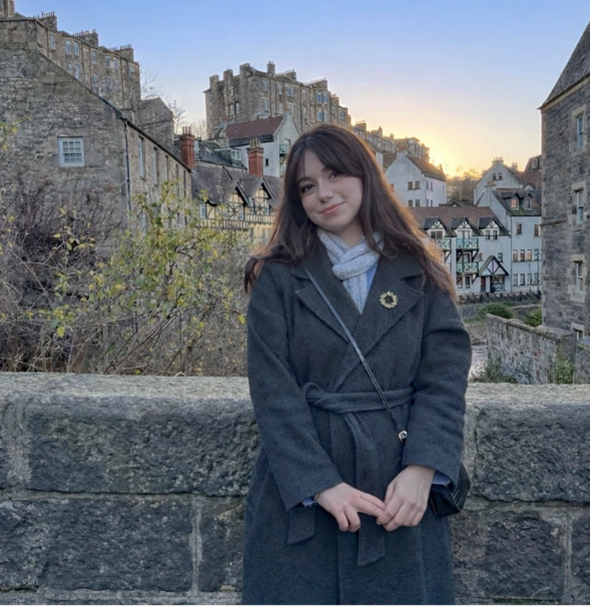
Guest post by Maya Field, Digital Heritage and Open Knowledge intern.

Hello! I am Maya, this year’s Digital Heritage and Open Knowledge Intern at the University’s Information Services Group. My role this summer focuses on exploring the digital outputs that can be created to celebrate the heritage of both Edinburgh Medical School and Nursing Studies as they mark their 300th and 70th anniversaries respectively.

As a History student here at the University of Edinburgh, I am lucky enough to spend much of my time studying in the Old Medical School, the same place where my grandfather, Dr Dileep Godbole, studied for his surgical examinations after moving from Mumbai, India, in the 1970s. This connection, alongside my interest in uncovering the histories of people who have often been overlooked in the historical record, has made me incredibly excited to work on this project and to explore the diverse history of medicine and nursing at the University.  

Alongside settling into my role and putting my ability to remember names to the test, my first week involved being trained by my line manager, Ewan McAndrew, in the basics of editing Wikipedia. Armed with this new knowledge, I was soon presented with a collection of Japanese-language sources relating to Agnes Vetch, a Scottish nurse who trained at the Royal Infirmary of Edinburgh and went on to become a pioneer of nursing education in Meiji-era Japan. Despite her remarkable career, her story had previously only been documented on the Japanese-language version of Wikipedia. 
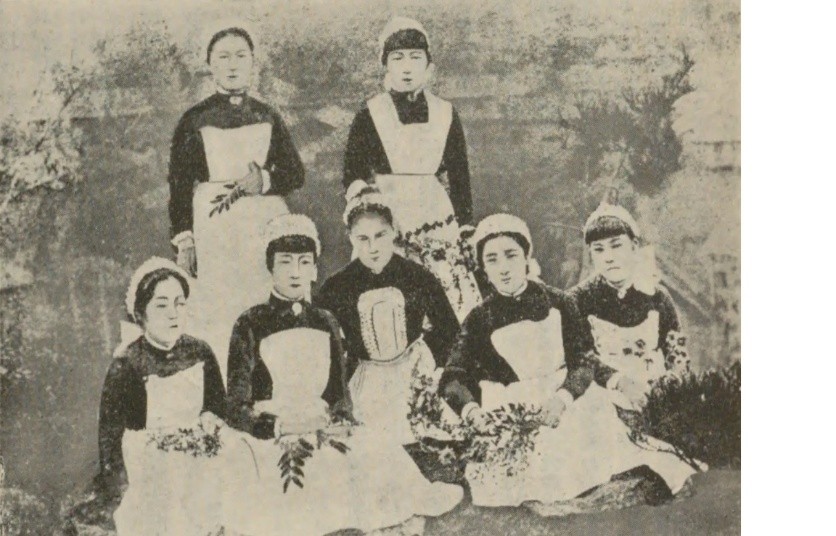
Agnes Vetch, seated in the centre of the front row, with her nursing students from Sakurai Girls School, Tokyo, 1888.

Agnes Vetch, seated in the centre of the front row, with her nursing students from Sakurai Girls School, Tokyo, 1888. Public domain via Wikimedia Commons.

Using these sources, alongside additional research, I created and expanded an English-language article about her life and career. It was a fascinating introduction to the role, not only because it allowed me to learn about an extraordinary woman, but also because it highlighted how many important figures in the history of medicine and nursing remain largely absent from public knowledge resources.

I was also given the opportunity to present this work at the Usher Institute alongside Ewan and fellow intern Anna as part of a session on public health literacy and Wikipedia. It was particularly interesting to hear from both of them about the importance of Wikipedia as a public health resource and the role it can play in making reliable information accessible to a wide audience.  

Beyond Wikipedia, much of my work so far has focused on Nursing Studies. With the help of Pam Smith, Professor of Nursing Studies at the School of Health and Social Science, I have been introduced to a wide range of resources relating to its unique history as the first nursing degree programme at a UK university. I’ve spent a lot of time carrying out detective work in the University Centre for Research Collections, looking at stories that have yet to be told, from members of the first cohort to developments in mental health nursing and the programme’s global connections. I am looking forward to continuing this research over the coming weeks and, hopefully, sharing some of these stories by the end of the internship. 

Overall, it has been a lovely and varied introduction to the role. I have been welcomed by so many lovely people across ISG, as well as by my fellow interns. A Forrest Hill scavenger hunt with the other interns provided a great introduction to both each other and the maze that is the building itself! I am excited to continue my work with Nursing Studies, get stuck into the Edinburgh Medical School 300 project, and see what the rest of the summer has in store! 

History of Medicine 2017 – Outcomes

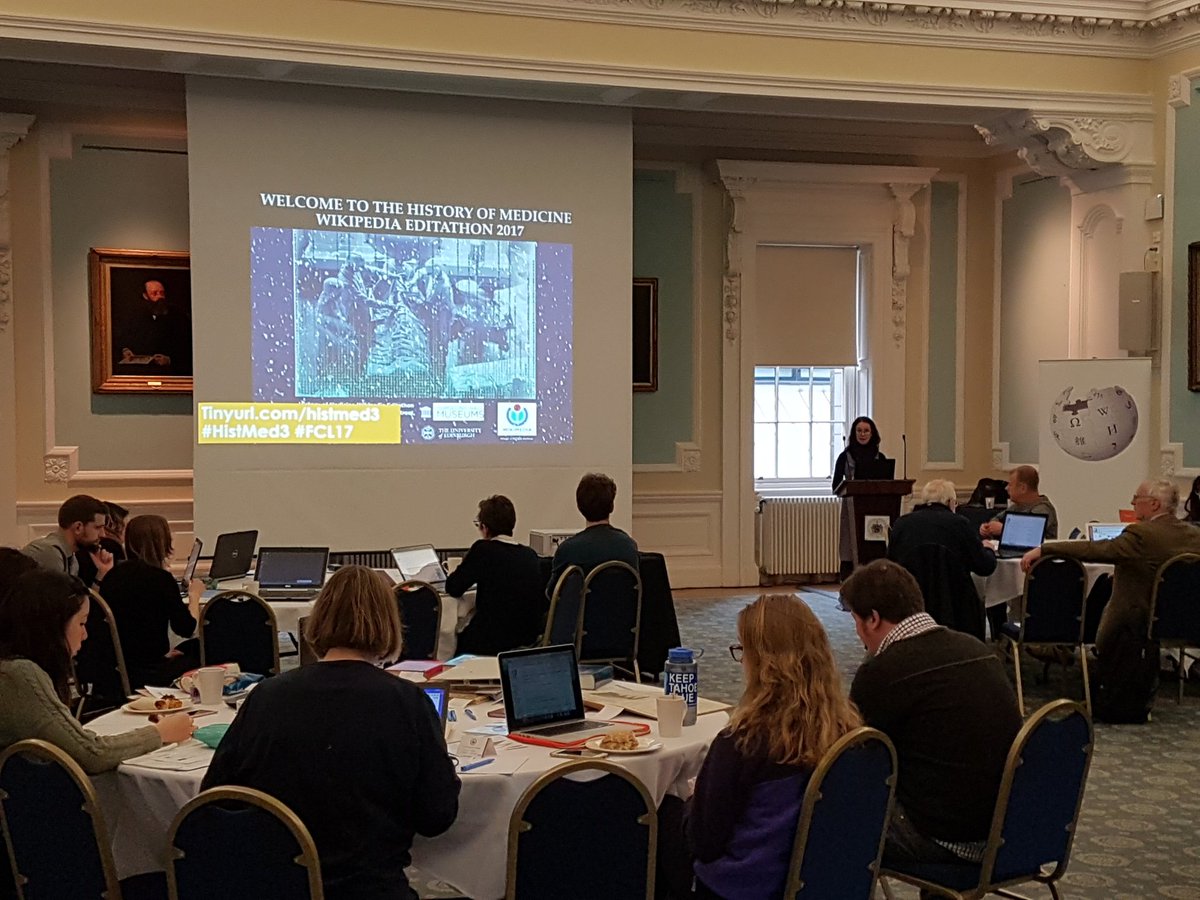
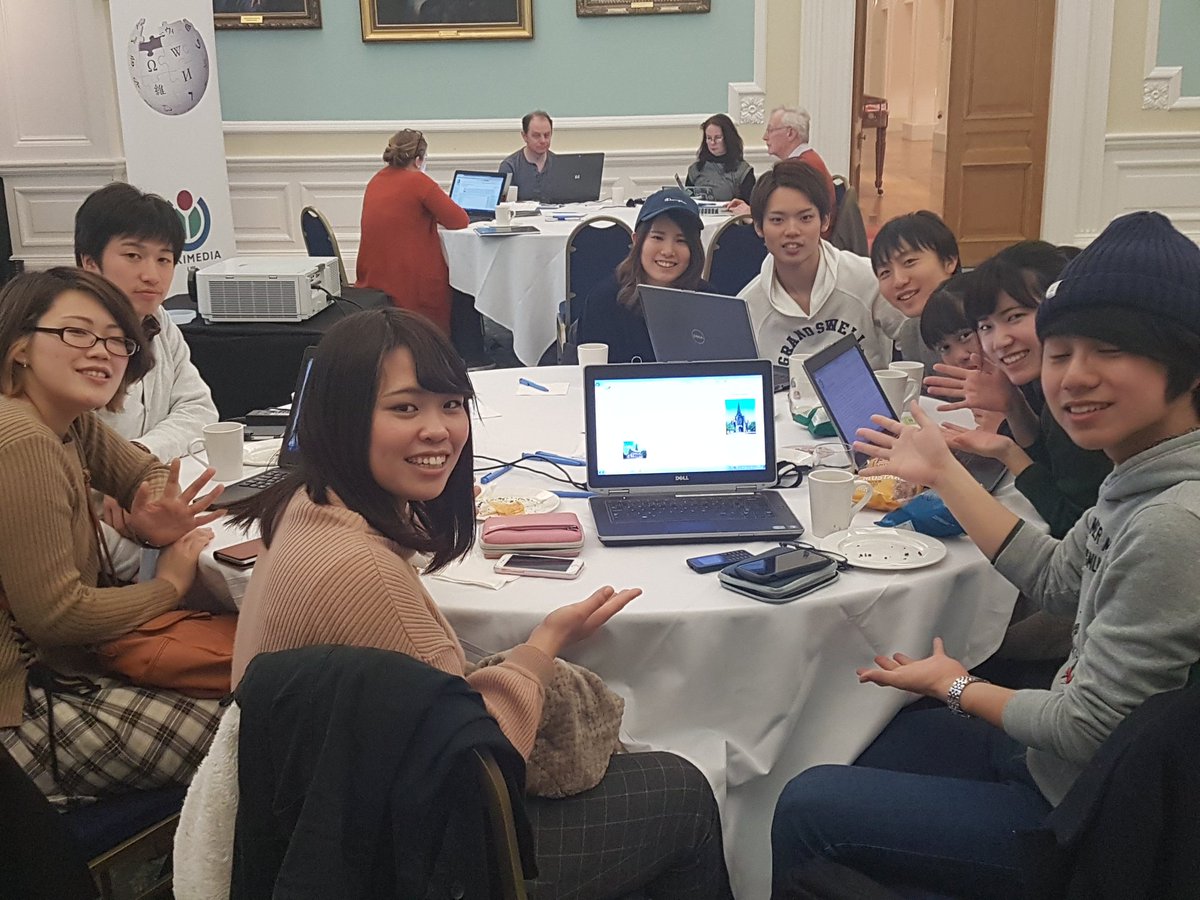
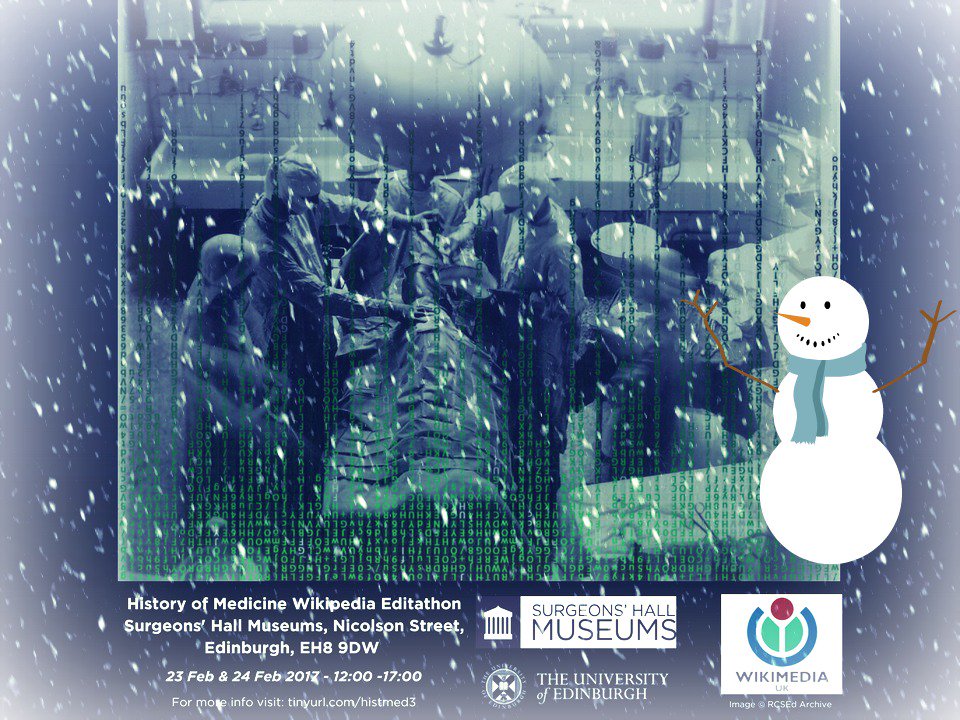
For the third year running, the University of Edinburgh’s Information Services division hosted a ‘History of Medicine’ Wikipedia event; to celebrate the lives & contributions of women in medicine, over sixty years of Nursing Studies & seventy-five years of the Polish School of Medicine. Over the course of two afternoons at the Surgeons’ Hall Museums, we unravelled myths, discovered truths, created new pages & re-wrote existing Wikipedia pages of Scotland’s famous, and infamous, medical figures including gruesome body-snatcher William Burke.
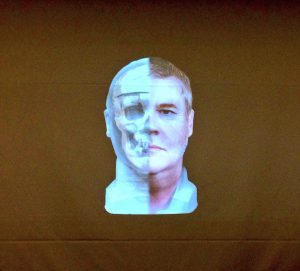
Facial reconstruction of William Burke

Facial reconstruction of William Burke

We were also fortunate to be graced by some excellent guest speakers:

  • Iain MacIntyre – The Scottish and British Societies of the History of Medicine
  • Alice Doyle – The Lothian Health Services Archive
  • Steve Sturdy – The History of Medicine
  • Janet Philp – Uncovering Burke and Hare
  • David Wright – An Illustrated History of Scottish Medicine – the inside story
  • Daisy Cunynghame – The Royal College of Physicians

Articles improved

  • Burke and Hare murders – Image added of facial reconstruction of William Burke. William Burke’s place of birth added as Orrey from his confession. Other corrections made to the article e.g. date of birth and removing the surname Croswhaite from Joseph as no citation and not found in other material.
  • John Barclay (anatomist) – An eminent Scottish comparative anatomist, extramural teacher in anatomy, and director of the Highland Society of Scotland. New paragraph added on Barclay’s candidacy for the chair of comparative anatomy. Further information on Barclay’s Life and organisation.
  • Leith Hospital – 21 paragraphs added.
  • Thomas Keith (doctor) – Added Early life, photographic career, surgical career. A Victorian surgeon and amateur photographer from Scotland. He developed and improved the wax paper process and his photographs are recognised for their composition and use of shade. He was an early practitioner of the operation of ovariotomy (ovarian cystectomy) where his published results were amongst the best in the world.
  • Scottish Women’s Hospitals for Foreign Service – Infobox added and relocated images.
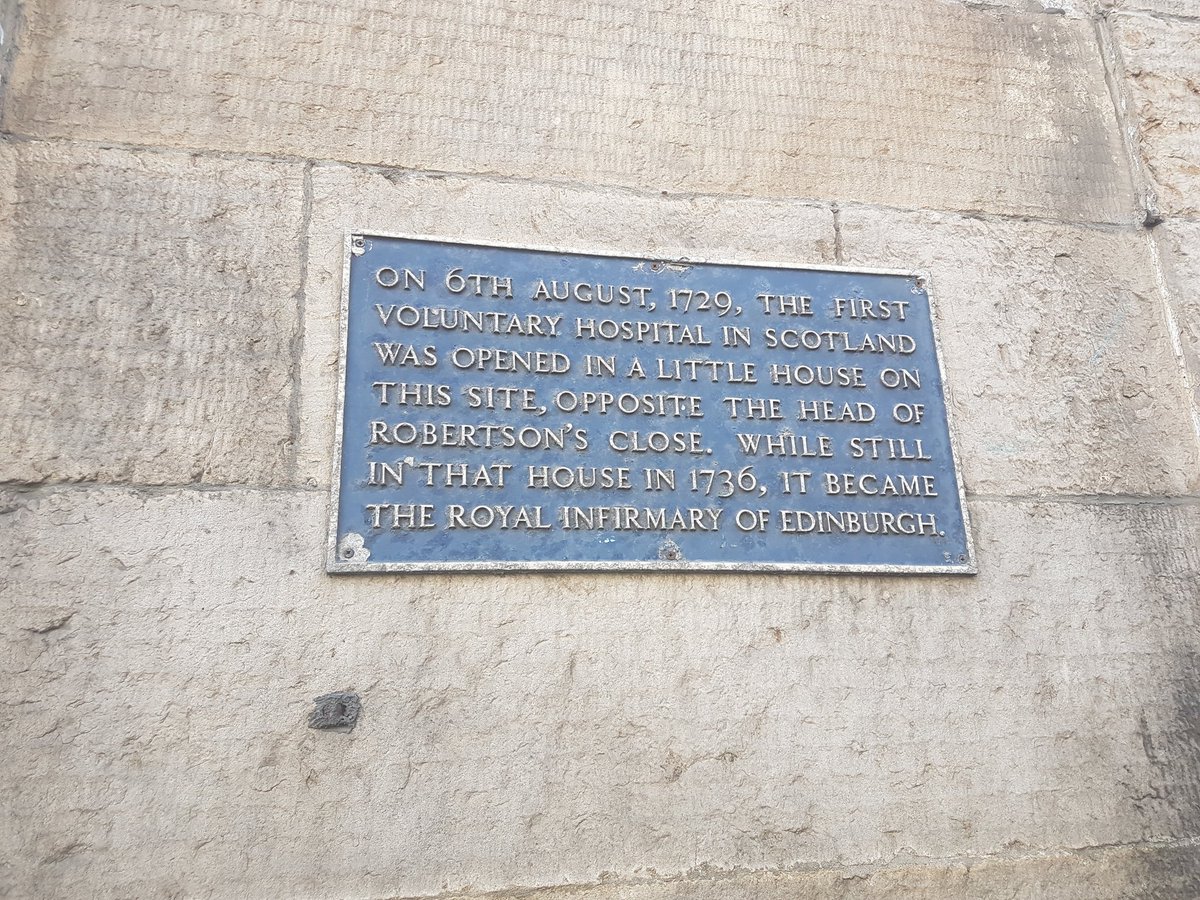
  • Edinburgh Pharmacopoeia – 3 paragraphs added. The Edinburgh Pharmacopoeia was a medical guide consisting of recipes and methods for making medicine. It was first published by the Royal College of Physicians of Edinburgh in 1699 as the Pharmacopoea Collegii Regii Medicorum Edimburgensium. The Edinburgh Pharmacopeia merged with the London and Dublin Pharmacopoeia’s in 1864 creating the British Pharmacopoeia.
  • Royal Hospital for Sick Children, Edinburgh – more information about the future of the hospital added and the various buildings on the current site.
  • Infobox added to Hanna Segal – British psychoanalyst and a follower of Melanie Klein. She was president of the British Psychoanalytical Society, vice-president of the International Psychoanalytical Association, and was appointed to the Freud Memorial Chair at University College, London (UCL) in 1987. James Grotstein considered that “Received wisdom suggests that she is the doyen of “classical” Kleinian thinking and technique.”
  • Information added about the Polish School of Medicine to the article about Francis Albert Eley Crew – English animal geneticist. He was a pioneer in his field leading to Edinburgh’s place as a world leader in the science of animal genetics. He was the first Director of the Institute of Animal Breeding and the first Professor of Animal Genetics. He is said to have laid the foundations of medical genetics.
  • Small amendments and a new Publications section added to Douglas Guthrie – Scottish medical doctor, otolaryngologist and historian of medicine.

Articles created

  • Rebecca Strong – English nurse who pioneered preliminary training for nurses.
  • Kate Hermann – the first female neurology consultant in Scotland. Hermann, who was Jewish, left with her family from Hamburg to London in 1937, fleeing the Nazis. She then moved, in 1938, to Edinburgh to study at the Royal Infirmary under Professor Norman Dott.
  • Anne_Ferguson (physician) – Scottish physician, clinical researcher and expert in inflammatory bowel disease. She was educated at Notre Dame School and The University of Glasgow, graduating with a first class honours degree in Physiology, and winning the Brunton Medal. In 1975 she was appointed as a Senior Lecturer at The University of Edinburgh, also becoming a Consultant at the Gastrointestinal Unit at the Western General Hospital in Edinburgh. In 1987 she was appointed to a personal professorship in gastroenterology, and was honoured by election as a Fellow to the Royal Society of Edinburgh in 1990.
  • Ethel Moir – WW1 nurse with the Scottish Women’s Hospitals for Foreign Service.
  • The Polish School of Medicine – Terrific new illustrated 2200 word article.
  • Henryk Podlewski – Polish doctor who completed his studies at the Polish School of Medicine at the University of Edinburgh during World War II and became the first Psychiatrist to practice in the Bahamas.
  • Nancy Loudon – Scottish gynaecologist. She devoted her professional life to pioneering and ensuring provision of family planning and well woman services. As such she was a fore-runner in what is now the specialty of ‘community gynaecology’. This article is now translated on to the Italian Wikipedia.
  • Krystyna Magdalena Munk – a Polish doctor who completed her studies at the Polish School of Medicine at the University of Edinburgh during World War II.
  • Elizabeth Wilson (doctor) – Family Planning Doctor and Right-to-Die campaigner. She founded the 408 Clinic, and FATE (Friends at the End) in 2000.

Other outcomes and coverage

And this was all despite Storm Doris trying to throw a spanner in the works!

Powered by WordPress & Theme by Anders Norén