
Supporting the University of Edinburgh's commitments to digital skills, information literacy, and sharing knowledge openly

Tag: Wikidata

COMING SOON: Wikidata & Wikisource Showcase for Repo-Fringe

Wikisource logo

Wikisource logo

Wikidata logo

Wikidata logo

For Repo-Fringe 2016, myself and Histropedia’s Navino Evans will be co-presenting a showcase of two of Wikipedia’s sister projects: Wikisource, the free content library, and Wikidata, the structured data knowledge base. With both projects, it is not about what they hold in their repositories so much as what that knowledge means to the user able to access it; be it the experience of being able to commune with the past through Wikisource for those authentic ‘shiver-inducing’ moments of digital contact with library & archival materials or being able to manipulate & visualise structured data through Wikidata, actually querying & utilising information on Wikipedia, as never before in myriad ways. The possibilities for both projects are endless and highlight the importance of curating & safeguarding repositories of open knowledge such as these.

Hence our showcase event, as part of Repository Fringe 2016 on 2nd August at the John McIntyre Conference Centre in Edinburgh, will focus on this and provide practical demonstrations of how to engage with the past, present & future with these two projects.

Consequently, the English teacher part of me has opted for a title which attempts to sum this up:

“It’s not what you do. It’s what it does to you.”

Wikidata and Wikisource Showcase – 2nd August 2016

Engaging with the past, present & future with Wikipedia’s sister projects.

This is a nod to Simon Armitage’s poem, ‘It ain’t what you do, it’s what it does to you‘, a hymn of praise to the experiential.


It ain’t what you do, it’s what it does to you


I have not bummed across America
with only a dollar to spare, one pair
of busted Levi’s and a bowie knife.
I have lived with thieves in Manchester.

I have not padded through the Taj Mahal,
barefoot, listening to the space between
each footfall picking up and putting down
its print against the marble floor. But I

skimmed flat stones across Black Moss on a day
so still I could hear each set of ripples
as they crossed. I felt each stone’s inertia
spend itself against the water; then sink.

I have not toyed with a parachute cord
while perched on the lip of a light-aircraft;
but I held the wobbly head of a boy
at the day centre, and stroked his fat hands.

And I guess that the tightness in the throat
and the tiny cascading sensation
somewhere inside us are both part of that
sense of something else. That feeling, I mean.

In addition, I am reminded of another poem on the power of the experiential:

The famous aviation poem written in 1941 by 19-year-old Pilot Officer John Gillespie Magee Jr, three months before he was killed.

Oh! I have slipped the surly bonds of earth,
And danced the skies on laughter-silvered wings;
Sunward I’ve climbed, and joined the tumbling mirth
Of sun-split clouds, –and done a hundred things
You have not dreamed of –Wheeled and soared and swung
High in the sunlit silence. Hov’ring there
I’ve chased the shouting wind along, and flung
My eager craft through footless halls of air…
Up, up the long, delirious, burning blue
I’ve topped the wind-swept heights with easy grace
Where never lark or even eagle flew —
And, while with silent lifting mind I’ve trod
The high untrespassed sanctity of space,
Put out my hand, and touched the face of God.
Whisky (and Projects) Galore!

The residency so far

The residency so far

As the dust settled after the hectic days of Spy Week 2016 and OER16 came to a close and the university exam period came and went, I was left thinking… what’s next?

Projects in development (from the University of Edinburgh Wikimedia residency page)

  • History of Veterinary Medicine edit-a-thon – Event for Royal (Dick) School of Veterinary Studies staff to research & create articles relating to the history of veterinary medicine. 4th July 2016
  • Euro Stem Cell Editathon at Centre for Regenerative Medicine, Edinburgh. Editathon for UoE staff and Eurostemcell partner labs in Europe & at the Wellcome Library.
  • Wikidata (& WikiSource) Showcase (with Pauline Ward & Histropedia’s Navino Evans) at the John McIntyre Conference Centre JMCC – 1st & 2nd August 2016
  • Reproductive Medicine Edit-a-thon (with Dr. Chris Harlow) – 21 September and 28 September. Partnering with West Virginia University.
  • Vet School Wikipedia research session – Edit-a-thon event for Royal (Dick) School of Veterinary Studies students to research & create new Wikipedia articles on Veterinary Medicine. Proposed for October 5th 2016.
  • International Alumni project – Celebrating the international students who studied at Edinburgh University and gone on to have a huge impact abroad (including simultaneous editathons, hopefully, in Singapore & Hong Kong to create a global edit-a-thon). Mooted for early October 2016 for Black History Month.
  • Ada Lovelace Day – Tuesday 11th October 2016 – celebrating the achievements of Women in STEM with a particular focus on female mentors given that Mary Somerville will grace the new £10 note. Truly noteworthy.
  • Day of the Dead editathon – Monday 31st October 2016 – using the obituaries from Scottish & UK newspapers to recognise & celebrate the lives of those sadly passed away.
  • Edinburgh Gothic (agreed a partnership with the National Library of Scotland) – Saturday 12th November. Marking the day before Robert Louis Stevenson Day, the National Library of Scotland will join us to celebrate the best of Edinburgh Gothic, releasing Robert Louis Stevenson images into the public domain to Wikicommons (wherever possible) and any additional material not yet transcribed onto Wikisource. Looking to see if we can combine efforts in gothic art, gothic history, gothic costume design, gothic music, gothic film, gothic literature etc. to fill any gaps on Wikipedia… in the most macabre way.
  • The Kelvin Hall relaunch (in Glasgow) – mooted for late November / early December 2016 (again in collaboration with the National Library of Scotland). The idea is to create an edit-a-thon based on the Moving Image Archive by showing participants short films from the archive on the Video Wall there, creating Wikipedia articles for the films & filmmakers, and showing a longer film afterwards at the Hunterian cinema.
  • Translate-a-thon – Reaching out to bilingual and multi-lingual students to translate articles from English Wikipedia to their own native language Wikipedia (& vice versa) using Wikipedia’s new Content Translation tool.
  • Festival of Architecture 2016 – An architecture-themed editathon to celebrate the achievements of architects for the Festival of Architecture 2016.
Whisky Galore

Whisky Galore

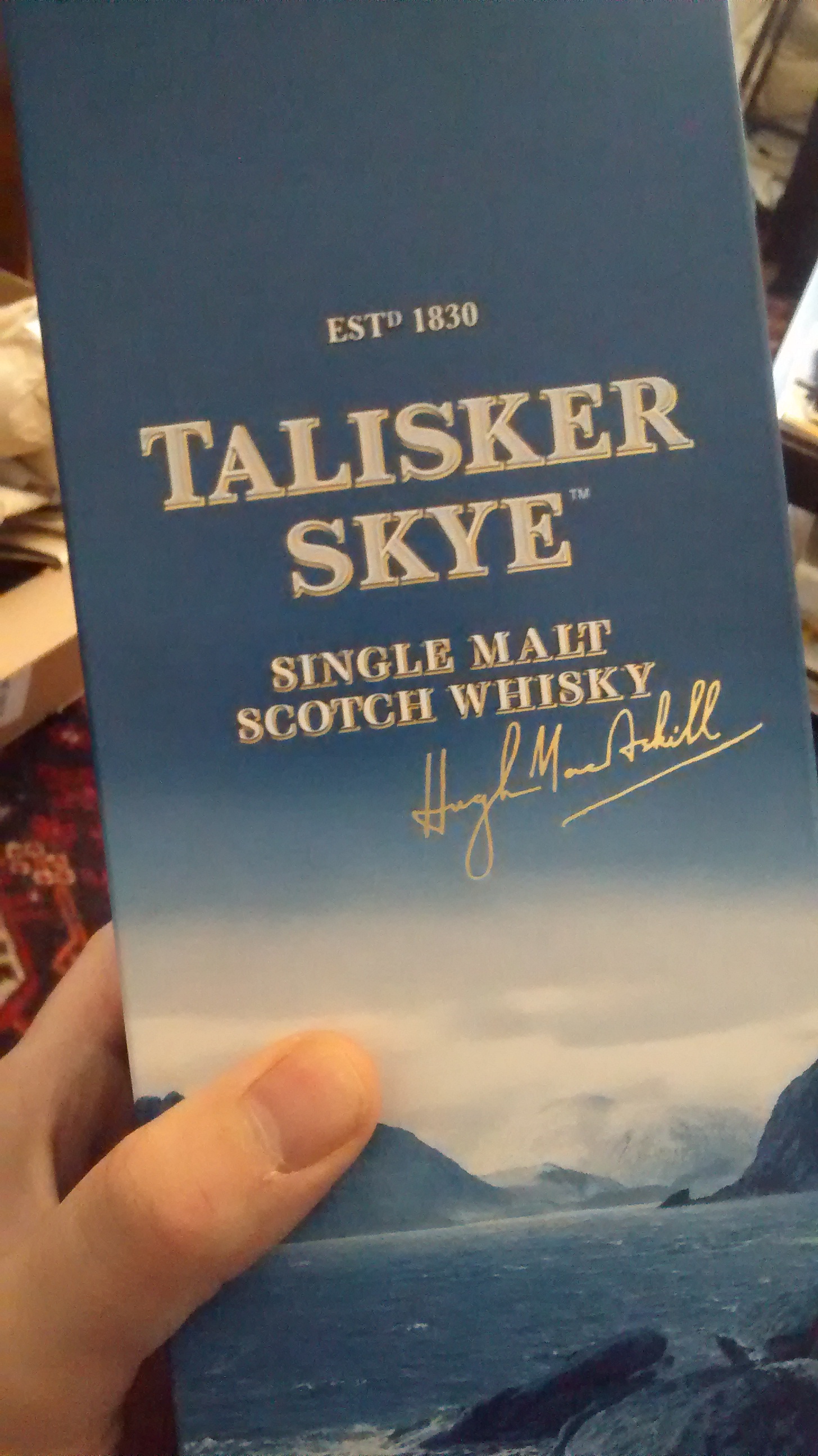
And the whisky? It seems my less than unsubtle hints following my trip to Skye in April resulted in my getting a fair few bottles for my birthday.

Projects and whisky galore. Lots to be excited about and lots to get on with!


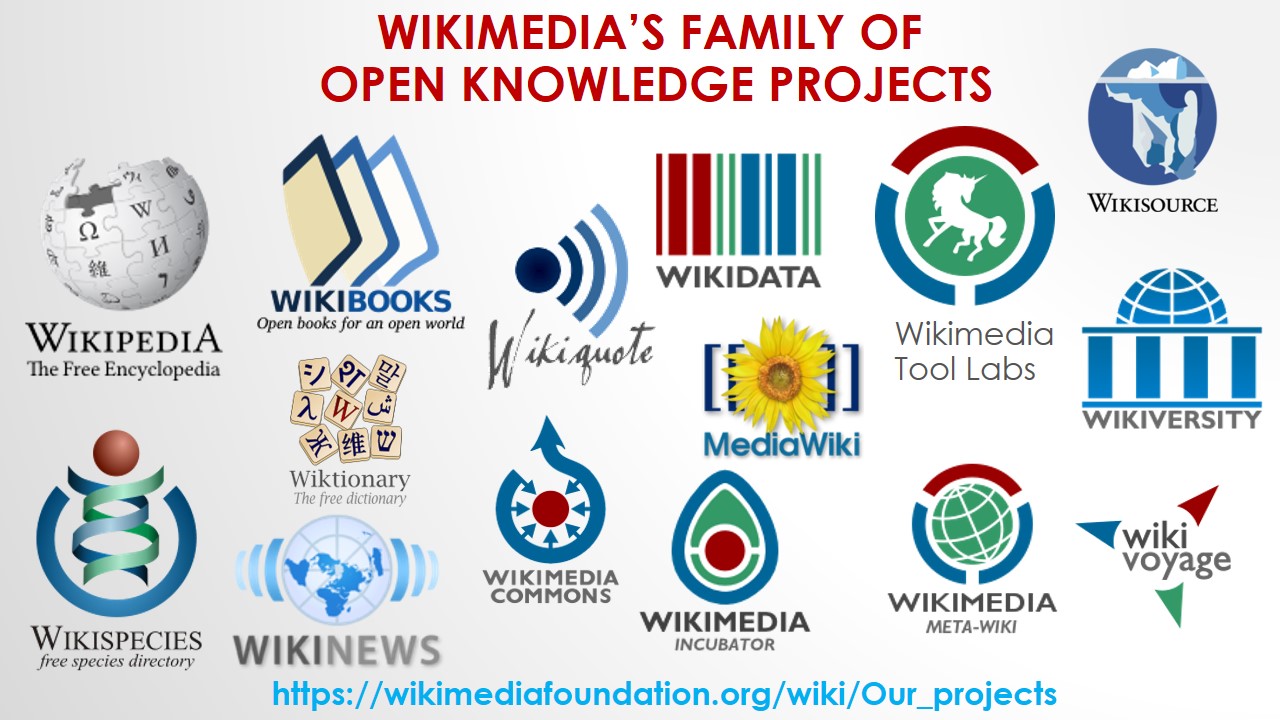
A smorgasbord of Wikimedia projects to choose from: not just Wikipedia!

In visiting a lot of different people of places over the last two months, one question keeps cropping up: what is the difference between Wikimedian and Wikipedian?

Which is a fair question.

Ultimately, Wikimedia UK is the parent or umbrella body, a charitable non-profit foundation (the UK chapter of the global Wikimedia movement which has its HQ in San Francisco) which exists to support & promote Wikimedia’s projects in the UK: one of which happens to be its main open Knowledge project, Wikipedia.

From the Wikimedia Foundation’s FAQs:

“What is Wikipedia?

Wikipedia is the largest collection of free, collaborative knowledge in human history. Millions of people from around the world have written and added to Wikipedia since it was created in 2001: anyone can edit it, at any time. Wikipedia contains more than 35 million volunteer-authored articles in more than 290 languages. Every month, Wikipedia is viewed more than 15 billion times, making it one of the most popular sites in the world. The people who support it are united by the joy of knowledge, their passion and curiosity, and their awareness that we know much more together than any of us does alone.

What is the Wikimedia Foundation?

The Wikimedia Foundation is the non-profit organization that supports and operates Wikipedia and the other free knowledge projects. All of our work is guided by our mission to share the sum of all knowledge with every person in the world. We keep the websites fast, secure, and available. We support the community of volunteers who contribute to the Wikimedia projects. We make free knowledge accessible wherever you are — on your phone or laptop, on a boat in the South Pacific, or in the hills of Nepal. We help bring new knowledge online, lower barriers to access, and make it easier for everyone to share what they know.”

However, while Wikipedia draws the most attention, there are numerous ways where staff & students can get involved & directly contribute their knowledge & expertise to develop Wikimedia UK’s diverse range of projects.

Slide10

Not just Wikipedia: Wikimedia UK’s diverse range projects (above).


Wikisource, for instance, is a ‘free content library of source texts’ with some 300,000+ source texts which anyone can use.

Wikimedia Commons is our media repository with over 30 million freely usable media files to which anyone can contribute to and re-use.

Wikibooks, an open-content textbooks collection that anyone can edit, has been utilised by some academic institutions (notably Greg Singh, lecturer  in Communications, Media & Culture at the University of Stirling) as an assessed part of their courses where students work in research groups to contribute chapters to create a brand new textbook, the Digital Media & Culture Yearbook.

Wikidata, in particular, as Wikipedia’s newest sister project offers up a wealth of possibilities as a structured database of all human knowledge which is readable by humans and machines. For example, the Histropedia website makes good use of the data Wikidata harnesses in order to create visually stimulating & dynamic timelines: be it as straightforward as a timeline of University of Edinburgh alumni or something much more bespoke: such as a timeline of descendants of Robert the Bruce, who are female, and born in Denmark.

Example timeline from Histropedia

Example timeline from Histropedia

As the residency continues, I hope to explore each of these projects a bit further (and others besides) and see if any collaborations can be achieved which mutually benefit the university and Wikimedia in adding open knowledge content to these projects. So watch this space… and if you have any questions about any of the projects then let me know.

Page 3 of 3

Powered by WordPress & Theme by Anders Norén