Supporting the University of Edinburgh's commitments to digital skills, information literacy, and sharing knowledge openly

Tag: Research Skills

Digital Volunteering with Wikipedia – open for 2025/2026 student participation

Digital Volunteering with Wikipedia

The fourth year of the Edinburgh Award for Digital Volunteering with Wikipedia concluded on 31st March 2025.

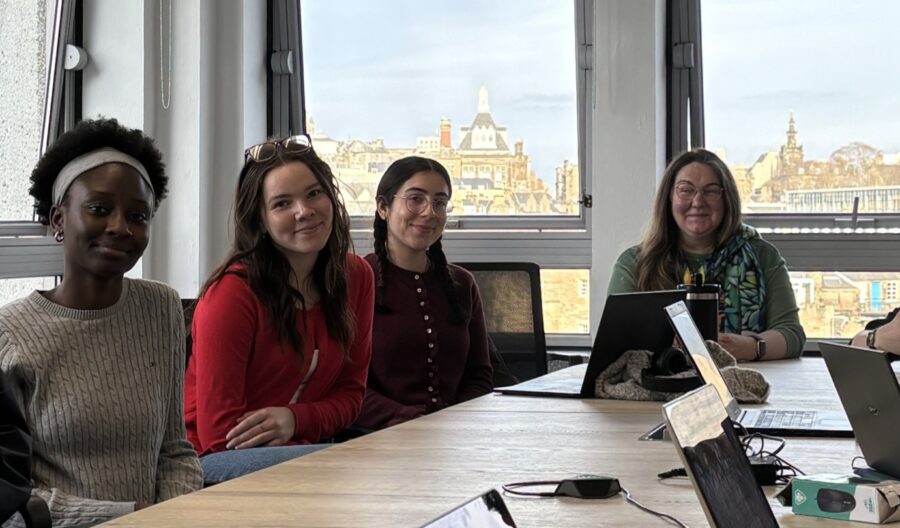
Seven students (and one staff volunteer) completed this extracurricular digital research project amassing both the requisite 55-80 hours of volunteering time AND the significant & demonstrable impact in improving the topic coverage of their chosen project area on the free and open encyclopedia, Wikipedia.

Their projects covered a wide range of topics which often complemented their studies (and at times provided a respite/holiday from their studies) as well as, importantly, enhancing & evidencing their graduate capabilities and digital research skills in such diverse project areas as:

By the award’s completion, our 2025 Edinburgh Award achievers had contributed over 80,000 words and 1200 references to the largest reference work on the internet, and their work had amassed over 1 million pageviews from interested readers all around the world.

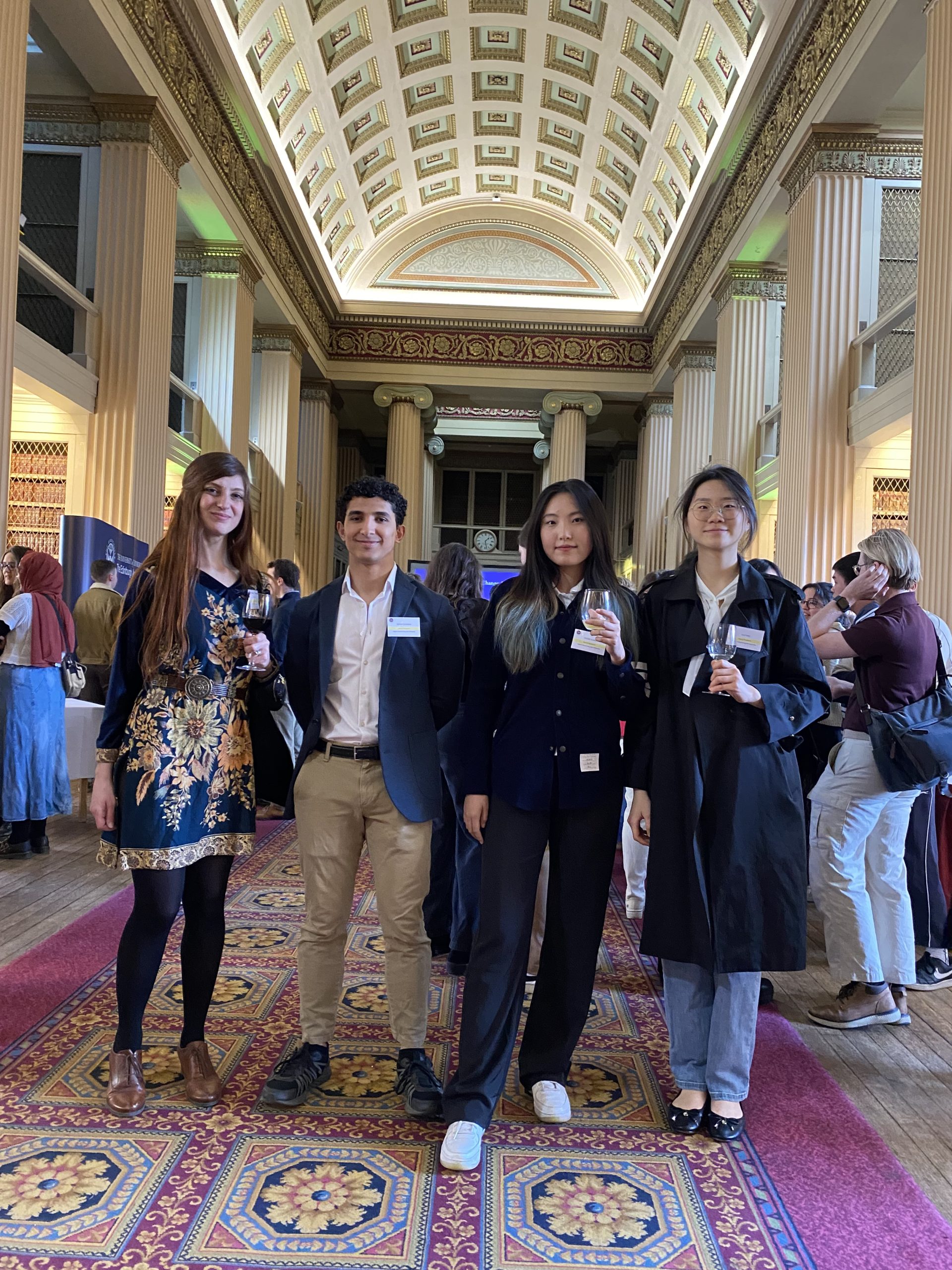
The student achievers were then presented with their certificate of completion, and record of their achievement added on their Higher Education Achievement Report, at a celebration event evening for all Edinburgh Award achievers at the University’s Playfair Library during Reading Week in April.

Watch the 2024/2025 short video presentations on Media Hopper and consider volunteering for this year’s award commencing with a workshop on 21 October 2025 where you can meet other participants and formally enroll.

Register your interest here

And we look forward to working with you and toasting your Award success!

Here’s an example ‘end of award’ presentation by one of our 2023 achievers, Ana Aldazabal (pictured above on left), on her project on Latin American literature (suggested by Professor Fiona Mackintosh).

NB: If you are a member of staff at the University then you can also get involved by suggesting topic areas and/or resources (like course reading lists) that would be helpful and of interest to the students for project idea inspiration as to where they could so some good improving topic coverage on Wikipedia.

This adds to the fascinating work of our past award achievers who have helped improve global understanding on other underrepresented topics such as:

Find out more on our website.

Computer Keyboard with an AI button lit up

Wikipedia at 24: Wikipedia and Artificial Intelligence

Wikipedia at 24

“With more than 250 million views each day, Wikipedia is an invaluable educational resource”.[1]

In light of Wikipedia turning 24 years this  (January 15th), and the Wikimedia residency at the University of Edinburgh turning 9 years old this week too, this post is to examine where we are with Wikipedia today in light of artificial intelligence and the ‘existential threat’ it poses to our knowledge ecosystem. Or not. We’ll see.

NB: This post is especially timely given also Keir Starmer’s focus on “unleashing Artificial Intelligence across the UK” on Monday[2][3] and our Principal’s championing of the University of Edinburgh as “a global centre for artificial intelligence excellence, with an emphasis on using AI for public good” this week.

Before we begin in earnest

Wikipedia has been, for some time, preferentialised in the top search results of Google, the number one search engine. And “search is the way we live now” (Darnton in Hillis, Petit & Jarrett, 2013, p.5)…. whether that stays the same remains to be seen with the emergence of chat-bots and ‘AI summary’ services. So it is incumbent on knowledge-generating academic institutions to support staff and students in navigating a robust information literacy when it comes to navigating the 21st century digital research skills necessary in the world today and understanding how knowledge is created, curated and disseminated online.

Engaging with Wikipedia in teaching & learning has helped us achieve these outcomes over the last nine years and supported thousands of learners to become discerning ‘open knowledge activists‘; better able to see the gaps in our shared knowledge and motivated to address these gaps especially when it comes to under-represented groups, topics, languages, histories. Better able also to discern reliable sources from unreliable sources, biased accounts from neutral point of view, copyrighted works from open access. Imbued with the critical thinking, academic referencing skills and graduate competencies any academic institution and employer would hope to see attained.

Further reading

Point 1: Wikipedia is already making use of machine learning

ORES

The Wikimedia Foundation has been using machine learning for years (since November 2015). ORES is a service that helps grade the quality of Wikipedia edits and evaluate changes made. Part of its function is to flag potentially problematic edits and bring them to the attention of human editors. The idea is that when you have as many edits to deal with as Wikipedia does, applying some means of filtering can make it easier to handle.

The important thing is that ORES itself does not make edits to Wikipedia, but synthesizes information and it is the human editors who decide how they act on that information” – Dr. Richard Nevell, Wikimedia UK

MinT

Rather relying entirely on external machine translation models (Google Translate, Yandex, Apertium, LingoCloud), Wikimedia also now has its own machine translation tool, MinT (Machine in Translation) (since July 2023) which is based on multiple state-of-the-art open source neural machine translation models [5] including (1) Meta’s NLLB-200 (2) Helsinki University’s OPUS (3)  IndicTrans2  (4)  Softcatalà.

The combined result of which is that more than 70 languages are now supported by MinT that are not supported by other services (including 27 languages for which there is no Wikipedia yet).[5]

“The translation models used by MinT support over 200 languages, including many underserved languages that are getting machine translation for the first time”.[6]

Machine translation is one application of AI or more accurately large language models that many readers may be familiar with. This aids with the translation of knowledge from one language to another, to build understanding between different languages and cultures. The English Wikipedia doesn’t allow for unsupervised machine translations to be added into its pages, but human editors are welcome to use these tools and add content. The key component is human supervision, with no unedited or unaltered machine translation permitted to be published on Wikipedia. We made use of the Content Translation tool on the Translation Studies MSc for the last eight years to give our students meaningful, practical published translation experience ahead of the world of work.

Point 2: Recent study finds artificial intelligence can aid Wikipedia’s verifiability

“It might seem ironic to use AI to help with citations, given how ChatGPT notoriously botches and hallucinates citations. But it’s important to remember that there’s a lot more to AI language models than chatbots….”[7]

SIDE – a potential use case

A study published in Nature Machine Intelligence in October 2023 demonstrated that the use of SIDE, a neural network based machine intelligence, could aid the verifiability of the references used in Wikipedia’s articles.[8] SIDE was trained using the references in existing ‘Featured Articles‘ on Wikipedia (the 8,000+ best quality articles on Wikipedia) to help flag citations where the citation was unlikely to support the statement or claim being made. Then SIDE would search the web for better alternative citations which would be better placed to support the claim being made in the article.

The paper’s authors observed that for the top 10% of citations tagged as most likely to be unverifiable by SIDE, human editors preferred the system’s suggested alternatives compared with the originally cited reference 70% of the time‘.[8]

What does this mean?

“Wikipedia lives and dies by its references, the links to sources that back up information in the online encyclopaedia. But sometimes, those references are flawed — pointing to broken websites, erroneous information or non-reputable sources.” [7]

This use case could, theoretically, save time for editors in checking the accuracy and verifiability of citations in articles BUT computational scientist at the University of Zurich, Aleksandra Urman, warns that this would only be if the system was deployed correctly and “what the Wikipedia community would find most useful”.[8]

Indeed, practical implementation and actual usefulness remains to be seen BUT the potential there is acknowledged by some within the Wikimedia and open education space:

“This is a powerful example of machine learning tools that can help scale the work of volunteers by efficiently recommending citations and accurate sources. Improving these processes will allow us to attract new editors to Wikipedia and provide better, more reliable information to billions of people around the world.” – Dr. Shani Everstein Sigalov, educator and Free Knowledge advocate.

One final note is that Urman pointed out that Wikipedia users testing the SIDE system were TWICE as likely to prefer neither of the references as they were to prefer the ones suggested by SIDE. So the human editor would still have to go searching for the relevant citation online in such instances.

Point 3: ChatGPT and Wikipedia

Do people trust ChatGPT more than Google Search and Wikipedia?

No, thankfully. A focus group and interview study published in 2024 revealed that not all users trust ChatGPT-generated information as much as Google Search and Wikipedia.[9]

Has the emergence and use of ChatGPT affected engagement with Wikipedia?

In November 2022, ChatGPT was released to the public and quickly became a popular source of information, serving as an effective question-answering resource. Early indications have suggested that it may be drawing users away from traditional question answering services.

A 2024 paper examined Wikipedia page visits, visitor numbers, number of edits and editor numbers in twelve Wikipedia languages. These metrics were compared with the numbers before and after the 30th of November 2022 when ChatGPT released. The paper’s authors also developed a panel regression model to better understand and quantify any differences. The paper concludes that while ChatGPT negatively impacted engagement in question-answering services such as StackOverflow, the same could not be said, as of yet, to Wikipedia. Indeed, there was little evidence of any impact on edits and editor numbers and any impact seems to have been extremely limited.[10]

Wikimedia CEO Maryana Iskander states,

“We have not yet seen a drop in page views on the Wikipedia platform since ChatGPT launched. We’re on it. we’re paying close attention, and we’re engaging, but also not freaking out, I would say.”[11]

Do Wikipedia editors think ChatGPT or other AI generators should be used for article creation?

“AI generators are useful for writing believable, human-like text, they are also prone to including erroneous information, and even citing sources and academic papers which don’t exist. This often results in text summaries which seem accurate, but on closer inspection are revealed to be completely fabricated.”[12]

Author of Should You Believe Wikipedia?: Online Communities and the Construction of Knowledge, Regents Professor Amy Bruckman states large language models are only as good as their ability to distinguish fact from fiction… so, in her view, they [LLMs] can be used to write content for Wikipedia BUT only ever as a first draft which can only be made useful if it is then edited by humans and the sources cited checked by humans also.[12]

Unreviewed AI generated content is a form of vandalism, and we can use the same techniques that we use for vandalism fighting on Wikipedia, to fight garbage coming from AI.” stated Bruckman.[12]

Wikimedia CEO Maryana Iskander agrees,

There are ways bad actors can find their way in. People vandalize pages, but we’ve kind of cracked the code on that, and often bots can be disseminated to revert vandalism, usually within seconds. At the foundation, we’ve built a disinformation team that works with volunteers to track and monitor.[11]

For the Wikipedia community’s part, a draft policy setting out the limits of usage of artificial intelligence on Wikipedia in article generation has been written to help editors avoid any copyright violations being posted on a open-licensed Wikipedia page or anything that might open Wikipedia volunteers up to libel suits. While at the same time the Wikimedia Foundation’s developers are creating tools to aid Wikipedia editors to better identify content online that has been written by AI bots. Part of this is also the greater worry that it is the digital news media, more than Wikipedia, that may be more prone to AI-generated content and it is these hitherto reliable news sources that Wikipedia editors would like to cite normally.

“I don’t think we can tell people ‘don’t use it’ because it’s just not going to happen. I mean, I would put the genie back in the bottle, if you let me. But given that that’s not possible, all we can do is to check it.”[12]

As what is right or wrong or missing on Wikipedia spreads across the internet then the need to ensure there are enough checks and balances and human supervision to avoid AI-generated garbage being replicated on Wikipedia and then spreading to other news sources and other AI services means we might be in a continuous ‘garbage-in-garbage-out’ spiral to the bottom that Wikimedia Sweden‘s John Cummings termed the Habsburg AI Effect (i.e. a degenerative ‘inbreeding’ of knowledge, consuming each other in a death loop, getting progressively and demonstrably worse and more ill each time) at the annual Wikimedia conference in August 2024. Despite Wikipedia and Google’s interdependence, the Wikipedia community itself is unsure it wants to enter any kind of unchecked feedback loop with ChatGPT whereby OpenAI consumes Wikipedia’s free content to train its models to then feed into other commercial paywalled sites when ChatGPT’s erroneous ‘hallucinations’ might have been feeding, in turn, into Wikipedia articles.

It is true to say that while Jimmy Wales has expressed his reluctance to see ChatGPT used as yet (“It has a tendency to just make stuff up out of thin air which is just really bad for Wikipedia — that’s just not OK. We’ve got to be really careful about that.”)[13] other Wikipedia editors have expressed their willingness to use it get past the inertia and “activation energy” of the first couple of paragraphs of a new article and, with human supervision (or humans as Wikipedia’s “special sauce”, if you will), this could actually help Wikipedia create greater numbers of quality articles to better reach its aim of becoming the ‘sum of all knowledge’.[14]

One final suggestion posted on the Wikipedia mailing list has been the use of the BLOOM large language model which makes use of Responsible AI Licences (RAIL)[15]

“Similar to some versions of the open Creative Commons license, the RAIL license enables flexible use of the AI model while also imposing some restrictions—for example, requiring that any derivative models clearly disclose that their outputs are AI-generated, and that anything built off them abide by the same rules.”[12]

A Wikimedia Foundation spokesperson stated that,

Based on feedback from volunteers, we’re looking into how these models may be able to help close knowledge gaps and increase knowledge access and participation. However, human engagement remains the most essential building block of the Wikimedia knowledge ecosystem. AI works best as an augmentation for the work that humans do on our project.”[12]

Point 4: How Wikipedia can shape the future of AI

WikiAI?

In Alek Tarkowski’s 2023 thought piece he views the ‘existential challenge’ of AI models becoming the new gatekeepers of knowledge (and potentially replacing Wikipedia) as an opportunity for Wikipedia to think differently and develop its own WikiAI, “not just to protect the commons from exploitation. The goal also needs to be the development of approaches that support the commons in a new technological context, which changes how culture and knowledge are produced, shared, and used.”[16] However, in discussion at Wikimania in August 2024, this was felt to be outwith the realms of possibility given the vast resources and financing this would require to get off the ground if tackled unilaterally by the Foundation.

Blacklisting and Attribution?

For Chris Albon, Machine Learning Director at the Wikimedia Foundation, using AI tools has been part of the work of some volunteers since 2002. [17] What’s new is that there may be more sites online using AI-generated content. However, Wikipedia has existing practice of blacklisting sites/sources once it has become clear they are no longer reliable. More concerning is the emerging disconnect whereby AI models can provide ‘summary’ answers to questions without linking to Wikipedia or providing attribution that the information is coming from Wikipedia.

Without clear attribution and links to the original source from which information was obtained, AI applications risk introducing an unprecedented amount of misinformation into the world. Users will not be able to easily distinguish between accurate information and hallucinations. We have been thinking a lot about this challenge and believe that the solution is attribution.”[17]

Gen-Z?

For Slate writer, Stephen Harrison, while a significant number of Wikipedia contributors are already gen Z (about 20% of Wikipedia editors are aged 18-24 according to a 2022 survey) there is a clear desire to increase this percentage within the Wikipedia community, not least to ensure the continuing relevance of Wikipedia within the knowledge ecosystem.[18] I.e. if Wikipedia becomes reduced to mere ‘training data’ for AI models then who would want to continue editing Wikipedia and who would want to learn to edit to carry on the mantle when older editors dwindle away? Hence, recruiting more younger editors from generation Z and raising their awareness of how widely Wikipedia content is used across the internet and how they can derive a sense of community and a shared purpose from sharing fact-checked knowledge, plugging gaps and being part of something that feels like a world-changing endeavour.[18]

WikiProject AI Cleanup

There is already an existing project is already clamping down on AI content on Wikipedia, according to Jiji Veronica Kim[19] Volunteer editors on the project are making use of the help of AI detecting tools to:

  • Identify AI generates texts, images.
  • Remove any unsourced claims
  • Remove any posts that do not comply with Wiki policies.

“The purpose of this project is not to restrict or ban the use of AI in articles, but to verify that its output is acceptable and constructive, and to fix or remove it otherwise….In other words, check yourself before you wreck yourself.“.[19]

Point 5: Wikipedia as a knowledge destination and the internet’s conscience

Wikipedia in the Classroom – the Edinburgh Residency

Wikimedia at the University of Edinburgh

Reasons to engage in the conversation

With about 17 billion page views every month, it’s safe to say that most of us have heard of Wikipedia and maybe even use it on a regular basis. However, most people don’t realise that Wikipedia is the tip of the iceberg. Its sister sites include a media library (Wikimedia Commons), a database (Wikidata), a library of public domain texts (Wikisource), and even a dictionary (Wiktionary) – along with many others, these form the Wikimedia websites.

While the content is all crowd-sourced, the Wikimedia Foundation in the US maintains the hardware and software the websites run on. Wikimedia UK is one of dozens of sister organisations around the globe who support the mission of the Wikimedia websites to share the world’s knowledge.

Today, Wikipedia is the number one information site in the world, visited by 500 million visitors a month; the place that students and staff consult for pre-research on a topic. And considered, according to a 2014 Yougov survey, to be trusted more than the Guardian, BBC, Telegraph and Times. Perhaps because its commitment to transparency is an implicit promise of trust to its users where everything on it can be checked, challenged and corrected.

The University of Edinburgh and Wikimedia UK – shared missions.

Wikimedia at an ancient university

The Edinburgh residency

In January 2016, the University of Edinburgh and Wikimedia UK partnered to host a Wikimedian in Residence for twelve months. This residency marks something of a paradigm shift as the first in the UK in supporting the whole university as part of its commitment to skills development and open knowledge.

Background to the residency

The University of Edinburgh held its first editathon – a workshop where people learn how to edit Wikipedia and start writing – during the university’s midterm Innovative Learning Week in February 2015. Ally Crockford (Wikimedian in Residence at the National Library of Scotland) and Sara Thomas (Wikimedian in Residence at Museums & Galleries Scotland) came to help deliver the ‘Women, Science and Scottish History’ editathon series which celebrated the Edinburgh Seven; the first group of matriculated undergraduate female students at any British university.

Timeline of the Wikimedia residencies in Scotland to date. The University of Edinburgh residency was the first residency in the UK to have a university-wide remit. Martin Poulter was Wikimedian in Residence at the Bodleian Library before beginning a 2nd residency at the University of Oxford on a university-wide remit.


Melissa Highton, Assistant Principal for Online Learning at the University of Edinburgh.

“The striking thing for me was how quickly colleagues within the University took to the idea and began supporting each other in developing their skills and sharing knowledge amongst a multi-professional group. This inspired me to commission some academic research to look at the connections and networking amongst the participants and to explore whether editathons were a good investment in developing workplace digital skills.”Melissa Highton – Assistant Principal for Online Learning.

This research, conducted by Professor Allison Littlejohn, found that there was clear evidence of informal & formal learning going on. Further, that “all respondents reported that the editathon had a positive influence on their professional role. They were keen to integrate what they learned into their work in some capacity and believed participation had increased their professional capabilities.”

Since successfully making case for hosting a Wikimedian in Residence, the residency’s remit has been to advocate for knowledge exchange and deliver training events & workshops across the university which further both the quantity & quality of open knowledge and the university’s commitment to embedding information literacy & digital literacy in the curriculum.

Wikimedia UK and the University of Edinburgh – shared missions

Edinburgh was the first university to be founded with a ‘civic’ mission; created not by the church but by the citizens of Edinburgh for the citizens of Edinburgh in 1583. The mission of the university of Edinburgh is “the creation, curation & dissemination of knowledge”. Founded a good deal later, Wikipedia began on January 15th 2001; the free encyclopaedia is now the largest & most popular reference work on the internet.

Wikimedia’s vision is “imagine a world in which every single human being can freely share in the sum of all knowledge”. It is 100% funded by donations and is the only non-profit website in the top ten most popular sites.

Wikipedia – the world’s favourite site for information.

Addressing the knowledge gap

While Wikipedia is the free encyclopaedia that anyone can edit, not everyone does. Of the 80,000 or so monthly contributors to Wikipedia, only around 3000 are termed very active Wikipedians; meaning the world’s knowledge is often left to be curated by a population the size of a village (roughly the size of Kinghorn in Fife… or half of North Berwick). While 5.4 million articles in English Wikipedia is the largest of the 295 active language Wikipedias, it is estimated that there would need to be at least 104 million articles on English Wikipedia alone to cover all the notable subjects in the world. That means as of last month, English Wikipedia is missing approximately 99 million articles.

Less than 15% of women edit Wikipedia and this skews the content in much the same way with only 17.1% of biographies about notable women. The University of Edinburgh has a commitment to equality and diversity and our Wikimedia residency therefore has a particular emphasis on open practice and engaging colleagues in discussing why some areas of open practice do have a clear gender imbalance. In this way many of our Wikipedia events focused on addressing the gender gap as part of the university’s commitment to Athena Swan; creating new role models for young and old alike. Role models like Janet Anne Galloway, advocate for higher education for women in Scotland, Helen Archdale (journalist and suffragette), Mary Susan McIntosh (sociologist and LGBT campaigner) among many many more.

Pages created at Women in Red meetings at the University of Edinburgh editing sessions.

That’s why it is enormously pleasing that over the whole year, 65% of attendees at our events were female.

Sharing knowledge

The residency has, at its heart, been about making connections. Both across the university’s three teaching colleges and beyond; with the city of Edinburgh itself. Demonstrating how staff, students and members of the public can most benefit from and contribute to the development of the huge open knowledge resource that are the Wikimedia projects. And we made some significant connections over the last year in all of these areas.

Inviting staff & students from all different backgrounds and disciplines to contribute their time and expertise to the creation & improvement of Wikipedia articles in a number of events has worked well and engendered opportunities for collaborations and knowledge exchange across the university, with other institutions across the UK; and across Europe in the case of colleagues from the MRC Centre for Regenerative Medicine working with research partner labs.

Wikipedia in the Classroom – 3 assignments in Year One. Doubled in Year Two.

Ultimately, what you wanted attendees to get from the experience was this; the idea that knowledge is most useful when it is used; engaged with; built upon. Contributing to Wikipedia can also help demonstrate research impact as there is a lot of work going on to ensure that Wikipedia citations to scholarly works use the DOI. The reason being that Wikipedia is already the fifth largest referrer of traffic through the DOI resolver and this is thought to be an underestimate of its true position.

Not just Wikipedia

Knowledge doesn’t belong in silos. The interlinking of the Wikimedia projects for Robert Louis Stevenson.

Introducing staff and students to the work of the Wikimedia Foundation and the other 11 projects has been a key part of the residency with a Wikidata & Wikisource Showcase held during Repository Fringe in August 2016 which has resulted in some out-of-copyright PhD theses being uploaded to Wikisource, and linked to from Wikipedia, just one click away.

Wikisource is a free digital library which hosts out-of-copyright texts including: novels, short stories, plays, poems, songs, letters, travel writing, non-fiction texts, speeches, news articles, constitutional documents, court rulings, obituaries, and much more besides. The result is an online text library which is free to anyone to read with the added benefits that the text is quality assured, searchable and downloadable.

Sharing content to Wikisource, the free digital library, and linking to Wikipedia one click away.

Wikidata is our most exciting project with many predicting it will overtake Wikipedia in years to come as the dominant project. A free linked database of machine-readable knowledge, Wikidata acts as central storage for the structured data of all 295 different language Wikipedias and all the other Wikimedia sister projects.

Timeline of Female alumni of the University of Edinburgh generated from structured linked open data stored in Wikidata.

 “How can you trust Wikipedia when anyone can edit it?”

This is the main charge levelled against involvement with Wikipedia and the residency has been making the case for re-evaluating Wikipedia and for engendering a greater critical information literacy in staff & students. And that’s the thing. Wikipedia doesn’t want you to cite it. It is a tertiary source; an aggregator of articles built on citations from reliable published secondary sources. In this way it is reframing itself as the ‘front matter to all research.’

Wikipedia has clear policy guidelines to help ensure its integrity.

Verifiability – every single statement on Wikipedia needs to be backed up with a citation from a reliable published secondary source. So an implicit promise is made to our users that you can go on there and check, challenge and correct the verifiability of any statement made on Wikipedia.


No original research – while knowledge is created everyday, until it is published by a reliable secondary source, it should not be on Wikipedia. The presence of editorial oversight is a key consideration in source evaluation therefore, however well-researched, someone’s personal interpretation is not to be included.


Neutral point of view – many subjects on Wikipedia are controversial so can we find common truth in fact? The rule of thumb is you can cover controversy but don’t engage in it. Wikipedians therefore present the facts as they exist.

Automated programmes (bots) patrol Wikipedia and can revert unhelpful edits & copyright violations within minutes. The edit history of a page is detailed such that it is very easy to revert a page to its last good state and block IP addresses of users who break the rules.

What underlies Wikipedia, at its very heart, is this fundamental idea that more people want to good than harm, more people want to create knowledge than destroy, more people want to share than contain. At its core Wikipedia is about human generosity.” – Katherine Maher, Executive Director of the Wikimedia Foundation in December 2016.

This idea that more people want to good than harm has also been borne out by researchers who found that only seven percent of edits could be considered vandalism.


Wikipedia in the Classroom

Developing information literacy, online citizenship and digital research skills.

The residency has met with a great many course leaders across the entire university and the interactions have all been extremely fruitful in terms of understanding what each side needs to ensure a successful assignment and lowering the threshold for engagement.

Translation Studies MSc students have completed the translation of a Wikipedia article of at least 4000 words into a different language Wikipedia last semester and are to repeat the assignment this semester. This time asking students to translate in the reverse direction from last semester so that the knowledge shared is truly a two-way exchange.


The Translation MSc assignment

World Christianity MSc students undertook an 11-week Wikipedia assignment as part of the ‘Selected Themes in the Study of World Christianity’ class. This core course offers candidates the opportunity to study in depth Christian history, thought and practice in and from Africa, Asia and Latin America. The assignment comprised of writing a new article, following a literature review, on a World Christianity term hitherto unrepresented on Wikipedia.

When you hand in an essay the only people that generally read it are you and your lecturer. And then once they both read it, it kind of disappears and you don’t look at it again. No one really benefits from it. With a Wikipedia assignment, other people contribute to it, you put it out there for everyone to read, you can keep coming back to it, keep adding to it, other people can do as well. It becomes more of a community project that everyone can read and access. I really enjoyed it.”Nuam Hatzaw, World Christianity MSc student.

The World Christianity MSc assignment.

Reproductive Biology Honours students in September 2015 researched, synthesised and developed a first-rate Wikipedia entry of a previously unpublished reproductive medicine term: neuroangiogenesis. The following September, the next iteration was more ambitious. All thirty-eight students were trained to edit Wikipedia and worked collaboratively in groups to research and produce the finished written articles. The assignment developed the students’ research skills, information literacy, digital literacy, collaborative working, academic writing & referencing.

One particular deadly form of ovarian cancer, High grade serous carcinoma, was unrepresented on Wikipedia and Reproductive Biology student Áine Kavanagh took great care to thoroughly research and write the article to address this; even developing her own openly-licensed diagrams to help illustrate the article. Her scholarship has now been viewed over sixteen thousand times adding an important source of health information to the global Open Knowledge community.

It was a really good exercise in scientific writing and writing for a lay audience. As a student it’s a really good opportunity. It’s a really motivating thing to be able to do; to relay the knowledge you’ve learnt in lectures and exams, which hasn’t really been relevant outside of lectures and exams, but to see how it’s relevant to the real world and to see how you can contribute.” –Áine Kavanagh.

The Reproductive Biology Hons. assignment.

Following a successful multidisciplinary approach, including students and staff all collaborating in the co-creation & sharing of knowledge, the residency has been extended into a third year until January 2019. Twenty members of staff have also now been trained to provide Wikipedia training and advice to colleagues to help with the sustainability of the partnership in tandem with support from Wikimedia UK.

While also ensuring Wikipedia editing is both embedded in regular digital skills workshops, demystifying how to begin editing Wikipedia has been a core focus of the residency, utilising Wikipedia’s new easy-to-use Visual Editor interface. Over two hundred videos and video tutorials, lesson plans, case studies, booklets and handouts have been created & curated in order to lower the threshold for staff and students to be able to engage with the Wikimedia projects in the years ahead.

The way ahead

Ten years after Wikipedia first launched, the Chronicle of Higher Education published an article by the vice president of Oxford University of Press acclaiming that ‘Wikipedia had come of age’ and that it was time Wikipedia played a vital role in formal education settings. Since that article, the advent of ‘Fake News’ has engendered discussions around how best to equip students with a critical information literacy. For Wikipedia editors this is nothing new as they have been combatting fake news for years and source evaluation is one of the Wikipedian’s core skills.

In fact, there is increasing synchronicity in that the skills and experiences that universities and PISA are articulating they want to see students endowed with are ones that Wikipedia assignments help develop. The assignments we have run this year have all demonstrated this and are to be repeated as a result. The case for Wikipedia playing a vital role in formal education settings has never been stronger.

Is now the time for Wikipedia to come of age?

If not now, then when?

Course leaders at Edinburgh University

Postscript: All three assignments from 2016/2017 are continuing in 2017/2018 because of the positive feedback from staff and students alike.

These are being augmented with collaborations with:

  • two student societies; the History Society for Black History Month and the Translation Society on a Wikipedia project to give their student members much-needed published translation practice.
  • Library and University Collections to add source metadata from 27,000 records in the Edinburgh Research Archive to Wikidata and 20+ digitised theses to Wikisource
  • a further three in-curriculum collaborations in Digital Sociology MSc, Global Health and Anthropology MSc and Data Science for Design MSc.
  • the Fruitmarket Gallery and the university’s Centre for Design Informatics for a Scottish Contemporary Artists editathon.
  • A Litlong editathon as part of the AHRC ‘Being Human’ festival.
  • The School of Chemistry for Ada Lovelace Day to celebrate women in STEM.
  • the University Chaplaincy to mark the International Storytelling Festival.
  • Teeside University to run a ‘Regeneration’ themed editathon.

As we have shown, there are huge areas of convergence between the Wikimedia projects and higher education. The Edinburgh residency has demonstrated that collaborations between universities and Wikimedia are mutually beneficial and that Wikipedia plays a vitally important role in the development of information literacy, digital research skills and the dissemination of academic knowledge for the common good.

That all begins with engaging in the conversation. Building an informed understanding of the Wikimedia projects and the huge opportunities that working together create.

Planting the seed and watching it grow.

Reasons to engage in the conversation
Powered by WordPress & Theme by Anders Norén