Supporting the University of Edinburgh's commitments to digital skills, information literacy, and sharing knowledge openly

Tag: Open Knowledge Page 3 of 4

Reflections on a Wikipedia assignment – Reproductive Medicine

Wikipedia as an important source of health information and not medical advice.

“The Internet, especially Wikipedia, had proven its importance in everyday life. Even the medical sector is influenced by Wikipedia’s omnipresence. It has gained considerable attention among both healthcare professionals and the lay public in providing medical information. Patients rely on the information they obtain from Wikipedia before deciding to seek professional help. As a result, physicians are confronted by a professional dilemma as patients weigh information provided by medical professionals against that on Wikipedia, the new provider of health information….

We state that Wikipedia should not be viewed as being inappropriate for its use in medical education. Given Wikipedia’s central role in medical education as reported in our survey, its integration could yield new opportunities in undergraduate education. High-quality medical education and sustainability necessitates the need to know how to search and retrieve unbiased, comprehensive, and reliable information. Students should therefore be advised in reflected information search and encouraged to contribute to the “perpetual beta” improving Wikipedia’s reliability. Therefore, we ask for inclusion in medical curricula, since guiding students’ use and evaluation of information resources is an important role of higher education. It is of utmost importance to establish information literacy, evidence-based practices, and life-long learning habits among future physicians early on, hereby contributing to medical education of the highest quality.
Accordingly, this is an appeal to see Wikipedia as what it is: an educational opportunity. This is an appeal to academic educators for supplementing Wikipedia entries with credible information from the scientific literature. They also should teach their protégés to obtain and critically evaluate information as well as to supplement or correct entries. Finally, this is an appeal to medical students to develop professional responsibility while working with this dynamic resource. Criticism should be maintained and caution exercised since every user relies on the accuracy, conscientiousness, and objectivity of the contributor.” (Herbert et al, BMC Medical Education, 2015)

Reproductive Medicine Wikipedia assignment at Edinburgh University – September 2016

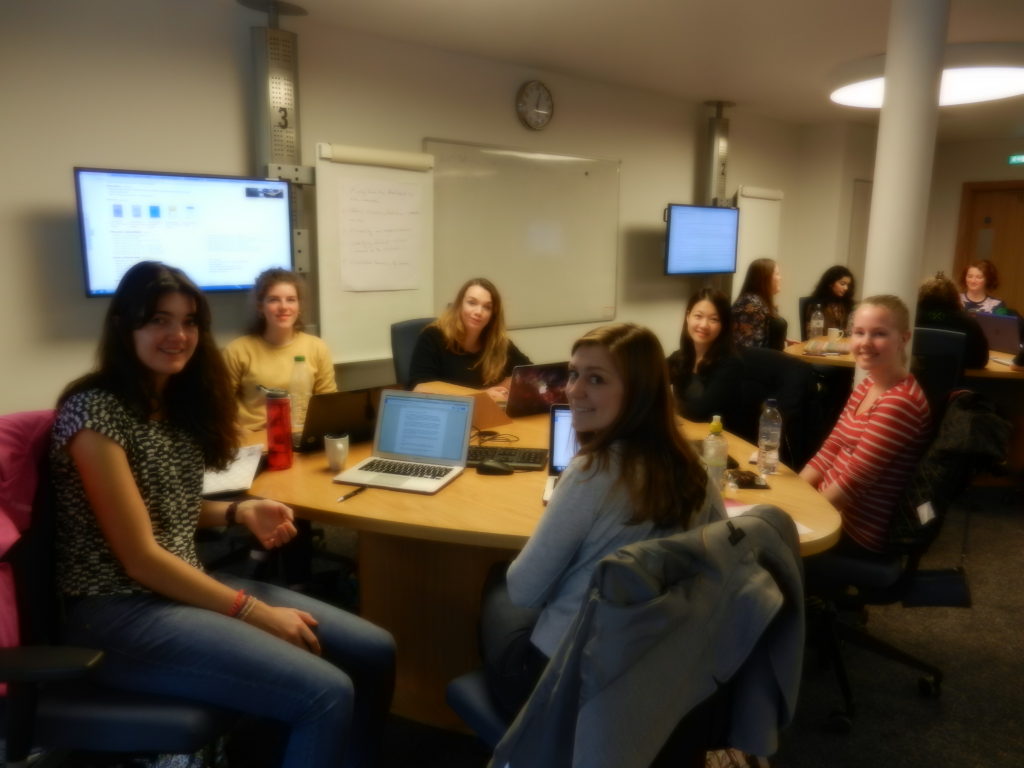
Reproductive Medicine undergraduates - collaborating to create Wikipedia articles.

Reproductive Medicine undergraduates – collaborating to create Wikipedia articles.

In September 2016, Reproductive Biology Honours students undertook a group research project to research, in groups of 4-5 students with a tutor, a term from reproductive biomedicine that was not yet represented on Wikipedia. All 38 were trained to edit Wikipedia and they worked collaboratively both to undertake the research and produce the finished written article. The assignment developed the students’ information literacy, digital literacy, collaborative working, academic writing & referencing and ability to communicate to an audience. The end result was 8 new articles on reproductive medicine which enriches the global open knowledge community and will be added to & improved upon long after they have left university creating a rich legacy to look back upon.

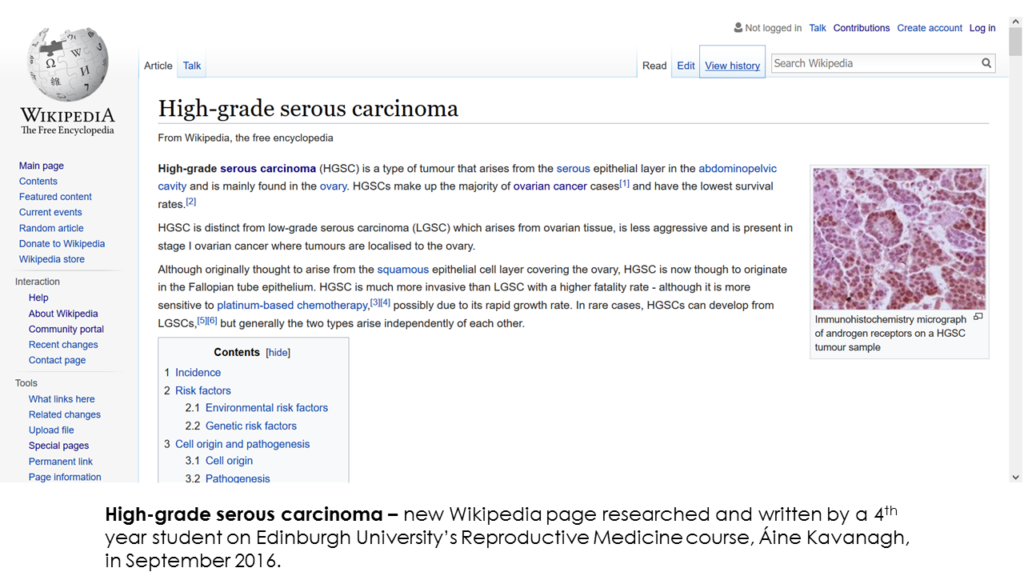
One of the new articles, high-grade serous carcinoma, was researched and written by 4th year student, Áine Kavanagh.

High-grade serous carcinoma - new Wikipedia article researched and written by Áine Kavanagh, in September 2016.

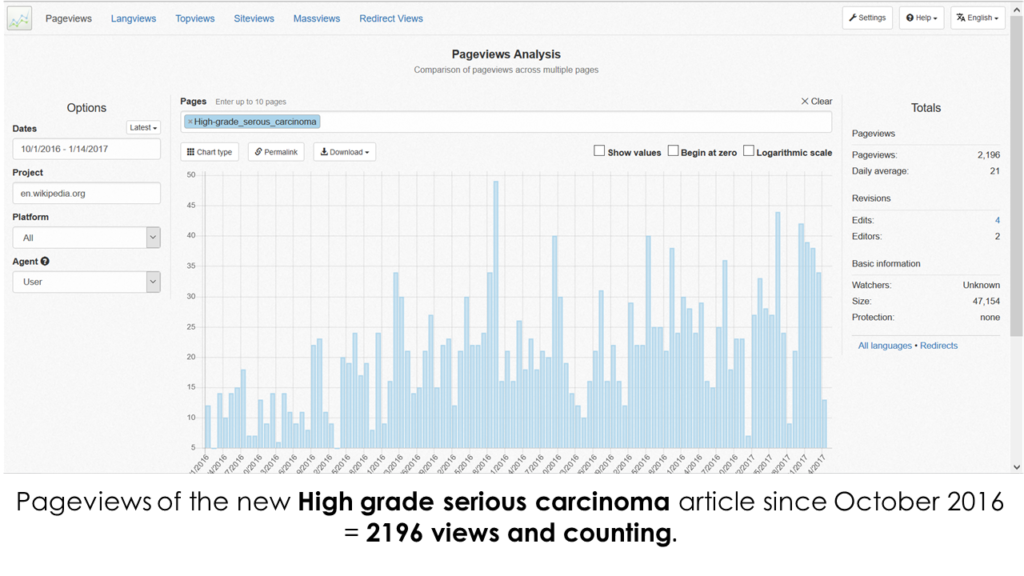
Rather than a writing an assignment for an audience of one, the course tutor, and never read again, Aine’s article can be viewed, built on & expanded by an audience of millions. Since creating the article in September 2016, the article has now been viewed 2196 times.

Pageviews for the High Grade Serous Carcinoma

Pageviews for the High Grade Serous Carcinoma

Guest post:

Reflections on a Wikipedia assignment

by Áine Kavanagh.
Reproductuve Medicine students - September 2016

Reproductive Medicine students – September 2016

The process of writing a Wikipedia article involved me trying to answer the questions I was asking myself about the topic. What was it? Why should I care about it? What does it mean to society? I also needed to make the answers to those questions clear to other people who can’t see inside my head.

It then moved onto questions I thought other people might ask about the topic. Writing for Wikipedia is really an exercise in empathy and perspective. Who else is going to want to know about this and what might they be interested in about it?

Is what I’m writing accessible and understandable? Am I presenting it in a useful way? It’s an incredibly public piece of writing which is only useful if it serves the public, so trying to put yourself in the frame of someone who’s not you reading what you’ve written is important (and possibly the most difficult part).

It’s also about co-operation from the get-go. You can’t post a Wikipedia article and allow no one else to edit it. You are offering something up to the world. You can always come back to it, but you can never make it completely your own again. The beauty of Wikipedia is in groupthink, in the crowd intelligence it facilitates, but this means shared ownership, which can be hard to get your head around at first.

It’s a unique way of writing, and some tips for other students starting out on a Wikipedia project is to not be intimidated. Wikipedia articles in theory can be indefinitely long and dense and will be around for an indefinitely long time, so writing a few hundred words can seem like adding a grain of sand to a desert. But if the information is not already there then you are contributing – and what is Wikipedia if not just a big bunch of contributions?

There’s also the fear that editors already on Wikipedia will swoop down and denounce your article as completely useless – but the beauty of storing information is that you can never really have too much of it. There’s no-one who can truly judge what is and isn’t worthy of knowing*.

*There’s no-one who can judge what’s worth knowing, but the sum of human knowledge needs to be organised, and so there are actually guidelines as to what a Wikipedia article is (objective account of a thing) and is not (platform for self-promotion).

Áine Kavanagh

#1Lib1Ref – Wikipedia turns 16

Getting citations into Wikipedia – can you spare 16 minutes to mark Wikipedia’s 16th birthday?


#1Lib1Ref - 1 Librarian adding 1 Reference

#1Lib1Ref – 1 Librarian adding 1 Reference


It’s been quite the week in politics this week. #CitationDefinitelyNeeded

#1Lib1Ref - 1 Librarian adding 1 Reference

#1Lib1Ref – 1 Librarian adding 1 Reference

On Sunday 15th January 2017, Wikipedia will turn 16 years old. How often do you think you have used the free online encyclopaedia in this time?

In this Google Talk, the Wikimedia Foundation’s Executive Director, Katherine Maher, speaks engagingly about Wikipedia’s humble beginnings in 2001, where it is now and, importantly, where it is going.

To mark Wikipedia’s birthday, the Wikipedia Library are repeating their successful #1Lib1Ref campaign from last year. This global campaign “1 Librarian 1 Reference” (#1Lib1Ref) is to get Information Services professionals and educators adding citations to Wikipedia.

Events are taking place at the National Library of Scotland, the Bodleian Library in Oxford and all over the globe from January 15th To February 3rd 2017 but here at the University of Edinburgh we are kicking things off by asking you to spare a mere 16 minutes to mark Wikipedia’s 16 years on Friday 20th January 2017. (You won’t even need to leave your desk).

Your 1,2,3 to taking part in next Friday’s #1Lib1Ref event.


  1. Have a nosy at what is involved: https://meta.wikimedia.org/wiki/The_Wikipedia_Library/1Lib1Ref – This link runs through what is involved (essentially finding one reference to back up a statement on Wikipedia that has no citation backing it up).
  2. Create a Wikipedia account ahead of Friday’s event. This 3 minute video shows what you need to do to setup your account. (NB: It is better if you do create an account at home ahead of time as Wikipedia limits the number of accounts that can be created from a single IP address within a 24 hour period to a mere 6 accounts.)
  3. On the day itself – This 5 minute video demos what you need to do. Essentially using the Citation Hunt tool to find a Wikipedia page that is both missing a citation  & that you are interested in helping out; and guiding you as to how to go about finding a suitable reference to fill that knowledge gap. NB: This post from the Biodiversity Heritage Library also illustrates the process too.


As you save your citation, please remember to add the hashtag #1Lib1Ref in your edit summary so that we can track participation in the event. We will announce these contributions on social media with the  strengthening Wikipedia’s links to scholarly publications and celebrating the collective expertise of the world’s Information Service professionals (so any pics you can share with the #1Lib1Ref hashtag would be greatly appreciated).

This is a chance to create incoming links or citations from articles that are usually the top Google hit for their topic. Citations can be to paper or electronic sources, that you are interested in professionally or otherwise. If you can supply citations for topics or authors that are under-represented in Wikipedia, then all the better. In January 2016, librarians around the world made thousands of edits to Wikipedia, with publicity seen by millions of people. You can read more about last year’s event here.

We live in the information age and the aphorism ‘one who possess information possesses the world’ of course reflects the present-day reality.” (Vladimir Putin in Interfax:Russia & CIS Presidential Bulletin, 30 June 2016).

To mark Wikipedia’s 16th birthday, and to assert that facts really do matter, let’s find Wikipedia pages we can help improve… and spend a few moments improving them with a reference (or two).

#FactsMatter #1Lib1Ref

Robert Louis Stevenson (public domain pic from Wiki Commons)

A Christmas Sermon – Robert Louis Stevenson on Wikisource

Robert Louis Stevenson (public domain pic from Wiki Commons)

Robert Louis Stevenson (public domain pic from Wiki Commons)

In ‘A Christmas Sermon’, a short public domain text available on Wikisource, Robert Louis Stevenson meditates on the holiday season, death, morality and man’s main task in life: “to be honest, to be kind… to make upon the whole a family happier for his presence.”

‘A Christmas Sermon’ appeared in a collection of essays entitled ‘Across the plains: with other Memories and Essays’ (1892) and was written, along with The Master of Ballantrae, shortly after Stevenson’s father had passed away and while Stevenson himself was recovering from a lung ailment at Lake Saranac, New York, in the winter of 1887.

More openly-licensed Christmas texts can be found at Wikisource’s Portal:Christmas including Is There a Santa Claus? (1897).

Wikisource, the hyper library hosts over 340,000 out-of-copyright longer texts (plays, poems, short stories, novels, letters, speeches, constitutional documents, songs & more) as demonstrated by the range of texts on Robert Louis Stevenson’s page here.

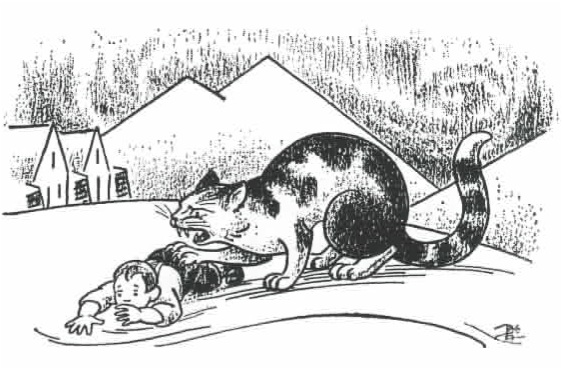
Yule cat (from Public Domain Super Heroes)

Yule Lads and Yule cat – on the greatest Open Education Resource: Wikipedia.

Yule Lads – on the greatest Open Education Resource: Wikipedia.


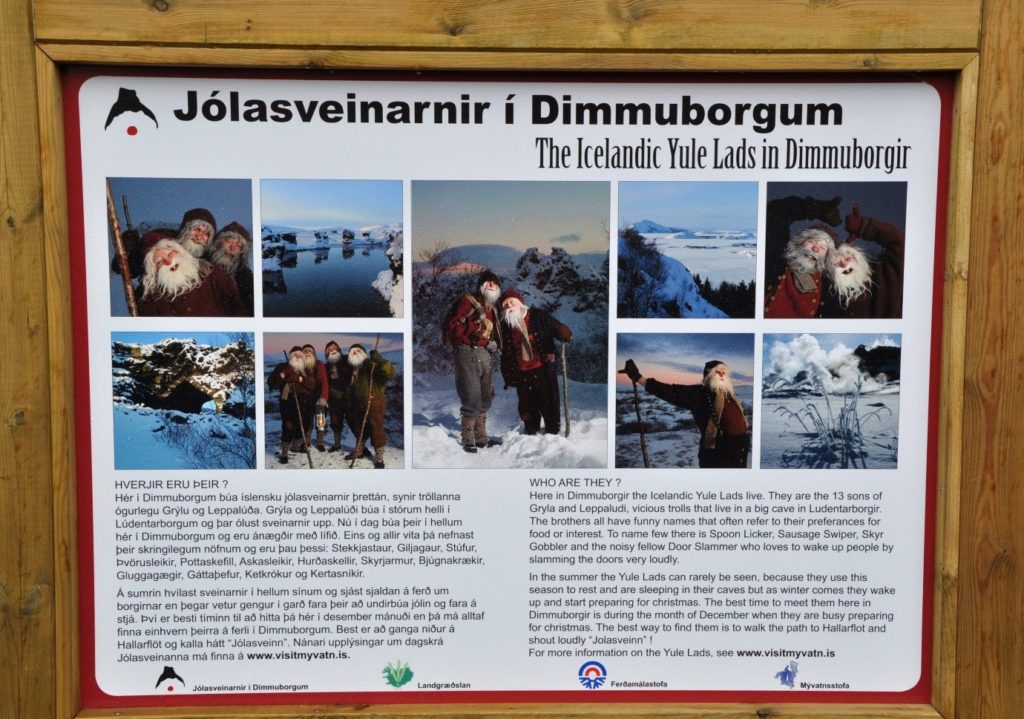
The Yule Lads - Picture taken by Inga Vitola CC-BY via Flickr (https://www.flickr.com/photos/360around/8438686745/in/photolist-dRGtz4-dBRVEa-dBGFuw-5MeWDT-dBGFTu)

The Yule Lads – Picture taken by Inga Vitola CC-BY via Flickr (https://www.flickr.com/photos/360around/8438686745/in/photolist-dRGtz4-dBRVEa-dBGFuw-5MeWDT-dBGFTu)


Yule lads are 13 trolls from Icelandic folklore who put rewards (or punishments) in shoes laid out on windowsills by children on the 13 nights in the run up to Christmas. Some Yule lads are mere pranksters while some are… homicidal monsters who eat children.

You can find out more about the Yule lads (and when they’re due to arrive in town) on the greatest open education tool; Wikipedia.

But just in case, below is a list of their names & descriptions so you can watch out for them (and their monstrous Yule Cat)!

Yule cat (from  Public Domain Super Heroes)

Yule cat (from
Public Domain Super Heroes)


Icelandic Name English translation Description
Stekkjarstaur Sheep-Cote Clod Harasses sheep, but is impaired by his stiff peg-legs.
Giljagaur Gully Gawk Hides in gullies, waiting for an opportunity to sneak into the cowshed and steal milk.
Stúfur Stubby Abnormally short. Steals pans to eat the crust left on them.
Þvörusleikir Spoon-Licker Steals spoons to lick. Is extremely thin due to malnutrition.
Pottaskefill Pot-Scraper Steals leftovers from pots.
Askasleikir Bowl-Licker Hides under beds waiting for someone to put down their bowl which he then steals.
Hurðaskellir Door-Slammer Likes to slam doors, especially during the night.
Skyrgámur Skyr-Gobbler A Yule Lad with an affinity for skyr.
Bjúgnakrækir Sausage-Swiper Would hide in the rafters and snatch sausages that were being smoked.
Gluggagægir Window-Peeper A voyeur who would look through windows in search of things to steal.
Gáttaþefur Doorway-Sniffer Has an abnormally large nose and an acute sense of smell which he uses to locate laufabrauð.
Ketkrókur Meat-Hook Uses a hook to steal meat.
Kertasníkir Candle-Stealer Follows children in order to steal their candles.
Screengrab of Histropedia Wikidata Query Viewer (CC-BY-SA).

Histropedia – knowledge from Wikipedia visualised as dynamic timelines

Histropedia Timelines – In the (Saint) Nick of Time.

Can you spot Saint Nick in the below timeline of saints?

Screengrab of Histropedia Wikidata Query Viewer (CC-BY-SA).

Screengrab of Histropedia Wikidata Query Viewer (CC-BY-SA).

For today’s post, the Open Education resource we present to you is Histropedia – the timeline of everything.

Histropedia allows users to create visually dynamic timelines using structured data from Wikidata, articles from Wikipedia and images from Wikimedia Commons. It has in excess of 340,000 timelines listing 1.5 million articles from Wikipedia: including timelines on the Battles of World War One, the Heroic Age of Antarctic Exploration, the Novels by Charles Dickens, Empires, Famous Artists, the filmography of David Bowie and many more.

This 1 minute 22 second video demonstrates how quickly & easily timelines can be put together using Wikipedia articles & categories to dramatically visualise events.

By way of example, I was able to create this Santa Claus in the movies timeline in a matter of minutes going from the 1900 movie, A Christmas Dream, by Georges Méliès right up to modern day with films like Trading Places (1983), Miracle on 34th Street (1994) and Arthur Christmas (2012). The published timeline is now available for others to view and add to as a free open education resource where each timeline event can be clicked on to take you through to the Wikipedia article to find out more.


histropedia-screengrabScreengrab of Histropedia timeline for Santa Claus in the movies. (CC-BY)

Further, now that the Histropedia now has a Wikidata Query Viewer option this means that the structured data can now be queried even further. For example, I was curious to find out more about Saint Nick so I was able to ask Wikidata to show me all the saints it had information about and show them on a timeline according to their year of birth and colour coded by their place of birth. Click here to view the result.

Screengrab from Histropedia Wikidata Query Viewer Tutorial – Timeline of University of Edinburgh female alumni colour-coded by place of birth and labelled in Japanese, Russian, Arabic and English (CC-BY)

Histropedia’s developers, Navino Evans and Sean McBirnie, joined us at Repository Fringe at the University of Edinburgh in August this year where we recorded a short video tutorial in order to demonstrate how to create a Histropedia timeline using their Wikidata Query Viewer – this time on female alumni of the University of Edinburgh; colour-coded by their place of birth and labelled in Japanese, Russian, Arabic & English (depending on whether the query could find an article in these 4 different language Wikipedias).

This OER video tutorial has now been viewed a thousand times and is available to view on the university’s Media Hopper channel on a CC-BY license.

To find out more about Histropedia, you can read this article from the Wikimedia UK blog but why not have a go yourself!

Desperately Seeking Ada

Booking for Ada Lovelace Day 2016 is now live – please feel free to pass on details to people you feel maybe interested in coming along.

ada_lovelace_in_1852

Ada Lovelace, “The Enchantress of Numbers”, in 1852.


Who was Ada Lovelace?

Ada Lovelace (1815–1852), the only legitimate child of the poet George, Lord Byron and his wife Anne Isabella Milbanke, was an English mathematician and writer, chiefly known for her work on Charles Babbage‘s early mechanical general-purpose computer, the Analytical Engine. Her notes on the engine include what is recognised as the first algorithm intended to be carried out by a machine. As a result, she is often regarded as the first computer programmer with her work a major influence on Alan Turing & inspiring countless others. There’s now a graphic novel of her short but brilliant life and you can read more about her life here and an ‘interview’ with her in New Scientist here.

On Tuesday 11th October 2016, in Room 1.12 of the University Main Library, we will again be running a Wikipedia edit-a-thon to celebrate Ada Lovelace Day 2016, an international celebration day of the achievements of women in science, technology, engineering and maths (STEM).

Beginning at 10am with a range of guest speakers in the morning, this will be followed by fun technology activities from 11am to 1pm (Metadata games, BBC Microbit, Sonic Pi, Lego calculators/adders).

Full Wikipedia editing training will be given at 1-2pm. Thereafter the afternoon’s editathon from 2-5pm will focus on improving the quality of Wikipedia articles related to Women in STEM!

The event page can be accessed here: http://bit.ly/2cGapkn

For booking purposes, the day is split in two parts: talks & technology activities in the morning and the Women in STEM Wikipedia editathon in the afternoon.

You can attend both morning and afternoon sessions or just one.

Time for lunch? The fun technology activities from 11am to 1pm can be dropped in and out of and there is the Library Cafe downstairs where you can get refreshments and a bite to eat.

Not a student or staff member of the university? You can book tickets through Eventbrite.

Suggestions for notable Women in STEM who could & should be represented on Wikipedia?

Feel free to suggest name of notable women we could include as part of this day of celebration. Email me at ewan.mcandrew@ed.ac.uk

Hope to see you there!

A river runs through it – Wikimedia at OER16

Edinburgh Castle on April 19th 2016

Edinburgh Castle on April 19th 2016

Co-chair, Lorna Campbell, welcoming attendees to Edinburgh for OER16. By Stinglehammer (Own work) [CC BY-SA 4.0 (http://creativecommons.org/licenses/by-sa/4.0)], via Wikimedia Commons

Co-chair, Lorna Campbell, welcoming attendees to Edinburgh for OER16.
By Stinglehammer (Own work) [CC BY-SA 4.0 (http://creativecommons.org/licenses/by-sa/4.0)], via Wikimedia Commons

Wikimedia at OER16

Wikimedia at OER16

“A river runs through it” 

Apologies for the naming of this blog article BUT it did seem that there was a common (Wikimedia) thread running through a great many of the sessions at the 7th Open Education Resources Conference this year.

View the Storify of Wikimedia at OER16 in pics & tweets

Hosted by the University of Edinburgh, we were blessed with some surprisingly good weather (not a cloud in the sky) and some stellar keynote speakers; all progressing the case for OER and examining what it means to be ‘open’.

Jim Groom at OER16

Jim Groom at OER16


  • Jim Groom, Reclaim Hosting – an independent web hosting company focused on the higher education community.

Can we imagine tech Infrastructure as an Open Educational Resource? Or, Clouds, Containers, and APIs, Oh My!

Watch Jim Groom’s presentation on Media Hopper.

IMG_5667


  • Catherine Cronin – An educator and researcher at the National University of Ireland, Galway, Catherine has worked as an open educator for many years.

“If ‘open’ is the answer, what is the question?”

Watch Catherine Cronin’s keynote presentation on Media Hopper

Emma Smith at OER16 By Stinglehammer (Own work) [CC BY-SA 4.0 (http://creativecommons.org/licenses/by-sa/4.0)], via Wikimedia Commons

Emma Smith at OER16 By Stinglehammer (Own work) [CC BY-SA 4.0 (http://creativecommons.org/licenses/by-sa/4.0)], via Wikimedia Commons

  • Emma Smith –At the University of Oxford, Dr Emma Smith’s research combines a range of approaches to Shakespeare and early modern drama. She is a fellow of Hertford College and a Professor of Shakespeare studies. She was also one of the first academic colleagues to  champion the use and creation of OER at University of Oxford through her involvement in the Jisc funded Open Spires and Great Writers Inspire projects. Her OER licensed lectures reach an international audience and she continues to produce, publish and share cultural resources online.

Free Willy: Shakespeare and OER”

Watch Emma Smith’s keynote presentation on Media Hopper.

IMG_20160419_170142176_HDR

  • John Scally – National Library for Scotland. John started his library career in 1993 when he was appointed as a curator in the British Antiquarian Division at the National Library. He joined the University of Edinburgh 10 years later as Director of University Collections and Deputy Director of Library, Museums and Galleries.

Postcards from the Open Road

Watch John Scally’s keynote presentation on Media Hopper

Conference co-chair, Melissa Highton, welcomes attendees to Edinburgh at the 7th Open Education Resources conference.

Conference co-chair, Melissa Highton, welcomes attendees to Edinburgh at the 7th Open Education Resources conference.


  • Melissa Highton. University of Edinburgh. Melissa leads the University of Edinburgh’s strategic priorities for open educational resources, digital and distance learning on global platforms, MOOCs, blended learning, virtual learning environments, technology enhanced learning spaces, digital skills  and use of the web for outreach and engagement.

Open with care” – Watch Melissa Highton’s keynote presentation on Media Hopper

IMG_5678

Unexpected outcomes

  • Emma Smith very kindly attended the Wikipedia editing training session I ran at lunchtime that first day of the conference (also my birthday so a double boon) and suggested she may like to collaborate with the Wikimedian at the Bodleian Library, Martin Poulter, upon her return.
  • John Scally referenced the sterling work undertaken by the first Wikimedian in Residence in Scotland, Ally Crockford, during her 17 months at the National Library of Scotland in releasing a considerable amount of the National Library of Scotland’s collections on open licenses to Wikimedia Commons.
  • Melissa Highton both presented a session on the research undertaken following the ‘Women in Science & Scottish History’ Wikipedia edit-a-thon  and then later closed the conference with her ‘Open with Care‘ keynote which eloquently expressed how to give those holding the purse strings at an institutional level something they can say ‘Yes‘ to  when it comes to the move towards openness where ‘not being open is a risk and not being open costs us money‘.
  • Jim Groom summing up Wikipedia as: The single greatest Open Education Resource the world has ever seen“.

My Wikimedia colleague, Martin Poulter, turned to me at this point, conspiratorially, to say that previous OER conferences had not had this level of Wikimedia involvement throughout so there had definitely been a shift in emphasis & in thinking over the years.

Given Wikimedia’s added focus on education this year, it just felt that Wikimedia and Open Education was an idea whose time had come.

Wikimedia at OER16

In addition to our keynote speakers, we ran a number of other Wikimedia sessions for OER delegates to attend.

Wikimedia at OER16

Wikimedia at OER16

Beyond this we had a number of Wikimedia related speakers taking part in OER16.

  • Martin Poulter – Wikimedian in Residence at the Bodleian Library, Oxford University.

IMG_5692

Martin Poulter, Wikimedian in Residence at the Bodleian Library. By Stinglehammer (Own work) [CC BY-SA 4.0 (http://creativecommons.org/licenses/by-sa/4.0)], via Wikimedia Commons

Watch Martin Poulter on Media Hopper (from 21 minutes on)

Martin’s presentation was a critical look inside some of Wikipedia’s sister projects: “Wikibooks as a platform and community for creating open textbooks, Wikidata as a source of open data for educational resources and Wikisource as a way to add educational value to historic texts. All these sites have “Edit” buttons and depend on users to build, evaluate, and repurpose open content.”

  • Lucy Crompton-Reid: CEO Wikimedia UK

Lucy Crompton-Reid, CEO Wikimedia UK. By Stinglehammer (Own work) [CC BY-SA 4.0 (http://creativecommons.org/licenses/by-sa/4.0)], via Wikimedia Commons

Lucy Crompton-Reid, CEO Wikimedia UK. By Stinglehammer (Own work) [CC BY-SA 4.0 (http://creativecommons.org/licenses/by-sa/4.0)], via Wikimedia Commons.

Lucy’s presentation focused on the ways in which Wikimedia UK is working with libraries, archives and museums to ensure greater access to educational content online, with a particular focus on the Wales collaboration but drawing on experience in other settings.

Watch Lucy Crompton-Reid’s presentation on Media Hopper.

  • Sara Thomas – Wikimedian in Residence at Museums & Galleries Scotland.

Sara Thomas at OER16 By Stinglehammer (Own work) [CC BY-SA 4.0 (http://creativecommons.org/licenses/by-sa/4.0)], via Wikimedia Commons

Sara Thomas at OER16
By Stinglehammer (Own work) [CC BY-SA 4.0 (http://creativecommons.org/licenses/by-sa/4.0)], via Wikimedia Commons

In contrast to most residencies, where the resident is embedded with just one institution, Sara was tasked with working with the entire Scottish museums sector, with the aim of increasing open knowledge capacity and beginning to effect culture change with regard to open knowledge in a cultural context. Her presentation reflected on what can (and can’t) be achieved in a year, offers provocations with regard to the challenges faced by the museums sector, and suggestions as to the best direction for future activity.

Watch Sara’s presentation on Media Hopper

  • Subhashish Panigrahi – Cultural Institution aka GLAM for more OER

Subhashish Panigrahi at OER16. By Stinglehammer (Own work) [CC BY-SA 4.0 (http://creativecommons.org/licenses/by-sa/4.0)], via Wikimedia Commons

Subhashish Panigrahi at OER16.
By Stinglehammer (Own work) [CC BY-SA 4.0 (http://creativecommons.org/licenses/by-sa/4.0)], via Wikimedia Commons

GLAM is a global initiative for making cultural data open targeting galleries, libraries, archives and museums in particular. Subhashish’s presentation was around the best practices of several GLAM initiatives and how these projects could lead to create useful OERs.

Watch Subhashish’s presentation on Media Hopper

  • Antoni Meseguer-Artola – Open University of Catalonia

Learning Effectiveness and Perceived Value of Wikipedia as a Primary Course Resource at OER16. By Stinglehammer (Own work) [CC BY-SA 4.0 (http://creativecommons.org/licenses/by-sa/4.0)], via Wikimedia Commons

Learning Effectiveness and Perceived Value of Wikipedia as a Primary Course Resource at OER16.
By Stinglehammer (Own work) [CC BY-SA 4.0 (http://creativecommons.org/licenses/by-sa/4.0)], via Wikimedia Commons

Melissa Highton introducing Antoni Meseguer-Artola at OER16. By Stinglehammer (Own work) [CC BY-SA 4.0 (http://creativecommons.org/licenses/by-sa/4.0)], via Wikimedia Commons

Melissa Highton introducing Antoni Meseguer-Artola at OER16.
By Stinglehammer (Own work) [CC BY-SA 4.0 (http://creativecommons.org/licenses/by-sa/4.0)], via Wikimedia Commons

Antoni’s presentation examines a case study where Wikipedia was used as a primary learning resource, and it was appropriately integrated with the existing learning materials.

Results support the idea that the student’s perceptions about Wikipedia change across knowledge areas, and also depend on the student’s academic profile. Added to this, we have found evidence confirming the hypotheses that Wikipedia has a positive effect on the student’s academic performance, and that the magnitude of this influence ranges from one course to another.”

Watch Antoni Meseguer-Artola’s presentation here.

  • Allison Littlejohn and Melissa Highton – Learning to Develop Open Knowledge
Melissa Highton - Learning to Develop Open Knowledge

Melissa Highton – Learning to Develop Open Knowledge

An editathon is “an event where people develop open knowledge around a specific topic” (Cress & Kimmerle, 2008; Kosonen & Kianto, 2009). Melissa & Allison’s presentation explores learning in an editathon.

All respondents reported that the editathon had a positive influence on their professional role. They were keen to integrate what they learned into their work in some capacity and believed participation had increased their professional capabilities… Overall, the editathon provided opportunity for professional learning, enabling people to learn a range of different types of knowledge useful for work.

Watch Melissa and Allison’s presentation here.

In addition, Martin Poulter ran a successful lunchtime session illustrating how to engage with Wikisource, Wikimedia’s free content library.

Martin Poulter delivering a Wikisource demonstration at OER16. By Stinglehammer (Own work) [CC BY-SA 4.0 (http://creativecommons.org/licenses/by-sa/4.0)], via Wikimedia Commons

Martin Poulter delivering a Wikisource demonstration at OER16.
By Stinglehammer (Own work) [CC BY-SA 4.0 (http://creativecommons.org/licenses/by-sa/4.0)], via Wikimedia Commons

Wikisource demonstration at OER16. By Stinglehammer (Own work) [CC BY-SA 4.0 (http://creativecommons.org/licenses/by-sa/4.0)], via Wikimedia Commons

Wikisource demonstration at OER16.
By Stinglehammer (Own work) [CC BY-SA 4.0 (http://creativecommons.org/licenses/by-sa/4.0)], via Wikimedia Commons

Wikisource demonstration at OER16. By Stinglehammer (Own work) [CC BY-SA 4.0 (http://creativecommons.org/licenses/by-sa/4.0)], via Wikimedia Commons

Wikisource demonstration at OER16.
By Stinglehammer (Own work) [CC BY-SA 4.0 (http://creativecommons.org/licenses/by-sa/4.0)], via Wikimedia Commons

Finally, given that Josie Fraser, Wikimedia trustee and educationalist, has accepted the baton and agreed to co-host OER17 (themed on the ‘Politics of Openness’) next year, the future looks extremely bright.
Who knows which ‘waterbody type‘ Wikimedia might end up being compared to next time….
Wikimedia's Josie Fraser at OER16. By Stinglehammer (Own work) [CC BY-SA 4.0 (http://creativecommons.org/licenses/by-sa/4.0)], via Wikimedia Commons

Wikimedia’s Josie Fraser at OER16.
By Stinglehammer (Own work) [CC BY-SA 4.0 (http://creativecommons.org/licenses/by-sa/4.0)], via Wikimedia Commons


A smorgasbord of Wikimedia projects to choose from: not just Wikipedia!

In visiting a lot of different people of places over the last two months, one question keeps cropping up: what is the difference between Wikimedian and Wikipedian?

Which is a fair question.

Ultimately, Wikimedia UK is the parent or umbrella body, a charitable non-profit foundation (the UK chapter of the global Wikimedia movement which has its HQ in San Francisco) which exists to support & promote Wikimedia’s projects in the UK: one of which happens to be its main open Knowledge project, Wikipedia.

From the Wikimedia Foundation’s FAQs:

“What is Wikipedia?

Wikipedia is the largest collection of free, collaborative knowledge in human history. Millions of people from around the world have written and added to Wikipedia since it was created in 2001: anyone can edit it, at any time. Wikipedia contains more than 35 million volunteer-authored articles in more than 290 languages. Every month, Wikipedia is viewed more than 15 billion times, making it one of the most popular sites in the world. The people who support it are united by the joy of knowledge, their passion and curiosity, and their awareness that we know much more together than any of us does alone.

What is the Wikimedia Foundation?

The Wikimedia Foundation is the non-profit organization that supports and operates Wikipedia and the other free knowledge projects. All of our work is guided by our mission to share the sum of all knowledge with every person in the world. We keep the websites fast, secure, and available. We support the community of volunteers who contribute to the Wikimedia projects. We make free knowledge accessible wherever you are — on your phone or laptop, on a boat in the South Pacific, or in the hills of Nepal. We help bring new knowledge online, lower barriers to access, and make it easier for everyone to share what they know.”

However, while Wikipedia draws the most attention, there are numerous ways where staff & students can get involved & directly contribute their knowledge & expertise to develop Wikimedia UK’s diverse range of projects.

Slide10

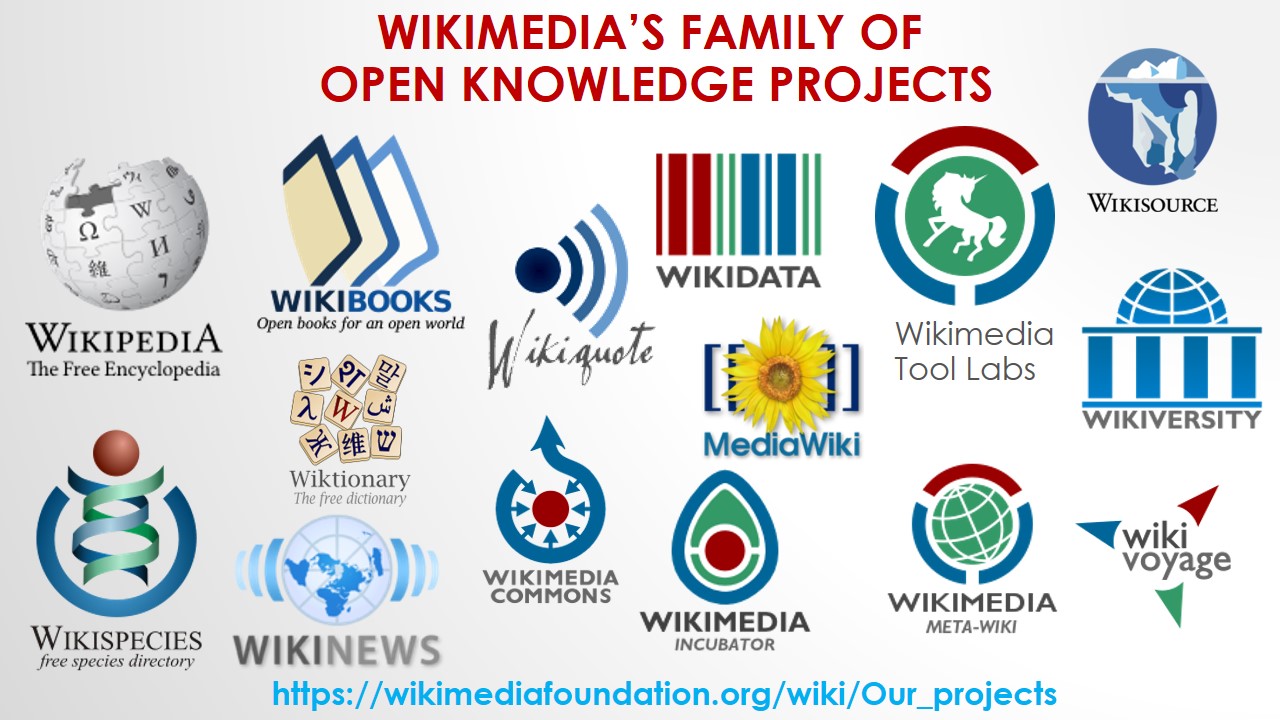
Not just Wikipedia: Wikimedia UK’s diverse range projects (above).


Wikisource, for instance, is a ‘free content library of source texts’ with some 300,000+ source texts which anyone can use.

Wikimedia Commons is our media repository with over 30 million freely usable media files to which anyone can contribute to and re-use.

Wikibooks, an open-content textbooks collection that anyone can edit, has been utilised by some academic institutions (notably Greg Singh, lecturer  in Communications, Media & Culture at the University of Stirling) as an assessed part of their courses where students work in research groups to contribute chapters to create a brand new textbook, the Digital Media & Culture Yearbook.

Wikidata, in particular, as Wikipedia’s newest sister project offers up a wealth of possibilities as a structured database of all human knowledge which is readable by humans and machines. For example, the Histropedia website makes good use of the data Wikidata harnesses in order to create visually stimulating & dynamic timelines: be it as straightforward as a timeline of University of Edinburgh alumni or something much more bespoke: such as a timeline of descendants of Robert the Bruce, who are female, and born in Denmark.

Example timeline from Histropedia

Example timeline from Histropedia

As the residency continues, I hope to explore each of these projects a bit further (and others besides) and see if any collaborations can be achieved which mutually benefit the university and Wikimedia in adding open knowledge content to these projects. So watch this space… and if you have any questions about any of the projects then let me know.

History of Medicine Wikipedia editathon 16-18th February

Following the successful editathon session on ‘Women, Science and Scottish History‘  that the University of Edinburgh ran with the assistance of the National Library of Scotland’s Wikimedian in Residence, Ally Crockford, during Innovative Learning Week in 2015, the UoE is running a brand new one for Innovative Learning Week 2016 on Tuesday 16th February to Thursday 18th February which Sara Thomas (WiR at Museums & Galleries Scotland) and I are hosting at room LG.07 in the David Hume Tower Building, George Square, Edinburgh, EH8 9JX.

I Want You For Wiki CC-BY-SA

I Want You For Wiki
CC-BY-SA


Feedback from attendees at last year’s editathon event:
“Fantastic week, one of the geeky best. Had a great time at the #ILW2015 #ILWeditathon, researching the #Edinburgh7”
“Shared delight in learning new things about the period & these people”
“Day 3 of #ILWeditathon and I’m getting hooked!”


The topic is on the History of Medicine on this occasion. It covers medical terms not currently covered on Wikipedia as well as historic Edinburgh locations which have played a large role in the history of medicine. It also broadens out to cover notable personages in the history of medicine such as the infamous Burke & Hare grave-robbers as well as the intriguing case of James Miranda Barry and continuing our work on those female pioneers of the medical profession such as ‘the Edinburgh 7’ whose stories continue to be under-represented on Wikipedia.

"A complete delineation of the entire anatomy engraved on copper" - Thomas Geminus

“A complete delineation of the entire anatomy engraved on copper” – Thomas Geminus CC-0

Here’s the event described in brief:

Unravel myths, discover truths and re-write the Wikipedia pages of Edinburgh’s infamous medical figures including gruesome body-snatcher William Burke and intriguing alumni Dr. James Miranda Barry. Come join us for all the fun and gain digital skills, learn how to edit Wikipedia, explore our history and harness the power of the web for public engagement.


There will be refreshments (inc. free lunch if you wish to edit in the morning and afternoon sessions), guest speakers, online materials to work with, physical materials to work with including, hopefully, the letter written in William Burke’s own blood. We’re also looking for some buildings associated with Edinburgh’s role in the history of medicine to be photographed and uploaded to Wikicommons.

You can attend one day or multiple days (or just half a day) if you so desire. Either in person or remotely joining in.

 by the Royal College of Surgeons, Edinburgh. UofE Innovative Learning Week 2015 editathon UofE Innovative Learning Week 2015 editathon CC-BY-SA

University of Edinburgh Innovative Learning Week 2015 editathon CC-BY-SA

It’s open to all: new and experienced editors; UoE staff & students; members of the public. You’d be very welcome. Training will be provided in each session.

Full details on how to register for the event are on the event page here:

https://wikimedia.org.uk/wiki/Creating_an_Open_Body_of_Knowledge_editathon_series

I have also now setup the Wikipedia Project Page for the University of Edinburgh residency with details of what it involves & what I’ll be up to including upcoming & past Wiki editathon events. The link to the Project Page is here:

https://en.wikipedia.org/wiki/Wikipedia:University_of_Edinburgh

If you have any questions regarding the event, the residency or about collaborating on any projects then feel free to get in touch.

Hopefully see you there!

Open Knowledge meetup at National Library of Scotland

On 19th January 2016, I attended my first ‘Open Knowledge‘ meetup at the National Library of Scotland.

Link here: Open Knowledge meetup at NLS

In an informal friendly setting, with a lovely assortment of sandwiches, nibbles and drinks I was able to observe an equally lovely assortment of Open Knowledge initiatives espoused by the evening’s speakers including:

Jeremy Darot on Edinburgh Open Data Map. Utilising lots of cool data to populate OpenStreetMap. Data like planning projects, schools, GP surgeries, shops, catchment areas, air quality, green belt areas & much more besides. Phew!

Jeremy Darot

Jeremy Darot

Also, the University of Edinburgh’s own Professor Richard Rodger outlined the MESH project (Mapping Edinburgh’s Social History): 60,000+ properties mapped accurately by physically walking past taking a note of every garden, wall and business with the ambition to create the most accurate city map in Edinburgh.

Then there was architect Akiko Kobayashi on fabulous project: open source house designs on Commons  which can be digitally fabricated & assembled easily.

Akiko Kobayashi

Akiko Kobayashi

Lastly, the National Library of Scotland’s own Fred Saunderson enthused about NLS’s Open Data Publication plan to publish 3-star open data (14 datasets in 2016, 8 more in 2017).

Fred Saunderson - NLS

Fred Saunderson – NLS

All in all, a great night of Open Knowledge initiatives. More please!

Page 3 of 4

Powered by WordPress & Theme by Anders Norén