Supporting the University of Edinburgh's commitments to digital skills, information literacy, and sharing knowledge openly

Tag: dsdtfeed

Screen grab of Wikipedia25.org's homepage

Happy 25th birthday Wikipedia!

Happy Birthday Wikipedia!

Read more about Wikipedia’s 25 year history, covering its early days with a ‘then and now'(and what lies ahead), at the link below:

https://wikipedia25.org/en

At 25 years old it may be the olddddd man of the old Internet but Wikipedia still remains the largest reference work on the Internet and is now a chief training dataset for pretty much all the major Artificial Intelligence answer services you may encounter every day while also still remaining a place where such universal and lofty ideals persist such as: writing with a neutral point of view; citing what you write; the reliability of sources; the verifiability  and accessibility of sources; objectivity; writing for a lay audience; avoiding bias; avoiding political interference and conflict of interest; navigating copyright and open access; use of academic referencing and more.

All of these aspects transparently debated and worked at day after day as we all know neutrality is something that can never be assumed and always has to be worked at. And where information can always be checked, challenged and corrected. Some pages we know are highly scrutinised (and padlocked) so that an experienced editor has to check any new addition is sufficiently and responsibly referenced (re: Donald Trump, Obama, Israel v Palestine conflict pages etc). Other pages are perhaps less well visited, and maybe just newly written (e.g. the Conan Pictish Stone), so may need that extra care and attention to ensure the content is expanded, copyedited and honed to perfection. An information literate user of Wikipedia will see that… but shouldn’t we all be, or try to be, more information literate when it comes to viewing content on the web? At least contributing to Wikipedia both helps the information readily available online AND the contributor to be that bit more information literate and vigilant about questionable material elsewhere online.

Volunteers (and automated bots for some of the more mundane tasks like date formatting, citation formatting and vandalism removal) help scrutinise, copyedit and revert content all the time based on what the reliable published secondary sources outside of Wikipedia tell us. Sources that we rely on. In this way, by adhering to community agreed procedures on best practice developed over the last twenty-five years and the need for always backing up what you write through citing reliable sources, the work of volunteers is all about attaining a measure of trust, of consistency and of determining where a consensus can be arrived at… all so that a holistic topic overview be provided on any given subject that our readers can rightly hope for and expect.
That’s unpaid labour, volunteers giving of their time, passion and expertise and, 25 years on, it really ought to be better understood and appreciated in these terms. AI represents a shift undoubtedly but the need for a free, ethical, open knowledge hub for the world remains (and especially with that human element as its ‘special sauce’) as it also needs to be ever growing and ever updating to feed these often parasitic GenAI services who are beginning to realise they need to support where the large amounts of free knowledge they consume voraciously actually comes from. And that they themselves will come to rely on when they need access to new and updated pages to train their AIs on if the information they provide is not to become badly out-of-date or degraded.

When you turn on a tap you expect clean water to come out. When you search online you (ought to) expect good verifiable factual information to be returned.

Though not 100% perfect (where on the Internet is?) there is much to admire about Wikipedia volunteers caring enough about a topic to share it openly and surface it to where the world can learn all about it for free.

And facts matter. Or at least they ought to, shouldn’t they?

Cite what you write, write neutrally, write in your own words. These are the core tenets of Wikipedia. And each volunteer contributes with those principles at the forefront of their mind.

Bad actors may (and do) persist in the world outside of Wikipedia, trying to muddy the water and the health of our information ecosystem; in social media terms, news media, politics and more. But the positivity Wikipedia engenders, and the impact and agency of contributing to Wikipedia, is felt by our students at the University Of Edinburgh and helps contribute to their graduate competencies and professional development.

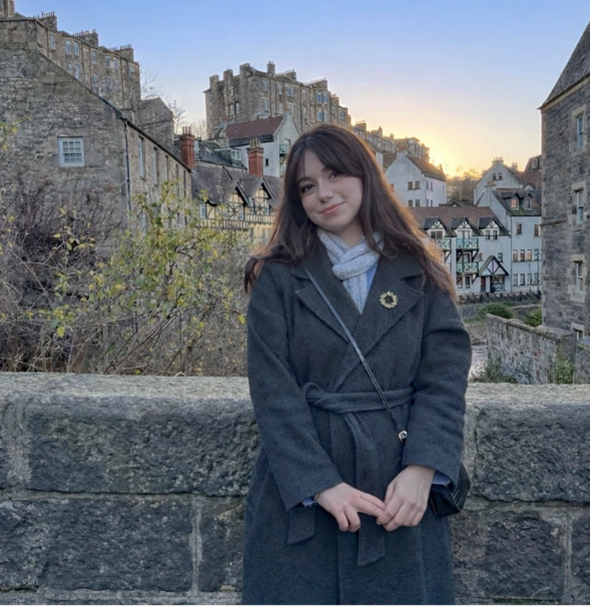
Rosie Taylor and Isobel Cordrey from the student support group, Wellcomm Kings, co-hosted the LGBTQ+ History month and Global Alumni event.

Our students firmly believe, and take pride in, the societal good of Wikimedia’s mission to share factchecked knowledge around the world for the benefit of all. That optimism, redolent of the early days of the internet, is something that persists just as much now as any bad actors trying to now game the system. It’s just about which wolf you feed and choosing what you value: illuminating the world with knowledge, building understanding, democratising access to information.

Whether it is about Scottish suffragettes, Edinburgh’s Royal Mile and its alleyways like ‘Fleshmarket Close’, or the individual accused witches’ histories from all around Scotland, or Pictish stones, or Hebridean storytellers and singers, Gaelic poets, the Burns Supper and its once hideous pictures of haggis (now much improved thankfully) and much much more…. our students have been helping to tell the history, culture, geography and tales of the people of Scotland online and making use of the vast treasure-trove of knowledge in the sometimes forgotten or overlooked non-digitised world (books, textbooks, news articles, journal articles, newspaper archives etc).

Image of a Burns Supper with Evelyn Hollow's hand raising a glass of whisky.

(Burns’ Supper image from public figure Evelyn Hollow added to Wikipedia on Burns Night 2024, Stinglehammer, CC BY-SA 4.0, via Wikimedia Commons)

And as an international outward-looking and knowledge-generating institution, the University of Edinburgh also is ‘walking the walk‘ in demonstrating its commitment to sharing knowledge openly outside ‘the ivory tower’ of academia and its knowledge silos through contributing to Wikipedia as a form of ‘knowledge activism’. As our vision states, “Our graduates, and the knowledge we discover with our partners, make the world a better place.”

Not just sharing about Scotland’s histories I hasten to add and not just in the English language either but about ALL the topics, languages and cultures its students and staff are researching in and care about; whether on the people of Singapore; or art and artefacts of the Congo; Latin American literature; South African feminist writers; the history of Borneo; the Qingtian diaspora; Japanese fashion (historic and contemporary); LLMs; floods in Afghanistan; the history of menstruation; Francophone literature; Greek poetry; Neuroscience; heatwaves; earthquakes; reproductive medicine topics; volcanic eruptions; Korean culture and society; Black history; LGBTQ+ history; Gender history and much much more besides.

So here’s to Wikipedia, to free knowledge, and to caring about, and caring for, a healthy ethical information ecosystem that is accessible to all and works for all.

You can read about Wikipedia’s approach in being more nimble about its role in the information ecosystem in making deals with prominent artificial intelligence companies, including Amazon, Meta Platforms, Perplexity, Microsoft, and France’s Mistral AI.

https://www.the-independent.com/tech/wikipedia-25th-anniversary-artificial-intelligence-ai-b2901259.html

And you can also listen to Wikimedia UK’s Lucy Crompton-Reid appearing on the BBC Radio Scotland morning show for five minute chat about Wikipedia’s birthday on BBC Sounds at 2:53:30 mark.

All good light-hearted banter about Wikipedia and how it ensures accuracy in today’s age (how does BBC for that matter, one could argue?) until sports presenter Phil Goodlad jokes that Martin Geissler’s Wikipedia page states erroneously that he is a Hibernian FC supporter and likes cats. It doesn’t. I checked. It correctly states he is a Hearts FC supporter and no mention of cats. So another £5 billion defamation suit seems in order! 🙂

ps. That Trump v BBC lawsuit is chilling though so best not joke about such things. In all honesty, I do think such lightweight jokey bants in a serious news show feed into the ‘Wikipedia is rubbish and easily vandalised’ trope which Lucy refuted in the piece and is thoroughly ‘old hat’ these days and 25 year ‘old hat’ at that.

But would settle for a mea culpa from Geissler & co. and/or £5 donation to Wikipedia. Definitely, presenter Laura MacIver ought to have a Wikipedia page if nothing else.
Digital Volunteering with Wikipedia – open for 2025/2026 student participation

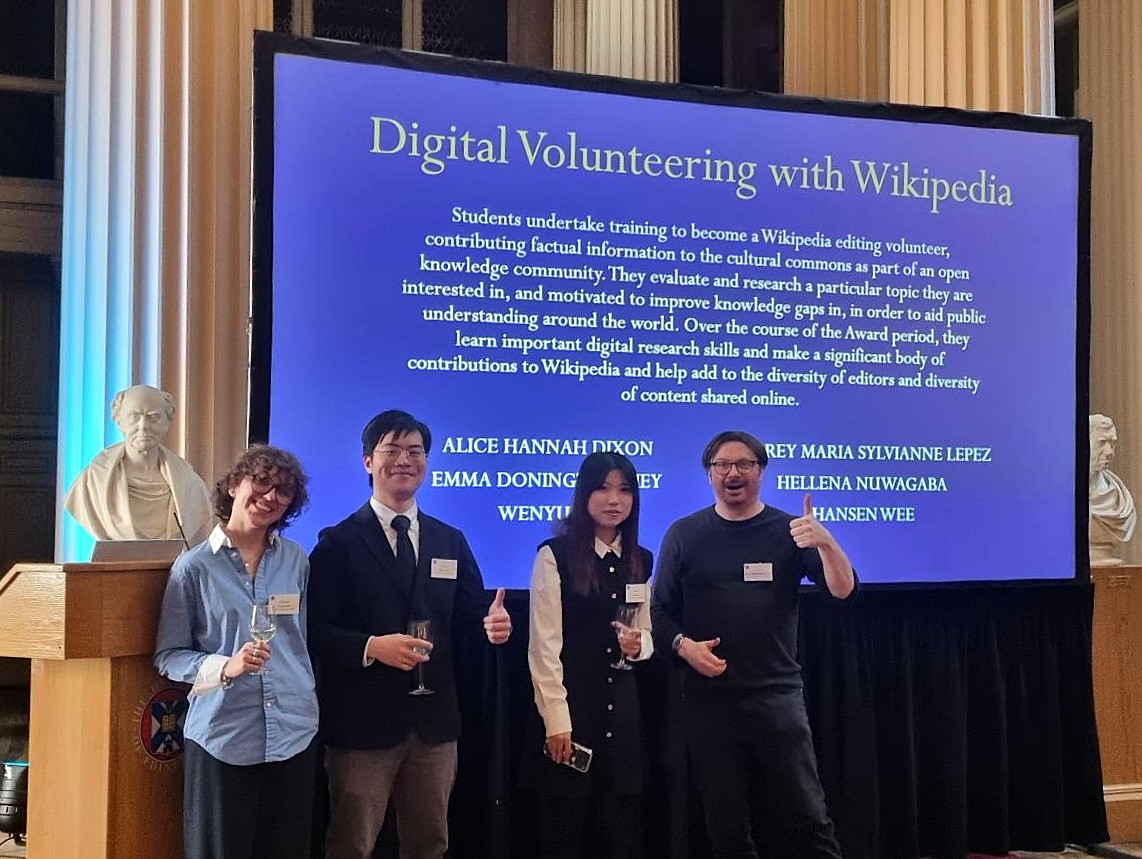
Digital Volunteering with Wikipedia

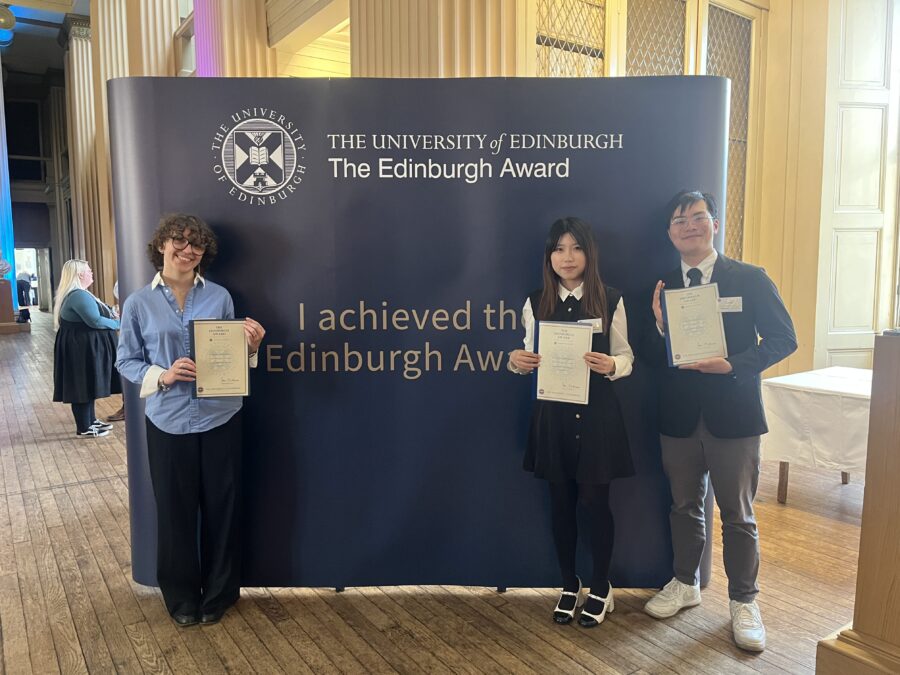
The fourth year of the Edinburgh Award for Digital Volunteering with Wikipedia concluded on 31st March 2025.

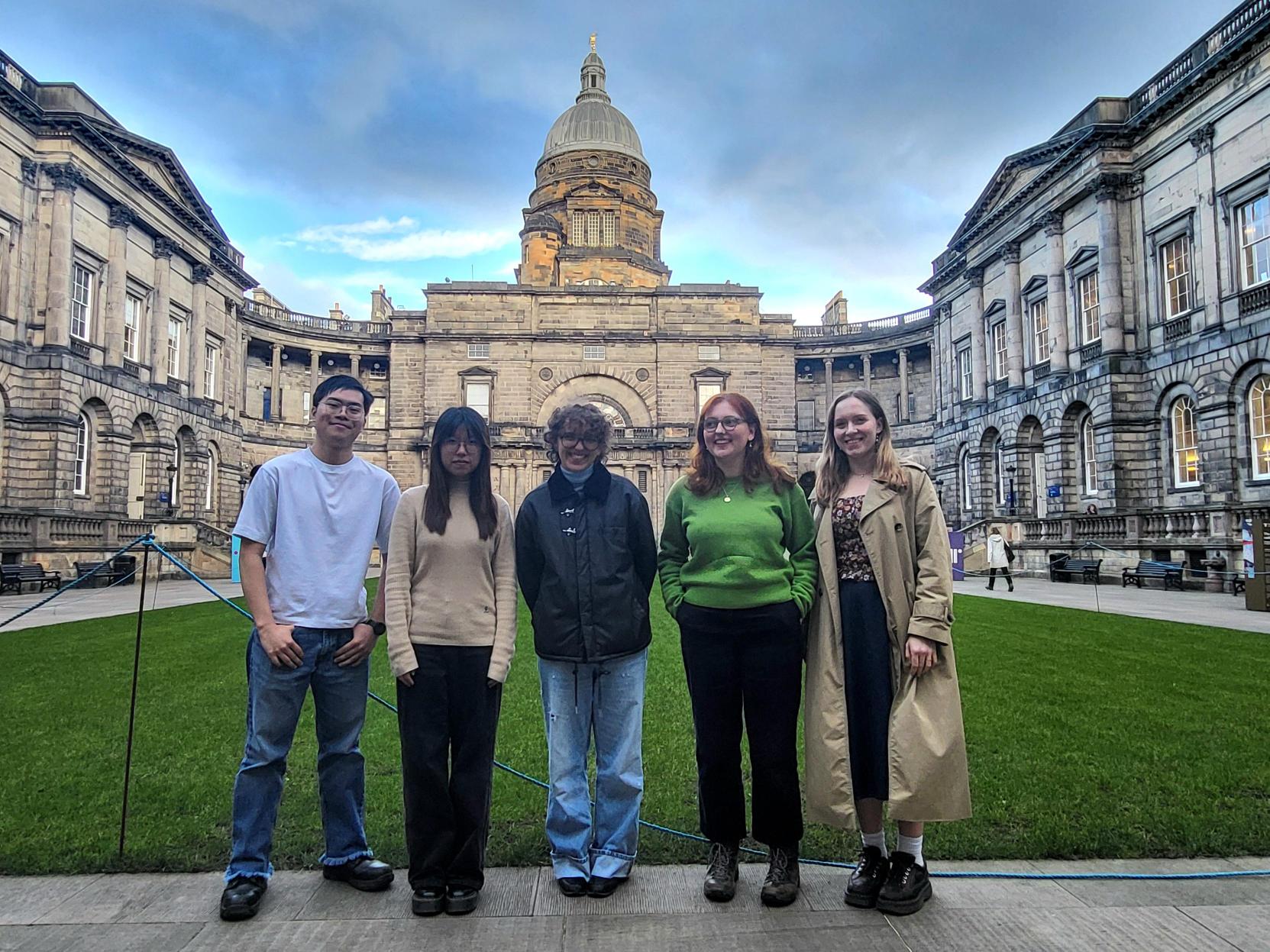
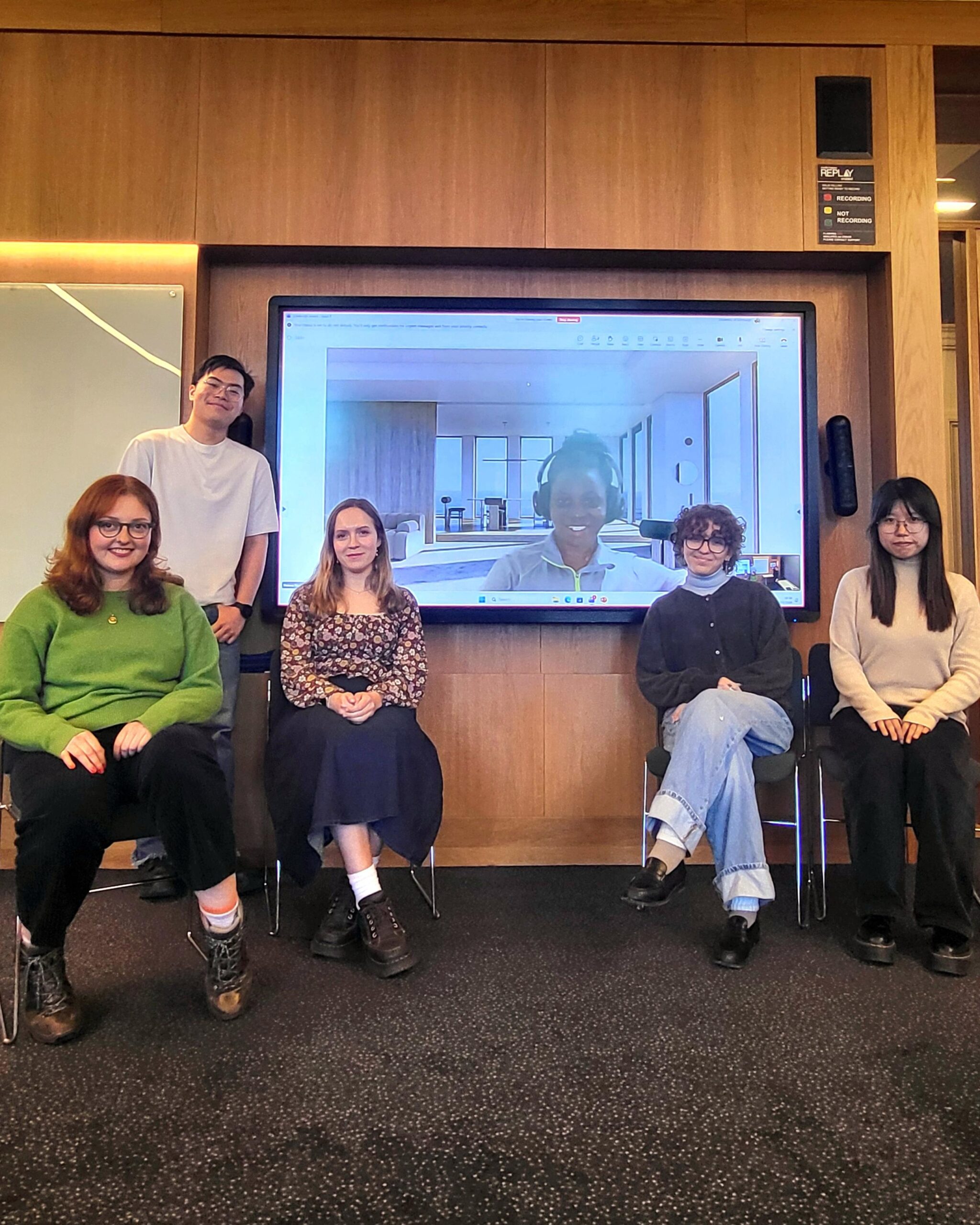
Seven students (and one staff volunteer) completed this extracurricular digital research project amassing both the requisite 55-80 hours of volunteering time AND the significant & demonstrable impact in improving the topic coverage of their chosen project area on the free and open encyclopedia, Wikipedia.

Their projects covered a wide range of topics which often complemented their studies (and at times provided a respite/holiday from their studies) as well as, importantly, enhancing & evidencing their graduate capabilities and digital research skills in such diverse project areas as:

By the award’s completion, our 2025 Edinburgh Award achievers had contributed over 80,000 words and 1200 references to the largest reference work on the internet, and their work had amassed over 1 million pageviews from interested readers all around the world.

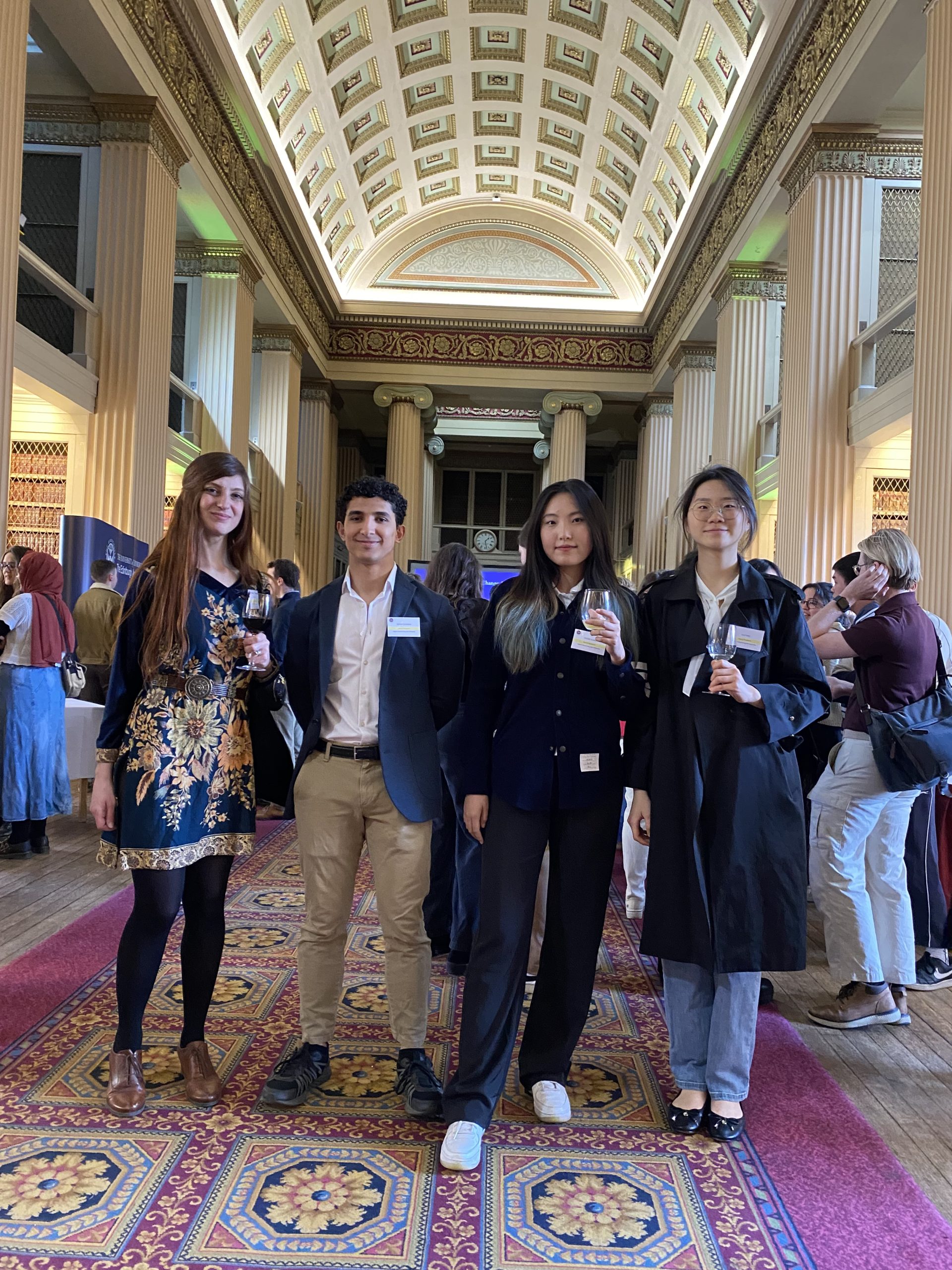
The student achievers were then presented with their certificate of completion, and record of their achievement added on their Higher Education Achievement Report, at a celebration event evening for all Edinburgh Award achievers at the University’s Playfair Library during Reading Week in April.

Watch the 2024/2025 short video presentations on Media Hopper and consider volunteering for this year’s award commencing with a workshop on 21 October 2025 where you can meet other participants and formally enroll.

Register your interest here

And we look forward to working with you and toasting your Award success!

Here’s an example ‘end of award’ presentation by one of our 2023 achievers, Ana Aldazabal (pictured above on left), on her project on Latin American literature (suggested by Professor Fiona Mackintosh).

NB: If you are a member of staff at the University then you can also get involved by suggesting topic areas and/or resources (like course reading lists) that would be helpful and of interest to the students for project idea inspiration as to where they could so some good improving topic coverage on Wikipedia.

This adds to the fascinating work of our past award achievers who have helped improve global understanding on other underrepresented topics such as:

Find out more on our website.

Preserving Scottish Heritage: The Accused Witches of Scotland

This post was written by LLB student Dervla Craig on her first month as Information and Data Literacy intern this Summer.

My name is Dervla and I am going into my second year of the Graduate LLB at the University of Edinburgh. This summer I am doing a 12-week internship with the University’s Information Services Group (ISG) on one of the most fascinating projects I have ever had the opportunity to be a part of: the Accused Witches of Scotland project. 

I am one of a long line of interns who has been involved in this project each year since 2019, which aims to commemorate and spread awareness about those who were persecuted as witches in Scotland during the 16th to 18th centuries. While previous interns have primarily been focused on processing and importing data from the University’s landmark The Survey of Scottish Witchcraft database (2003) into Wikidata and created our witches website with new map and timeline visualisations, this year my role looks a bit different. 

My remit for the 12 weeks is to prepare a bid to the National Lottery Heritage Fund to secure funding for what we hope can be the next phase of the project. Our goal is to preserve the accused witches’ data in the long-term and ensure that people can connect with and participate in this heritage now and in the future. As it has come to the end of my first month, I wanted to join the tradition of blogging about my internship experience so far. 

Getting to know the individual stories of the accused 

My first week was spent diving down the rabbit hole to explore all there is to learn about the Scottish witch trials. If you had asked me to describe an accused witch before this week, I would’ve told you they wore a pointy hat and flew around on a broomstick. I couldn’t have been more wrong! Now when I picture these women, they look like my mother, or my grandmother, or me. They were ordinary people who suffered an egregious injustice, and I was extremely moved when learning about their stories. 

Some of the most valuable tools for my research included The Survey of Scottish Witchcraft, created by Julian Goodare, a history professor at the University of Edinburgh, and his team in the late 90’s, and the interactive witches map resource created by Emma Carroll, a geography student and our former Data Visualisation intern, and our late developer colleague Richard Lawson in September 2019. The Survey made use of the historic records of all the accused witches in Scotland between 1563 – 1736 and organised the details into a MS Access 1997 database, and our new 2019 map brings this data to life in a new and engaging way through importing the data into Wikipedia’s sister project, Wikidata, as linked open machine-readable data. 

Learning about the great work that has been done previously definitely made me realise I have a lot to live up to but also motivated me to give it my all in the next twelve weeks and hopefully produce an end result that meets the standards of my predecessors. 

Writing a National Lottery Heritage Fund bid 

The next thing to familiarise myself with before I could dive into my writing was the bid itself. I spent a few days combing through the NLHF website to understand what it is they are looking for and how our project fits those needs. By getting to know my audience, I could ensure that my writing was intriguing, evidence-based and persuasive. I quickly found out that before submitting the 10,000-word application, I must submit a 1000-word ‘Expression of Interest’. This EoI asks questions about the heritage of the project, what our project aims to achieve, and why it is needed now. At this point, I felt I could write a dissertation for each of these questions, so the tight word count was my biggest enemy. I had lots of help from some lovely colleagues who offered their feedback and advice, including the Project Director of the Survey of Scottish Witchcraft, Professor Julian Goodare. After many tweaks and a few redrafts, I am happy to say at the end of week four that the EoI is pretty much ready to go. 

Exploring avenues for community engagement 

Alongside writing, writing and more writing, I have also been brainstorming ideas for the community engagement side of our project. There have been so many great ideas by the team which have led to interesting and helpful discussions with different people and organisations, including the National Museum of Scotland, Reforesting Scotland, and some really talented artists. Excitingly, most of the responses we have received have been positive and enthusiastic. In the upcoming weeks, I hope to visit some of these places and see firsthand the primary sources from the witch trials. 

Workshops and all-staff events 

Another educational and fun aspect of my experience so far, outside of my bid writing role, has been the plethora of events hosted by ISG. In the past month I have taken part in ‘intern welcome’ socials, Wikipedia writing workshops and even a workshop on an introduction to blogging! Alongside these, I have also attended two all-staff events, one for all Information Services Group (ISG) staff and one for the Learning, Teaching and Web (LTW) division. Not only have I learned so much about the behind-the-scenes and the people who have made my studies possible for the past five years, but these events have also been an opportunity to get to know more of my colleagues and socialise with other interns. At ISG there is a strong emphasis on having a healthy work-life balance and making sure that you and those around you have what you need to produce your best work. 

View of Edinburgh Castle from Floor K, Argyle House. CC-BY-SA by Dervla Craig.

In conclusion, I have had an amazing first month as an intern with the University of Edinburgh. I have learned a lot, met new people, and pushed myself outside of my comfort zone. Plus the amazing view of Edinburgh Castle from Floor K has been a real motivator to work from the office and not from home! I am nothing but hopeful that the next eight weeks will be even more exciting and productive, and that I can blog again soon with positive updates! 

P.S. If you haven’t already, definitely visit The Survey of Scottish Witchcraft and the Map of Accused Witches in Scotland websites! They are both amazing (and important) educational resources that I could browse for hours (and have). 


Powered by WordPress & Theme by Anders Norén