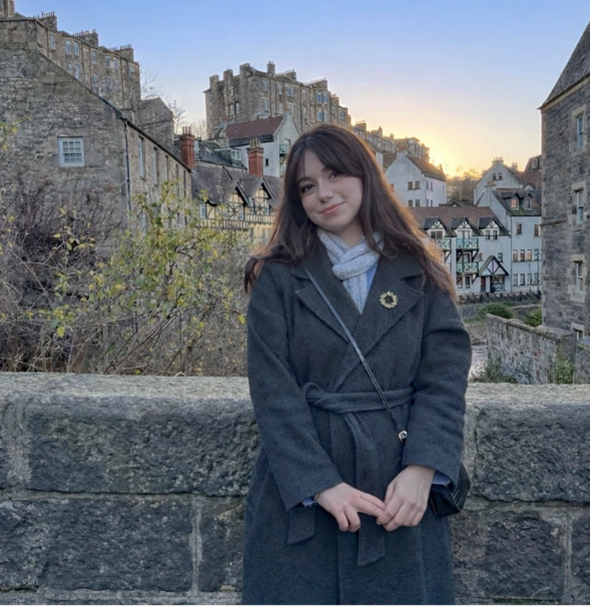
This post is the second written by LLB student Dervla Craig who has worked as our Information and Data Literacy intern this Summer researching and preparing a National Lottery Heritage Fund bid to preserve, and raise public engagement with, the accused witches of Scotland as an important part of Scotland’s heritage.
As I sit to write this blog post, my twelve-week internship is rapidly drawing to a close. How the time has flown! I have learned and achieved so much this summer, and it seems only appropriate that I reflect on and share what this experience has taught me through another blog post.
Since my first blog (Preserving Scottish Heritage: The Accused Witches of Scotland), my research and bid-writing have taken me down many different avenues. The more familiar I became with the past, however, the more questions arose about the present. Why is there still no appropriate memorial to the accused in Edinburgh? Does stigma still exist surrounding these persecuted individuals? How can we at the University best preserve and promote the individual stories of the accused and make sure they are not forgotten to history? Exploring these questions was extremely important for me in ensuring that I understood the context in which the bid lives and the landscape we would be entering with this project.
In my search for answers to these questions, two main areas stuck out to me as requiring more work and attention to make sure the real, human stories of those accused of witchcraft are protected and valued now and into the future: increasing awareness, education, and understanding of the Scottish witch trials, and appropriately memorialising the victims who were accused, tortured and executed.

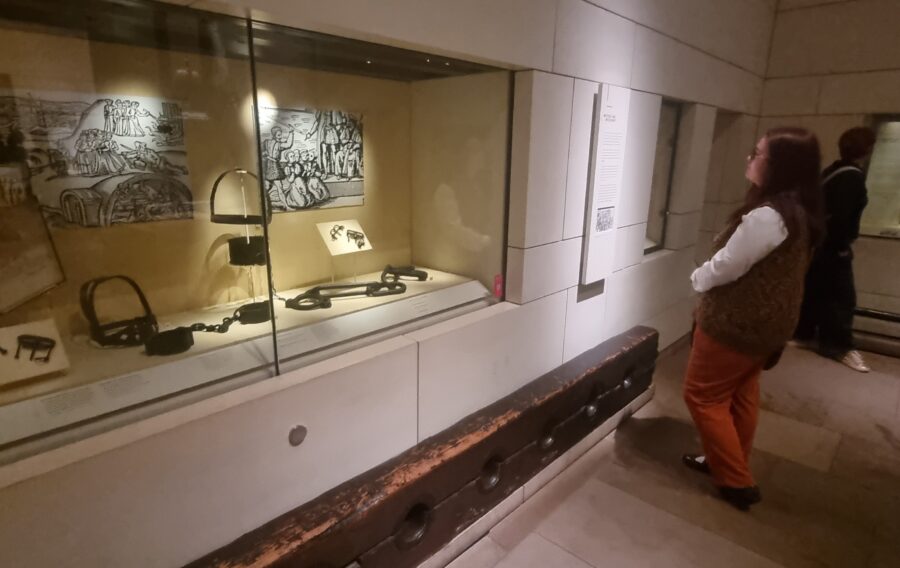
Information board about “Witches and Witchcraft” at the National Museum of Scotland. Pic by Ewan McAndrew, CC-BY-SA
Education on the Scottish Witch Trials
My line manager, Ewan McAndrew, and I have spent the last few weeks consulting with various organisations in an effort to realise the full potential of our bid. One area we explored was how we at the University, as a teaching and learning institution, could help facilitate education on the Scottish witch trials and use our accused witches’ dataset to combat negative perceptions of the accused exacerbated by entertainment-driven media portrayals. I researched the Curriculum in Scotland for secondary schools and was surprised to find that whilst adjacent topics such as King James VI and the Protestant Reformation are covered in detail, the witch trials themselves are largely overlooked. We also spoke with Jo Spiller and Judy Robertson from the University about their work on data education in schools and how our dataset could be a valuable resource.
A huge opportunity for progress in this area came in week eight, when we visited the National Museum of Scotland to meet with Anna Groundwater, the Principal Curator of Renaissance and Early Modern History, Scottish History and Archaeology. She showed us the current witchcraft exhibit, which has remained unchanged for the twenty-seven years it has been on display, and discussed what updates could be made to accurately reflect the research that has taken place in the years since and modern attitudes towards the study of witchcraft and the witch trials. We also had a great conversation about promoting education on this dark period of Scottish history and how we can engage a wider audience with this heritage. This was my first professional meeting, and I am happy to report that it went very well.

Inscription plaque at the Witches Well memorial on Castlehill, Edinburgh. Pic by (Lila), CC BY-SA 4.0 via Wikimedia Commons
The issue of memorialisation
For centuries after the Scottish witch trials, sympathy for the accused was often seen as sympathy for the Devil and as such, there was not much research into the lives of those who were charged with the crime of witchcraft. Whilst modern attitudes have shifted to a more empathetic approach, the issue of memorialisation is still one of great controversy. The only memorial which stands in Scotland’s capital city of Edinburgh is the Witches’ Well on Castle Hill, which is hidden away and has a problematic inscription that has been criticised for its historical inaccuracy and contention that while ‘some used their exceptional knowledge for evil purposes while others were misunderstood and wished their kind nothing but good‘. This assumption that those accused did indeed have supernatural abilities and that the brutality of the Scottish witch hunts was in any way justifiable is extremely harmful to the memory of the innocent people (85% of whom were women) that possessed no such powers but who were tortured and executed for being ‘witches’.
The Witches of Scotland campaign group have long been advocating for a national memorial to the accused which would honour the victims in an appropriate way, and have even created a new, highly symbolic Tartan pattern to honour the victims and act as a living memorial to them. (They also released a Book called How to Kill a Witch: A Guide to the Patriarchy which is a brilliant read and mentions the University’s The Survey of Scottish Witchcraft – I highly recommend putting it at the top of your reading list). In our consultations with various organisations, the issue of appropriately memorialising the accused was one which was met with much interest and enthusiasm, and it seems that a place to go and pay our solemn respects to those whose lives were unjustly taken is something that would largely be supported and welcomed in Edinburgh.
Final Thoughts
Although there is much more work to be done in ensuring that the stories of the individuals who were accused of witchcraft are understood and remembered with accuracy and empathy, an appetite undoubtably exists for promoting these stories and memorialising these individuals in an appropriate and meaningful way. It is within this context that we will be submitting our bid to the National Lottery Heritage Fund with the aim of establishing an open license, publicly accessible resource containing all known information on Scotland’s accused witches that can be used by researchers, historians, authors, artists, teachers, students and so many other groups to support work in and beyond the education and heritage sectors. Alongside this, we plan to run a programme of public engagement events to facilitate the public’s active participation with the data and stories of the accused. Further than simply historical education, we will encourage cultural reflection on themes such as women’s rights and the scapegoating of marginalised groups that permeate not just our past, but also our present.
There is much we as a society can learn from this dark period of Scottish history, and I am hopeful that our bid, if successful, will support future research and work on the Scottish witch trials and bring awareness to the real stories behind the 3837 Scottish people, mostly women, who were accused of and in many cases executed for crimes they simply did not commit. I have been greatly moved by not just the deaths, but the lives of these individuals and am so grateful to have played a role this summer in preserving their memory for generations to come.

Woodcut on display at the National Museum of Scotland from the Newes of Scotland pamphlet depicting suspected witches from North Berwick as they are threatened with a beating as they appear before two Scottish magistrates. Pic by Ewan McAndrew, CC-BY-SA
NB: Dervla has done so well over the last twelve weeks that she is continuing in post (part-time) during her studies this year.
Ps. You can catch the Edinburgh Book festival talk, Women not Witches, by Claire and Zoe of the Witches of Scotland at the Book Festival website.