Supporting the University of Edinburgh's commitments to digital skills, information literacy, and sharing knowledge openly

Author: Ewan McAndrew Page 1 of 13

Wikimedian in Residence at the University of Edinburgh. English & Media Teacher. Film, Travel & Open Knowledge enthusiast.

Wiki Loves Learning – How the Wikimedian in Residence team can support your teaching

Sticky post

What if your students could apply their research and subject expertise to a real audience, while developing digital, information and communication skills along the way?

Ewan McAndrew, Anna Judelsone and Maya Field make up the University’s Wikimedian in Residence Team. Ewan is Wikimedian in Residence, Anna is a PhD student and Assistant Wikimedian, and Maya is the Digital Heritage and Open Knowledge intern supporting digital outputs for Edinburgh Medical School’s 300th anniversary and Nursing Studies 70th anniversary.

Together, they work with colleagues across the University to design Wikipedia-based assignments, deliver training workshops, develop student projects and connect teaching with the wider Wikimedia community. Here, they explain more about their work and how it can contribute to the public good.

What is Wikipedia?

Wikipedia is a free online encyclopaedia available in more than 348 active language editions, with more than seven million articles in English alone. Compiled by volunteers around the world, it is the largest reference work on the internet and the world’s largest open educational resource.

Now 25 years old, Wikipedia has become an important part of everyday life and has democratised access to information globally. It now also powers virtually all the major AI answer services, most of which are beginning to acknowledge, and pay for, fast high-volume access to this freely available, ever-updating resource. While Wikipedia’s knowledge is free, its staff, servers and infrastructure are not.

Not everything is online, and AI carries real gaps, flaws and biases just as Wikipedia is always going to be a work in progress towards achieving the “sum of all human knowledge“. Maintaining a healthy, ethical and reliable information ecosystem therefore depends on people continuing to contribute to, and critically engage with, open knowledge.

What is the Wikimedian in Residence service?

The Wikimedian in Residence service is a free resource for University staff and students who want to learn how to benefit from, and contribute to, Wikipedia and its sister projects. We’re here as a tool in the staff/student armoury in order to facilitate working with Wikipedia as a form of learning technology to be actively, and critically, engaged with rather than passively consumed or abstained from.

In partnership with the charitable organisation Wikimedia UK, the role is based in Information Services. The team delivers digital skills workshops, supports teaching, assignment design and assessment, facilitates volunteer editing events, and advises on integrating open knowledge into research, learning and public engagement.

The team has collaborated with courses and student societies across the University, and across the city of Edinburgh itself, for more than a decade, helping students develop and evidence graduate competencies including: academic referencing; writing for different audiences; literature review and synthesising research; digital skills; data skills; information and A.I. literacy; online citizenship; neutral point of view vs. bias; collaborative working; copyright literacy; and identifying reliable sources.

Participants in curriculum projects and community edit-a-thons have improved thousands of Wikipedia articles during this time. In doing so, they have helped make reliable, fact-checked knowledge freely accessible to millions of readers worldwide. Our students learn about how information is created, curated and disseminated online and help upstream knowledge online and communicate their scholarship openly as empowered and informed ‘knowledge activists’.

Institutionally, this work supports the growing need to develop best practice in AI and information literacy, and also demonstrates the University’s commitment to sharing knowledge openly beyond the ‘ivory tower’, for the benefit of Scotland, the UK and the wider world.

How can Wikipedia support your teaching?

The Wikimedia team works with course organisers to design and incorporate Wikipedia editing into teaching and assessment with twenty-one exemplars of UK assignments already detailed in our Case Studies Booklet (2025) that we would love to add to and showcase work in other disciplines.

The team never recommends citing Wikipedia in academic work. Wikipedia is an ever-updating tertiary resource that relies on reliable published secondary sources; these are the sources students should cite, where suitably verified.

However, writing and editing Wikipedia can be a genuinely powerful teaching and learning activity. Students are asked to step into the role of subject expert and then turn around and explain what they know to a non-specialist public audience, in their own words, without jargon. This is pedagogically valuable in a specific way: to communicate a topic clearly and accurately to a lay reader, you have to understand it deeply enough to articulate it simply, making careful decisions about what matters, what to leave out, and how to explain it in terms anyone can follow. As educators have long observed, preparing to teach a subject is one of the most effective ways to consolidate learning. Wikipedia editing is, in that sense, a form of applied subject mastery.

Students also practise making decisions about evidence, structure and language, receive feedback in a low-stakes collaborative environment, and work towards an objective consensus on how a topic should be responsibly communicated. All while producing something for a real audience rather than simply writing for a tutor or assignment marker.

“We didn’t realise this was history.” – Student feedback on Dr. Huw Halstead’s Dark Tourism MSc history module.

Students frequently arrive expecting a conventional assignment and discover something much more engaging, work that connects their academic expertise with the world beyond the classroom and shows them that their, history degree, for instance, is of relevance to the broader public.

“Actually, knowing about history allows you to participate in these much broader things – things that are of broader interest to people, like Wikipedia. It’s something where actual historians would be really useful, but it’s not primarily used by historians; it’s used by people in their daily lives for all kinds of reasons.”- Dr. Huw Halstead.

What makes Wikipedia assignments unusual is the level of enthusiasm they consistently generate. Many students have used Wikipedia all their lives without ever thinking of contributing to it or even knowing where to begin. The realisation that their subject knowledge actually qualifies them to make it better and that they can do so right now is, for many, a genuine turning point and an exciting one at that. The result is something concrete and public: an article they can share with friends and family, include in a portfolio, and point to as a lasting, visible output of their studies.

For many students, the motivation goes further still. Wikipedia has well-documented gaps in its coverage of women, non-Western perspectives, under-represented communities and topics from everyday life. (Mirroring also many of the problems of topic coverage outside of Wikipedia). Students, therefore, who choose to address those gaps are not simply practising research and communication skills; they are contributing to a more equitable knowledge commons. That sense of purpose, of identifying something missing and doing something about it in a subject they care about, is a powerful source of intrinsic motivation, and it consistently shows in the quality of the work they produce.

Our aim is to make this kind of innovation easier for busy academic colleagues. We provide a free central resource to facilitate innovative practice, share reusable materials and connect colleagues with one another, so that no one has to reinvent the wheel and each year’s course design can build on what has gone before.

Wikipedia assignments can be adapted to suit different disciplines and learning outcomes. With ten years of course-design experience to draw on, the team can also provide reusable resources, including short video explainers and PDFs that can be embedded directly into VLEs.

Students can:

  • evaluate Wikipedia pages individually, in pairs or in groups;
  • conduct literature reviews;
  • explore how pages change over time;
  • research an underrepresented topic;
  • create a new article or improve an existing one;
  • translate pages;
  • illustrate pages with photographs, diagrams or video; or
  • contribute to other Wikimedia projects such as Wikidata, Wikimedia Commons, Wikibooks and Wikisource.

The team can support:

  • designing a Wikipedia assignment;
  • developing suitable topics and worklists;
  • delivering Wikipedia editing workshops and presentations;
  • supporting students throughout the editing process;
  • advising on assessment and learning outcomes;
  • connecting students with relevant Wikimedia projects and communities; and
  • delivering practical data-skills training using Wikidata.

Some courses have made Wikipedia assignments a regular part of their curriculum, including Reproductive Biology BSc, Translation Studies MSc, Global Health Challenges (PG Online), Masters in Public Health, History of Art, Design Informatics, Korean Studies MSc, Chinese Politics, World Christianity MSc, Mediaeval History, Dark Tourism MSc and more.

What happens at an edit-a-thon?

Edit-a-thons are social and supportive training workshops held in person or as hybrid or fully remote events. They begin with a practical 30–60 minute introduction to Wikipedia editing, covering the basics of formatting, community guidelines and principles of good Wikipedia writing.

Participants then choose a topic, research it using reliable published secondary sources, and synthesise their research into a new article or improve an existing one, writing entirely in their own words before publishing their work as a readily accessible encyclopaedia entry.

This gives students the opportunity to contribute to an important knowledge resource with a genuine public audience. Their work is indexed by Wikipedia and, within hours, by Google. Edits are saved transparently in a page’s edit history, while new articles are monitored by ‘New Page Patrol’ volunteer editors who can provide feedback and revert unhelpful edits where necessary.

Our monthly edit-a-thon workshops usually take place at the Main Library or online, but they can also be held on different campuses or in collaboration with the city’s many libraries, galleries, museums and archives.

A recent partnership with the National Records of Scotland, for example, saw us run a workshop linked to their exhibition, For the Safety of All: Scotland’s Lighthouses.

Supporting students beyond the curriculum

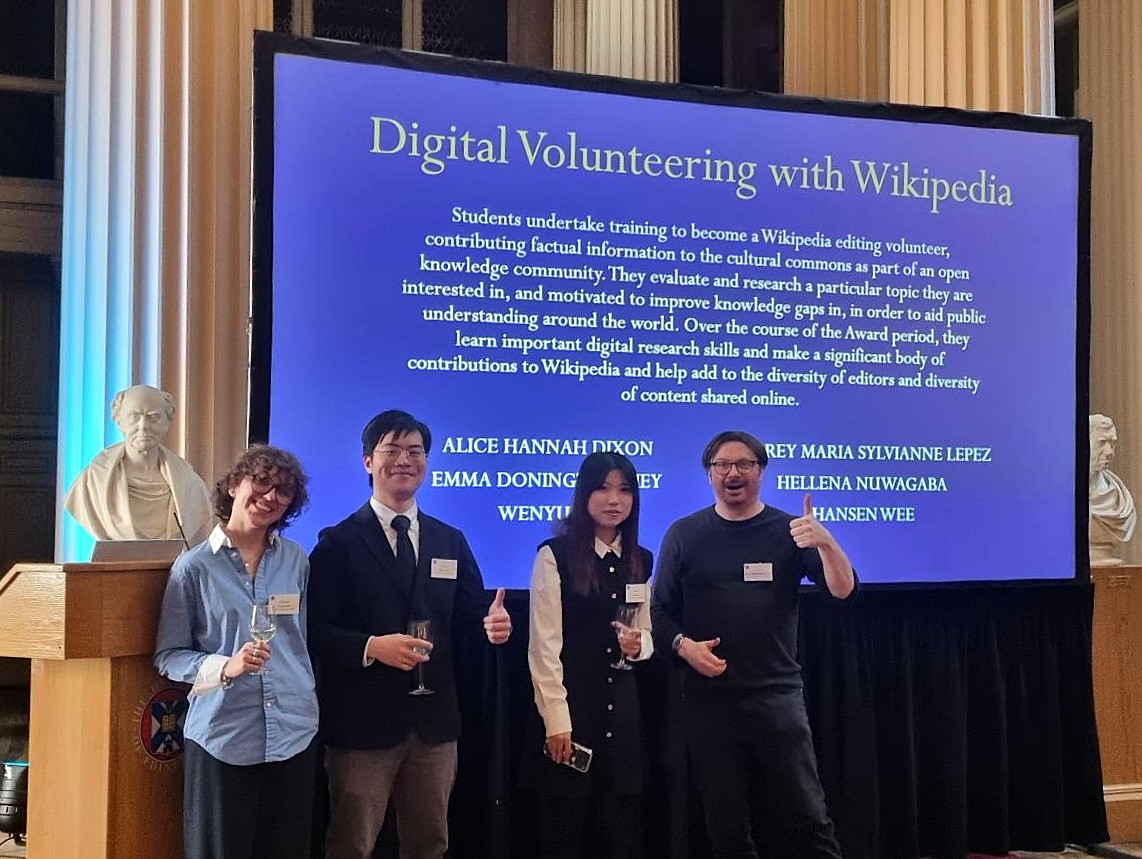
The programme also supports the Edinburgh Award in Digital Volunteering with Wikipedia. This gives students an opportunity to develop and evidence graduate skills through an extracurricular project contributing to open knowledge between October and April.

Students dedicate 55–80 hours of voluntary work to researching, writing and illustrating Wikipedia articles on a topic that interests them, either to complement their studies or as a rich and rewarding side project.

Over the last five years, the programme has accredited student achievers on their Higher Education Achievement Report for their scholarship and commitment to addressing knowledge gaps. Their articles have collectively attracted millions of page views, covering a wide range of topics including: Pictish Stones; Japanese Fashion Subcultures; the History of Menstruation; Women authors of the MENA region; Biochemistry; Women in Astronomy; Ugandan culture and cuisine; the History of Brunei; the Qingtian Diaspora; Greek Poetry; Artworks of Edinburgh; women artists such as Helen Chadwick; Witches in Past and Present; Latin American literature; Francophone literature; and Singaporean biographies.

This year, planned collaborations have already included the National Library of Scotland on its Edinburgh Fringe archive, and the National Records of Scotland on the Scottish Lighthouses exhibition with potential collaborations being discussed with Historic Environment Scotland and Royal Botanical Gardens. These projects will give students access to different experiences, different types of sources and further opportunities to develop and evidence their research skills.

We also encourage staff to suggest project ideas, books, people, organisations, exhibitions and reading lists that might inspire our 2026/27 cohort to go down the rabbit hole and contribute to our shared knowledge globally.

Have an idea? Let’s explore it.

You don’t need to have a fully formed assignment or project in mind. If you’re wondering whether Wikipedia or another Wikimedia project could work with your course, assessment or student activity, talk to us.

We can help you explore the possibilities, identify suitable topics and resources, draw on examples from across the University, and support students through the process.

All our Wikimedian events are posted on Eventbrite and MyEd event bookings, and training courses are also available through People and Money.

Why not suggest your own idea for a collaboration?

Visit the Wikimedia in Residence website or email ewan.mcandrew@ed.ac.uk to find out more.
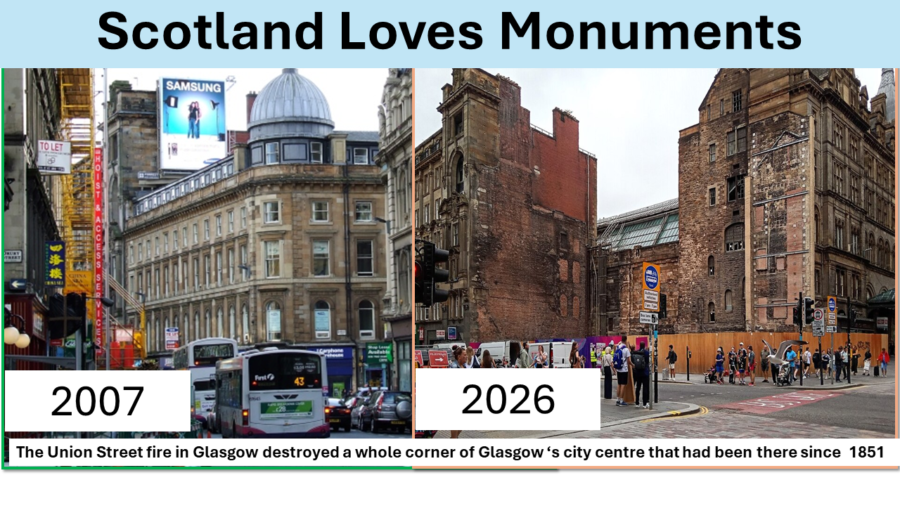
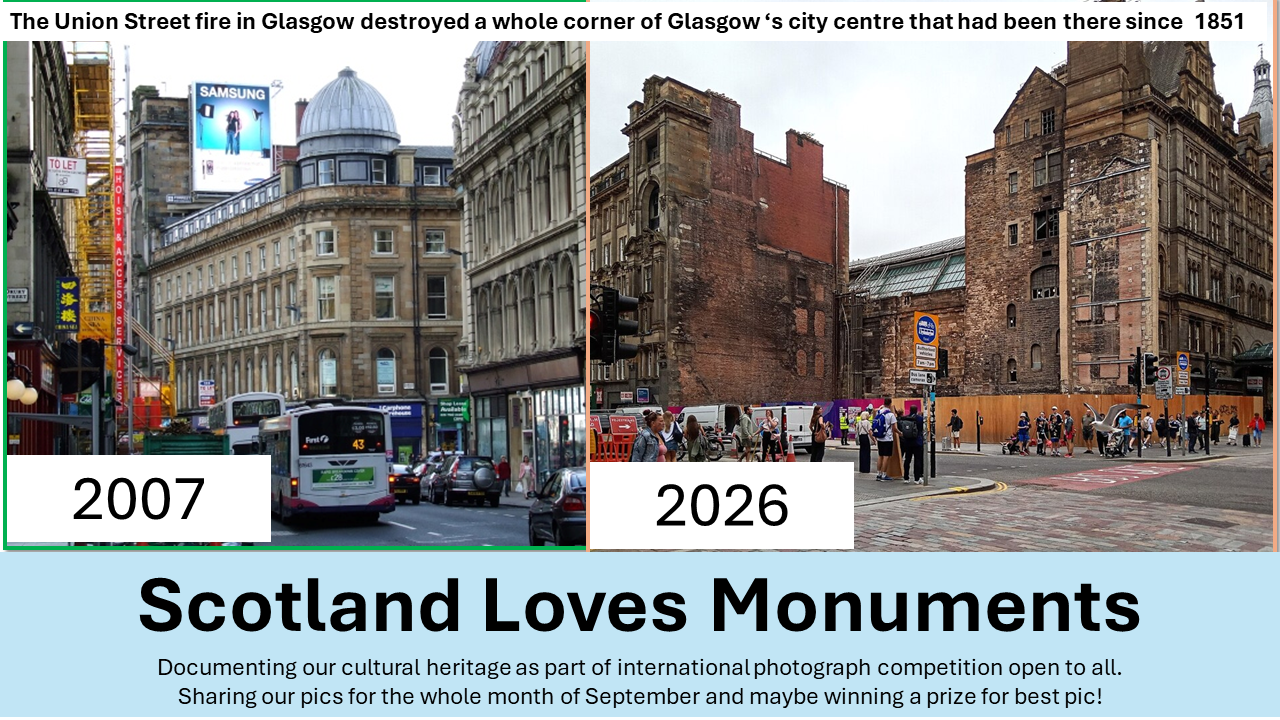
A photo of the Union Street corner building, its four storeys and its dome at the top, taken from Renfield Street and showing a bustling busy city scene with buses. This was in 2007. The image next to it is from 2026, showing the empty space where the buklding was demolished in 2026 following the fire destroying the 1851 building entirely.

Wiki loves Monuments 2026 – The world’s largest photo competition returns

The world’s largest photo competition, Wiki Loves Monuments, returns this month for its 16th year. Eight years ago, Scotland was voted the most beautiful country in the world in a Rough Guide readers’ poll.

For some reason we’re not in the top 20 this year …. but hey ho, there’s still nowhere quite like it. Thousands of visitors come to visit Edinburgh, Glencoe, Skye…. and Loch Ness (Nessie) every year. And Spiderman: Brand New Day, The Odyssey, World War Z, The Batman and Indiana Jones and the Dial of Destiny have all filmed here in recent years.

Yet, we can take it for granted that our beautiful locations, listed buildings and monuments will always be there… something that can never be fully guaranteed. Political and economic tides change and forces of nature can have devastating effects as we have seen with the floods in Nepal, earthquakes in Venezuela, the war in Ukraine, the destruction of Palmyra in Syria, the fires at the National Museum of Brazil, Notre-Dame Cathedral in Paris and, more closer to home, the Mackintosh building fire at the Glasgow School of Art, Charles Rennie Mackintosh’s masterwork. Or more recently again, the Union Street fire in Glasgow (pictured above) which removed a whole corner of Glasgow’s city centre that had been there since 1851.

There is a grief that comes from these lost buildings, their histories and what they had come to represent & symbolise. Recognising that there can be a profound regret and sadness at the cultural losses and a significant connection with the past means we can act today to look around us and appreciate the cultural heritage all around us. Many of us have access to a camera or camera phone and may even walk past these buildings every day. All it takes is looking up, taking a snap and uploading it in seconds and you’ve done something amazing to help document our cultural heritage for all time.

That’s why it’s so important that we take the opportunity to document our cultural heritage now for future generations before it is too late. Share your high quality pics of listed buildings and monuments to Wikimedia Commons and help preserve our cultural heritage online. After days out, weekend breaks and holidays at home & abroad, there will be gigabytes of pics taken in recent months and years. These could remain on your memory card or be shared to Commons and help illustrate Wikipedia for the benefit of all.

A photo of the Union Street corner building, its four storeys and its dome at the top, taken from Renfield Street and showing a bustling busy city scene with buses. This was in 2007. The image next to it is from 2026, showing the empty space where the buklding was demolished in 2026 following the fire destroying the 1851 building entirely.

Aside from being great fun, Wiki Loves Monuments is a way of capturing a snapshot of our nation’s cultural heritage for future generations and documenting our country’s most important historic sites. Don’t wait till it’s too late, do your bit today! Click here to view a map of your local area to get started.

You just take a quick look at the map, take a pic and upload. It takes seconds and is the easiest way to take part in this year’s competition.

If each one of us took just 1 pic, we’d have this sewn up in a few short weeks. Which is when Wiki Loves Monuments closes – end of 30 September 2026. But if you can do more then great.

#ScotWiki #WikiLovesMonuments

ps. If nothing else, let’s give our counterparts in Ireland, England and Wales a run for their money in terms of how many images we can upload. A little friendly rivalry never hurts, right?

Let’s smash it again this September! Let’s see if we can get pics from ALL over Scotland this year. Everyone is welcome to take part and every picture helps.

You can check out the images uploaded so far for Wiki Loves Monuments in Scotland here.

Don’t know where to begin? Why not join our Scotland’s Lighthouses event on Wed 23rd September held at the grand National Records of Scotland building overlooking the whole of North Bridge in Edinburgh.

Email ewan.mcandrew@ed.ac.uk if you want to know more.
Glenfinnan Viaduct at Loch Shiel won 2nd place in UK prizes, let’s see if we can win first place this year!
Pic by Paul Stümke CC BY-SA 4.0from Wikimedia Commons

Get involved in Wiki Loves Monuments!

Wiki Loves Monuments is an international photo competition which takes part throughout the month of September every year, and is supported by the nonprofit Wikimedia Foundation.

The aim is to crowdsource as many high quality, openly licensed photos as possible of scheduled monuments and listed buildings throughout the world. Why? Because documenting our cultural heritage today is so important.

In the UK, there will be prizes for the best photos of a site in England, Northern Ireland, Scotland and Wales as well as prizes for the best UK photos overall. The latter will then be put forward for international prizes and there are some phenomenal pics from last year’s competition worldwide like this one of St Andrew’s Church (1747 — 1762) at dawn, Kyiv, Ukraine by Maksym Popelnyukh:

St Andrew’s Church (1747 — 1762) at dawn, Kyiv, Ukraine by Maksym Popelnyukh

Why take part?

Wikimedia Commons is a free repository of photographs, audio and video content that anyone can use, re-use or distribute. Images on Commons can also be used to illustrate Wikipedia articles – which can then be seen by a global audience.  But not all of our rich heritage is represented – there are a number of gaps when it comes to the coverage of Scotland – and this year, we’d like to do what we can to change that. Especially when this is something fun and impactful we can all do.

Is your organisation or group looking for activities?  Wiki Loves Monuments can be a great activity for local social or volunteer groups, not just those those concerned with photography or history.  Why not organise a heritage walk to take pictures of listed buildings in the local area, and visit the local museum or library at the same time?

Collage of Wiki Loves Monuments pics by Stinglehammer, CC-BY-SA 4.0

How do you take part?

Register for an account on Wikimedia Commons. (Individuals only, no organisational accounts.) NB: If you already have a Wikipedia account, no need to register for a new account on Wikimedia Commons, you can use the same account for Wikimedia Commons. To enter the competition you must make sure that your account has a valid email address and that your email is activated.

Here’s a short 2 min video explainer by Classics student, Hannah Rothmann – you can use this new tool to view places to photo near you.

What should you photograph? How do you upload it?

In Scotland, the subjects eligible to be entered in Wiki Loves Monuments are those designated by Historic Environment Scotland references for Listed Buildings and Scheduled Monuments. If you’re not sure what buildings or monuments are classed as listed, don’t worry! We’ve got a great tool for you to use to upload your photos which includes an interactive map.

Green pins on the map indicate monuments which already have a photo on Wikimedia Commons, whereas red pins indicate where they are missing. Select your town or city then wander around your local area and look for buildings or monuments with red pins. You can take photos on smartphones, tablets or cameras and then upload them by selecting the appropriate pin on the map and clicking upload. Make sure that you are logged into your Wikimedia Commons account and follow the basic instructions. Every photo uploaded via the interactive map will be entered into the Wiki Loves Monuments.

You can take more than one photo of a building or monument. Preferably one should be a photo of the building or monument as a whole, but also use your photographic flair to add photos of key features, inside views or behind the scenes features that the public doesn’t normally get to see. Doors Open Day runs throughout September and is a great opportunity to organise a photography tour of a building or a tour of the local listed monuments in your town.

I’ve had the pleasure of visiting and snapping pictures of the Glasgow City Chambers, the Royal College of Physicians and Surgeons, the Anchor Line bar, Garnethill Synagogue and the Arlington Baths among many other locations as part of Glasgow Doors Open Days.

Other tips:
Not sure that your photo skills are up to the competition? Don’t worry about it, the important thing is to take part. The more photos we can crowdsource, the more we can improve the coverage of listed buildings and monuments in Scotland, which is our ultimate goal. You can also check the Wiki Loves Monuments blog for tips on how to best take architectural photos.

How can you take part?

  1. Do you work near a listed building? Why not go for a walk before, during or after work? Or visit places for Doors Open Days or beyond Or organise a heritage tour or walking tour yourself! Just add a picture!
  2. If you do take part, please post on social media about it! @WikiLovesUK #ScotWiki #WLM #WLMUK
  3. If you’ve got any questions, just email ewan.mcandrew@ed.ac.uk and we have a Scotland Programme Manager for Wikimedia UK too. sara.thomas@wikimedia.org.uk / scotland@wikimedia.org.uk

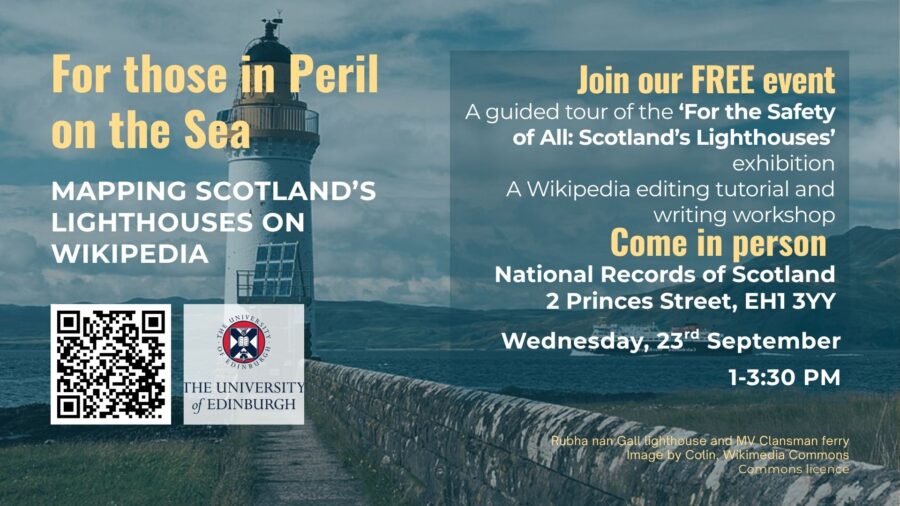
For Those in Peril on the Sea: Mapping Scotland’s lighthouses on Wikipedia

Join us for an expert-led guided tour of the exhibition ‘For the Safety of All: Scotland’s Lighthouses’ followed by a fun and interactive Wikipedia edit-a-thon on Wed 23rd September.

Let’s improve coverage of Scottish lighthouses in a stunning, historical building of the National Records of Scotland and turn Wikipedia’s “red links” (pages that don’t YET exist) into well-researched, published articles! No prior knowledge or experience required.

Book your place on Eventbrite here

All we need is 50-100 words+ and where you cite what you write and we can PUBLISH your work as a brand new page filling important knowledge gaps in our search results. Images all help too, some stunning lighthouse buildings and lonely Scottish promontories are not well illustrated at all online.

We can change that. #WeCanEdit

What to expect?

This in-person event will begin at the lobby of the General Register House, where the archivists, Jessica Evershed and Jocelyn Grant will take you on a guided tour of the exhibition. ‘For the Safety of All’ features enticing histories of the Bell Rock Lighthouse and the mystery of the Flannan Isles lighthouse keepers’ disappearance. Then visitors will get a unique change to have a closer look at the historical records unavailable to the public.

Afterwards, participants will have a chance do do their own research and improve the information gaps on Wikipedia. You will learn how to edit Wikipedia pages, then write and publish your very own article with guidance and support from us.

You’ll learn a new digital skill and meet like-minded people, who are all passionate about the unique legacy of Scottish engineering. Make this your day to make a difference!

Agenda

  • 1pm – 1:30pm: Guided tour of the exhibition and the records display
  • 1:30pm – 2pm: Wikipedia training from Anna Judelson.
  • 2pm – 2:15pm: Tea and Coffee break
  • 2:15 pm – 3:15pm: Research and Editing.
  • 3:15 pm – 3:30pm: Publishing your work and the event closing

What to bring?

Please bring your own laptop! The rest is sorted.

Have a look at the event page to see if there are pages you would like to help edit/create and if you fancy learning more about Wikipedia ahead of time then you can view the Wiki Basics site.

Email ewan.mcandrew@ed.ac.uk if you have any questions.

Please note:

  • The Doors Open Day programme for 2026 is live. Doors Open Days is Scotland’s largest free festival that celebrates places and stories, new and old.  Every September you can explore hundreds of fascinating buildings across Scotland for free. Some open up once a year, some just once a lifetime.
  • Wiki Loves Monuments – the world’s largest photo competition is live for the whole of month of September. This international photography competition is supported by the nonprofit Wikimedia Foundation and the best images can win prizes. You can see historic locations near you that are missing an image using our handy interactive map (red pins are locations without an open image). The aim is to crowdsource as many high quality, openly licensed photos as possible of scheduled monuments and listed buildings throughout the world. Why? Because documenting our cultural heritage today is so important.
  • The Edinburgh Award for Digital Volunteering with Wikipedia is OPEN too if you are a student wishing to register for a University of Edinburgh accredited 55-80hr volunteering programme to complement (or be a holiday from) your studies and where fascinatingly rich topics like Scotland’s Lighthouses or our other recent event with the National Library of Scotland on the History of the Edinburgh Fringe could be better documented, recorded and illustrated on Wikipedia from 21 October  2026 to 31 march 2027. If you are a lecturer with an idea (or a reading list) or a curator/archivist/librarian or indeed anyone with a project idea that could make for a rich student experience and plug some important histories and information gaps online then do get in touch.

Celebrating Edinburgh Medical School and Nursing Studies: Reflections from my first weeks as an intern

Guest post by Maya Field, Digital Heritage and Open Knowledge intern.

Hello! I am Maya, this year’s Digital Heritage and Open Knowledge Intern at the University’s Information Services Group. My role this summer focuses on exploring the digital outputs that can be created to celebrate the heritage of both Edinburgh Medical School and Nursing Studies as they mark their 300th and 70th anniversaries respectively.

As a History student here at the University of Edinburgh, I am lucky enough to spend much of my time studying in the Old Medical School, the same place where my grandfather, Dr Dileep Godbole, studied for his surgical examinations after moving from Mumbai, India, in the 1970s. This connection, alongside my interest in uncovering the histories of people who have often been overlooked in the historical record, has made me incredibly excited to work on this project and to explore the diverse history of medicine and nursing at the University.  

Alongside settling into my role and putting my ability to remember names to the test, my first week involved being trained by my line manager, Ewan McAndrew, in the basics of editing Wikipedia. Armed with this new knowledge, I was soon presented with a collection of Japanese-language sources relating to Agnes Vetch, a Scottish nurse who trained at the Royal Infirmary of Edinburgh and went on to become a pioneer of nursing education in Meiji-era Japan. Despite her remarkable career, her story had previously only been documented on the Japanese-language version of Wikipedia. 

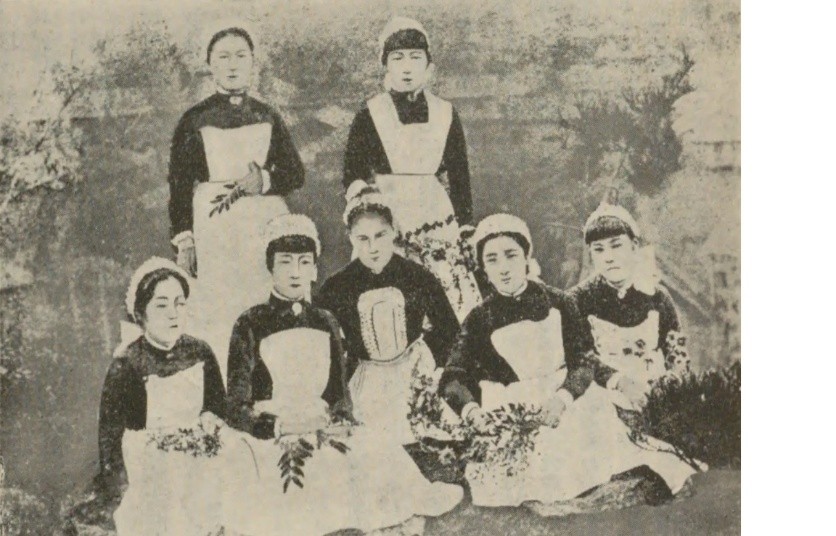
Agnes Vetch, seated in the centre of the front row, with her nursing students from Sakurai Girls School, Tokyo, 1888.

Agnes Vetch, seated in the centre of the front row, with her nursing students from Sakurai Girls School, Tokyo, 1888. Public domain via Wikimedia Commons.

Using these sources, alongside additional research, I created and expanded an English-language article about her life and career. It was a fascinating introduction to the role, not only because it allowed me to learn about an extraordinary woman, but also because it highlighted how many important figures in the history of medicine and nursing remain largely absent from public knowledge resources.

I was also given the opportunity to present this work at the Usher Institute alongside Ewan and fellow intern Anna as part of a session on public health literacy and Wikipedia. It was particularly interesting to hear from both of them about the importance of Wikipedia as a public health resource and the role it can play in making reliable information accessible to a wide audience.  

Beyond Wikipedia, much of my work so far has focused on Nursing Studies. With the help of Pam Smith, Professor of Nursing Studies at the School of Health and Social Science, I have been introduced to a wide range of resources relating to its unique history as the first nursing degree programme at a UK university. I’ve spent a lot of time carrying out detective work in the University Centre for Research Collections, looking at stories that have yet to be told, from members of the first cohort to developments in mental health nursing and the programme’s global connections. I am looking forward to continuing this research over the coming weeks and, hopefully, sharing some of these stories by the end of the internship. 

Overall, it has been a lovely and varied introduction to the role. I have been welcomed by so many lovely people across ISG, as well as by my fellow interns. A Forrest Hill scavenger hunt with the other interns provided a great introduction to both each other and the maze that is the building itself! I am excited to continue my work with Nursing Studies, get stuck into the Edinburgh Medical School 300 project, and see what the rest of the summer has in store! 

Fifth year of “Digital Volunteering with Wikipedia” – the Edinburgh Award

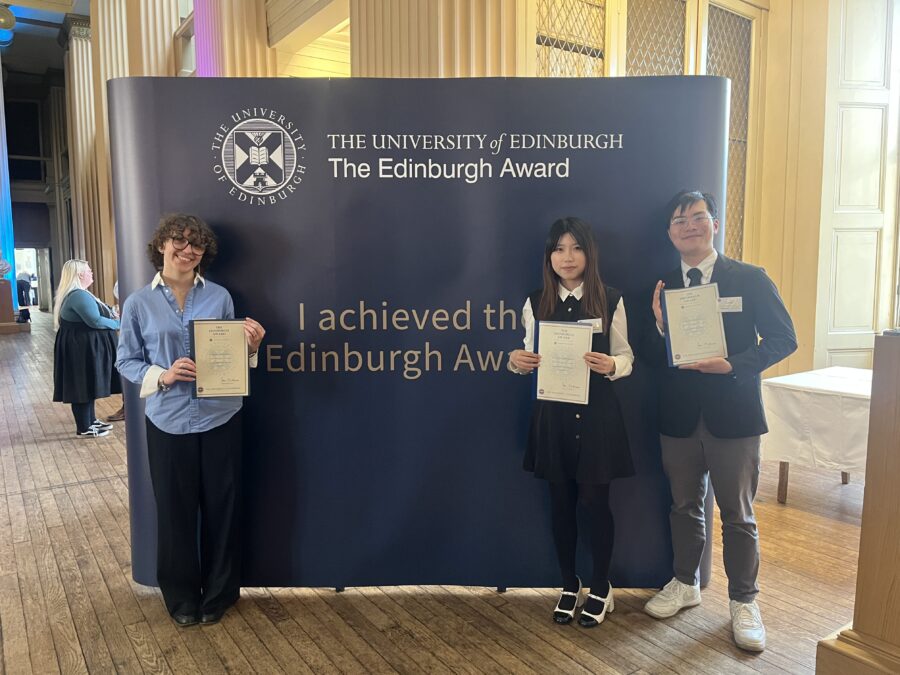
We know that many students are involved in activities alongside their studies such as volunteering, part-time work, and getting involved in the University community. To help these activities to stand out from the crowd, our University has had an Award for “Digital Volunteering with Wikipedia” to sit beside other available Edinburgh Awards for the last five years now. The Edinburgh Award is a programme that allows students to get official recognition for their involvement in extracurricular activities and demonstrate their digital capabilities to employers.

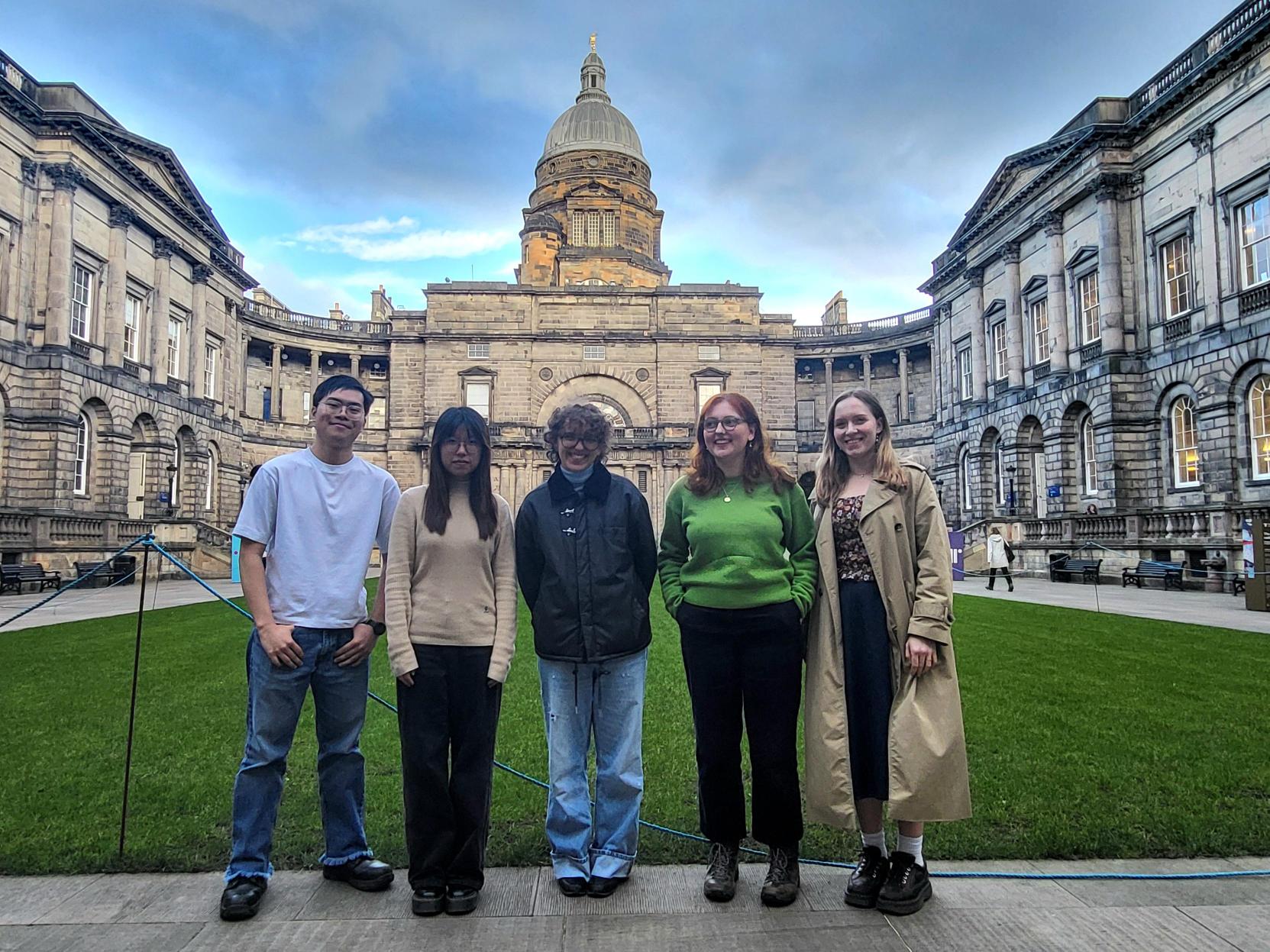
Our five (in-person) award achievers in Old College quad. Pic by Anna Judelson CC-BY-SA

There are many different types of Edinburgh Award activity students can undertake but Digital Volunteering with Wikipedia focuses on developing three Skills for Success (e.g. digital literacy, written communication, time management, assertiveness & confidence etc.) over the course of 55-80 hours of work and providing evidence of demonstrable learning, reflection and impact. These hours are staggered over the October to end of March period punctuated by three main mandatory “input” workshop sessions.

In the first, Aspiring, in mid October the students self-assess themselves against the Skills for Success framework and select three to develop as part of the award. They also select a topic area of Wikipedia they wish to improve and submit a 400 word action plan for how they plan to develop their chosen Skills for Success and how they’ll deliver impact.

Once they have had training and researched their topic areas, the 2nd Input Session, Developing, in early December, requires them to re-assess if their Likert scale ranking of their chosen Skills for Success has changed at all, and submit a completed Fortnightly Log of Activities designed to evidence their work to date and their reflections on how they are progressing  and action planning towards their personal project goals. We hold fortnightly group research sessions in the library (because there are vast useful resources there and because not everything is online) to help their research and allow them to come together to discuss their projects, ask questions, help one another and edit in a social and supportive environment.

The final Input Session, Owning, is about coming together to share their project outcomes and unique reflections. In addition, to this it is also about ensuring the students get the opportunity to tie all this personal and professional skills development in with their future goals and how they will communicate about their Edinburgh Award experience to their peers, academic advisors and future employers. This session takes place at end of March and their final submissions are an 800 word report and 5-10 minute presentation reflecting on both their impact achieved and the development achieved in their three chosen Skills for Success.

Topics suggested by students to improve online

More interestingly, are the fascinating topics the students have wanted to write about over this last year and over the last five years: Scottish history and archaeology; Japanese fashion subcultures (Gothic Lolita); Japanese art history; Singaporean people; Artefacts of the Republic of Congo; Ugandan culture and cuisine; Climate change, Covid-19, LGBT History, Black History, Women artists, Women in STEM. Marginalised groups, underrepresented topics, some of the biggest and most pressing challenges in the world today. This shows me, year on year, that students are ‘switched on’ and recognise the importance of addressing knowledge gaps and improving the world around them. Indeed, they had personally chosen to deep dive into their topics and become passionate & knowledgeable about them. And in their end of project presentations, it was abundantly clear they could all articulate (and evidence) such deep reflection and critical thinking on the act of editing and the sense of deep responsibility they felt in ‘taking on the mantle of the expert‘ to communicate their chosen subject as well as the intrinsic motivation and pride they each felt in helping to share their published outputs openly & globally to improve representation online.

Here’s our final six award achievers:

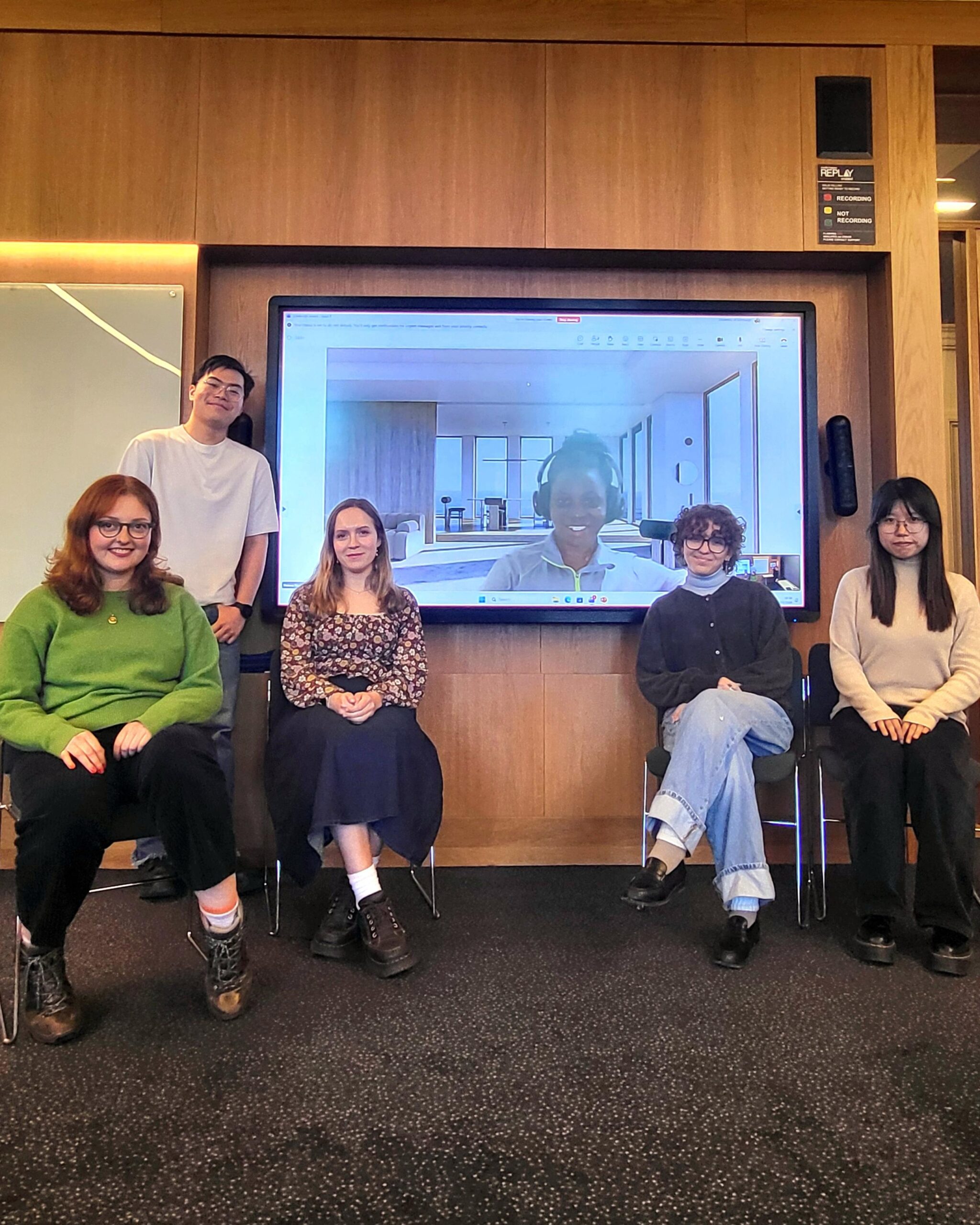
The final six students (Hellena joining us remotely from Uganda). Pic by Anna Judelson CC-BY-SA

We started in October with a large cohort off 24 interested students but this reduced to 6 by Input 3 but this was to be expected and is in line with other Edinburgh Award programmes similarly asking students to undergo over 55 hours in extracurricular volunteering when they have lots of other demands on their time and commitments like their studies and part-time jobs among others.

These final SIX ‘knowledge activist’ heroes have been put forward to achieving the Award this year.

The projects

  1. Singaporean biographies
  2. Pictish Stones
  3. Japanese art and fashion
  4. Artefacts of the Republic of Congo
  5. Ugandan cultural heritage.
  6. Japanese fashion subcultures.

The outcomes

138,000 words have been added to Wikipedia and over 1,500 references to pages viewed almost 4 million times already! Our most words contributed ever!

You can watch all their presentations on our Media Hopper playlist.

Playfair Library celebration event – 21 April 2026. Pic by Ewan McAndrew, CC-BY-SA

Digital Volunteering with Wikipedia – the Edinburgh Award runs each year from mid October to end of March. Visit our website page about the award and/or email ewan.mcandrew@ed.ac.uk if you are a student interested in taking part of a member of staff wishing to get involved and suggesting topic areas or resources/reading lists to be used next year.

Here is a presentation by Emma on Japanese art and fashion:

Here is a presentation by Alice on Pictish Stones in Scotland:

Here is a presentation by Wenyu on Gothic Lolita fashion and Japanese fashion subcultures:

Here is a presentation by Audrey on artefacts of the Republic of Congo:

Here is a presentation by Hellena on Ugandan cultural heritage objects:

Here is a presentation by Hansen on Singaporean biographies:

Anna Judelson, PhD student and Assistant Wikimedian in Residence at the University of Edinburgh, CC-BY-SA.

My Wikimedia journey so far

Guest post by Anna Judelson, PhD student and Assistant Wikimedian in Residence at the University of Edinburgh.

I started my internship as an Assistant Wikimedian in Residence almost four months ago, and it has already been one of the most rewarding work experiences I have had. The work is varied, creative, and, most importantly, impactful. It makes me genuinely excited about the remaining two thirds of this placement.

Anna Judelson, PhD student and Assistant Wikimedian in Residence at the University of Edinburgh, CC-BY-SA.

When I began, I did not realise how powerful Wikimedia could be as a tool for digital activism. It offers free, community-owned access to knowledge, but there are still significant gaps to address before it can be truly inclusive. For example, only about 20% of English Wikipedia’s biographies are about women, while people of colour and members of queer communities remain similarly underrepresented.

So far, I have created and edited four articles on remarkable individuals from marginalised communities, the most recent being an article on Emeritus Professor of Africana Studies, Paget Henry. I have also supported dozens of others in doing the same.

Creating a Wikipedia article from scratch is an incredibly empowering experience. Knowing that millions of people use the platform every day makes contributing to it feel both meaningful and slightly surreal. As a researcher, I also see it as a valuable way to build a portfolio of published work with real-world impact.

Through organising Wikipedia editing events, or edit-a-thons, I quickly developed from a beginner into a confident trainer. Since late November, I have conceptualised, planned, and hosted six edit-a-thons as part of the Wikipedia Women in Red project and in collaboration with University departments and societies. These events have led to the creation of new articles on women in education, engineering and physics, queer women, Jewish history in Scotland, and philosophers from underrepresented communities, with more in progress.

The most recent edit-a-thon I ran was our largest so far and took place in celebration of International Women’s Day. It was held in a newly opened, well-equipped space named after Molly Fergusson, the first female Fellow of the Institution of Civil Engineers and a University of Edinburgh graduate. In collaboration with the Molly Fergusson Initiative, we created a welcoming environment to celebrate the legacy of women engineers and physicists through the creation of new Wikipedia articles. The event also featured talks from Initiative representatives and PhD researchers, who shared stories of women whose contributions remain under-recognised.

International Women’s Day edit-a-thon participants in the new Molly Fergusson room at University of Edinburgh’s Science and Engineering campus, CC-BY-SA.

Despite ten years of social and educational impact, the Wikimedian in Residence programme is still not widely known across the University. Within a large and complex institutional structures, it can easily be overlooked. This is why, looking ahead, I hope to build more collaborations across the University to encourage wider participation in Wikipedia editing. I am currently reaching out to communications teams across the three colleges, beginning with the College of Medicine and Veterinary Medicine as it approaches the 300th anniversary of the Medical School. Word of mouth remains one of the most effective ways to build awareness, and we are working to expand our reach in this way. Our aim is to demonstrate that Wikimedia in Residence programme is not only a platform for events, but also a valuable tool for teaching and learning (e.g. our 2025 booklet of 21 case studies of Wikimedia in UK education) that can enhance both academic and extracurricular experiences (e.g. our Digital Volunteering with Wikipedia – Edinburgh Award programme).

This internship has also allowed me to develop my content creation skills. Through training in Canva and responsibility for event promotion, I have been experimenting with a range of outreach channels, from University newsletters to external social media platforms. It has been particularly rewarding to track how these skills are developing over time.

Overall, this has been a creative and supportive environment where I have taken on meaningful responsibilities and seen the tangible impact of my work. I am looking forward to the next six months and the opportunities they will bring.

If you are interested in collaborating with us, please get in touch (drop an email to ajudelso@ed.ac.uk and ewan.mcandrew@ed.ac.uk).

We welcome ideas for events, training workshops, presentations, or support in designing Wikipedia assignments at any level of study. You are also very welcome to join our edit-a-thons or suggest your own!

Women in Theatre editathon poster
Women in Theatre editathon poster,

Our next event, on 3 April, will celebrate women in theatre in honour of International Theatre Day, and we would love to see you there.

Anna

Screen grab of Wikipedia25.org's homepage

Happy 25th birthday Wikipedia!

Happy Birthday Wikipedia!

Read more about Wikipedia’s 25 year history, covering its early days with a ‘then and now'(and what lies ahead), at the link below:

https://wikipedia25.org/en

At 25 years old it may be the olddddd man of the old Internet but Wikipedia still remains the largest reference work on the Internet and is now a chief training dataset for pretty much all the major Artificial Intelligence answer services you may encounter every day while also still remaining a place where such universal and lofty ideals persist such as: writing with a neutral point of view; citing what you write; the reliability of sources; the verifiability  and accessibility of sources; objectivity; writing for a lay audience; avoiding bias; avoiding political interference and conflict of interest; navigating copyright and open access; use of academic referencing and more.

All of these aspects transparently debated and worked at day after day as we all know neutrality is something that can never be assumed and always has to be worked at. And where information can always be checked, challenged and corrected. Some pages we know are highly scrutinised (and padlocked) so that an experienced editor has to check any new addition is sufficiently and responsibly referenced (re: Donald Trump, Obama, Israel v Palestine conflict pages etc). Other pages are perhaps less well visited, and maybe just newly written (e.g. the Conan Pictish Stone), so may need that extra care and attention to ensure the content is expanded, copyedited and honed to perfection. An information literate user of Wikipedia will see that… but shouldn’t we all be, or try to be, more information literate when it comes to viewing content on the web? At least contributing to Wikipedia both helps the information readily available online AND the contributor to be that bit more information literate and vigilant about questionable material elsewhere online.

Volunteers (and automated bots for some of the more mundane tasks like date formatting, citation formatting and vandalism removal) help scrutinise, copyedit and revert content all the time based on what the reliable published secondary sources outside of Wikipedia tell us. Sources that we rely on. In this way, by adhering to community agreed procedures on best practice developed over the last twenty-five years and the need for always backing up what you write through citing reliable sources, the work of volunteers is all about attaining a measure of trust, of consistency and of determining where a consensus can be arrived at… all so that a holistic topic overview be provided on any given subject that our readers can rightly hope for and expect.

That’s unpaid labour, volunteers giving of their time, passion and expertise and, 25 years on, it really ought to be better understood and appreciated in these terms. AI represents a shift undoubtedly but the need for a free, ethical, open knowledge hub for the world remains (and especially with that human element as its ‘special sauce’) as it also needs to be ever growing and ever updating to feed these often parasitic GenAI services who are beginning to realise they need to support where the large amounts of free knowledge they consume voraciously actually comes from. And that they themselves will come to rely on when they need access to new and updated pages to train their AIs on if the information they provide is not to become badly out-of-date or degraded.

When you turn on a tap you expect clean water to come out. When you search online you (ought to) expect good verifiable factual information to be returned.

Though not 100% perfect (where on the Internet is?) there is much to admire about Wikipedia volunteers caring enough about a topic to share it openly and surface it to where the world can learn all about it for free.

And facts matter. Or at least they ought to, shouldn’t they?

Cite what you write, write neutrally, write in your own words. These are the core tenets of Wikipedia. And each volunteer contributes with those principles at the forefront of their mind.

Bad actors may (and do) persist in the world outside of Wikipedia, trying to muddy the water and the health of our information ecosystem; in social media terms, news media, politics and more. But the positivity Wikipedia engenders, and the impact and agency of contributing to Wikipedia, is felt by our students at the University Of Edinburgh and helps contribute to their graduate competencies and professional development.

Rosie Taylor and Isobel Cordrey from the student support group, Wellcomm Kings, co-hosted the LGBTQ+ History month and Global Alumni event.

Our students firmly believe, and take pride in, the societal good of Wikimedia’s mission to share factchecked knowledge around the world for the benefit of all. That optimism, redolent of the early days of the internet, is something that persists just as much now as any bad actors trying to now game the system. It’s just about which wolf you feed and choosing what you value: illuminating the world with knowledge, building understanding, democratising access to information.

Whether it is about Scottish suffragettes, Edinburgh’s Royal Mile and its alleyways like ‘Fleshmarket Close’, or the individual accused witches’ histories from all around Scotland, or Pictish stones, or Hebridean storytellers and singers, Gaelic poets, the Burns Supper and its once hideous pictures of haggis (now much improved thankfully) and much much more…. our students have been helping to tell the history, culture, geography and tales of the people of Scotland online and making use of the vast treasure-trove of knowledge in the sometimes forgotten or overlooked non-digitised world (books, textbooks, news articles, journal articles, newspaper archives etc).

Image of a Burns Supper with Evelyn Hollow's hand raising a glass of whisky.

(Burns’ Supper image from public figure Evelyn Hollow added to Wikipedia on Burns Night 2024, Stinglehammer, CC BY-SA 4.0, via Wikimedia Commons)

And as an international outward-looking and knowledge-generating institution, the University of Edinburgh also is ‘walking the walk‘ in demonstrating its commitment to sharing knowledge openly outside ‘the ivory tower’ of academia and its knowledge silos through contributing to Wikipedia as a form of ‘knowledge activism’. As our vision states, “Our graduates, and the knowledge we discover with our partners, make the world a better place.”

Not just sharing about Scotland’s histories I hasten to add and not just in the English language either but about ALL the topics, languages and cultures its students and staff are researching in and care about; whether on the people of Singapore; or art and artefacts of the Congo; Latin American literature; South African feminist writers; the history of Borneo; the Qingtian diaspora; Japanese fashion (historic and contemporary); LLMs; floods in Afghanistan; the history of menstruation; Francophone literature; Greek poetry; Neuroscience; heatwaves; earthquakes; reproductive medicine topics; volcanic eruptions; Korean culture and society; Black history; LGBTQ+ history; Gender history and much much more besides.

So here’s to Wikipedia, to free knowledge, and to caring about, and caring for, a healthy ethical information ecosystem that is accessible to all and works for all.

You can read about Wikipedia’s approach in being more nimble about its role in the information ecosystem in making deals with prominent artificial intelligence companies, including Amazon, Meta Platforms, Perplexity, Microsoft, and France’s Mistral AI.

https://www.the-independent.com/tech/wikipedia-25th-anniversary-artificial-intelligence-ai-b2901259.html

And you can also listen to Wikimedia UK’s Lucy Crompton-Reid appearing on the BBC Radio Scotland morning show for five minute chat about Wikipedia’s birthday on BBC Sounds at 2:53:30 mark.

All good light-hearted banter about Wikipedia and how it ensures accuracy in today’s age (how does BBC for that matter, one could argue?) until sports presenter Phil Goodlad jokes that Martin Geissler’s Wikipedia page states erroneously that he is a Hibernian FC supporter and likes cats. It doesn’t. I checked. It correctly states he is a Hearts FC supporter and no mention of cats. So another £5 billion defamation suit seems in order! 🙂

ps. That Trump v BBC lawsuit is chilling though so best not joke about such things. In all honesty, I do think such lightweight jokey bants in a serious news show feed into the ‘Wikipedia is rubbish and easily vandalised’ trope which Lucy refuted in the piece and is thoroughly ‘old hat’ these days and 25 year ‘old hat’ at that.

But would settle for a mea culpa from Geissler & co. and/or £5 donation to Wikipedia. Definitely, presenter Laura MacIver ought to have a Wikipedia page if nothing else.

A graphic depicting the face and shoulders of Ada Lovelace and a booking link detailing all the events on 14th of October to celebrate Women in STEM that day

Ten years of Ada Lovelace Day at the University of Edinburgh

Ada Lovelace day is the 14th of October this year and this will be our 10th year of celebrating that day!

We are planning events and activities with a climate and earth sciences theme, running in the afternoon and early evening of that date.   The day time events will be in the Main Library and the panel will be in G.03 in 50 George Sq.

uCreate takeover! 11.00-16.00 (First Floor, Main Library)

Have your chroma-key photo taken with women in STEM and explore some of the tech resources uCreate has to offer, like programming, sensors, virtual reality (VR) experiences, 3D scanners, 3D printers and more.

No need to book, just come along!

Lunch and Lightning talks   12.00-1.45 (Main Library, Room 1.07)

Lunch will be served 12pm to 12.30pm. Come say hello and meet fellow Ada Lovelace Day participants!

This session is a chance for some networking with some lightning talks from a range fascinating projects, initiatives and student societies.

  • Building Equity: the Molly Ferguson Initiative for Women in Engineering – Dr. Rhiannon Grant (Chancellor’s Fellow at School of Engineering) will provide an introduction to the initiative and what they have running at the moment, and a welcome for any input from others.
  • Digging for dinosaurs: how to be a woman in the field – Women face unique challenges when conducting field research, especially in remote locations. Milly Mead (PhD researcher, the Paleontology Society) discusses how she’s approached some of these challenges while digging up dinosaurs in the Badlands of Montana.
  • Building AdaHack – Bessie from the Edinburgh Hoppers Society on how they brought their hackathon to life and the benefits and opportunities presented to women and gender minorities through it.
  • The Mindset to Global Stages: How Resilience Powers Extraordinary Success – Anna Petrusenko (CompSoc Vice President). From fleeing a war-torn home to sharing a stage with President Bill Clinton, Anna’s journey taught her one truth: the mindset that helps you survive the unimaginable is the same one that fuels extraordinary success. This talk explores how resilience and determination can transform any challenge into possibility
  • Reflections on how my experiences have shaped my career – Ariadna Sanchez Cervera (PhD student) will share her 10+ years of experience in STEM which ranges from a career in the tech industry to academia at different stages (BSc,MSc and PhD). From these she will summarise a few insights that she has found key along the way which guides how she works today.
  • The Hidden Voices project: Unearthing the impact of women in Scottish archaeology – Lucia Michelin and Rebecca Jones (Society of Scottish Antiquaries). Many female Scottish antiquarians of the 19th and 20th centuries have made a significant contribution to Scottish archaeology, although often not given due credit for their work. This presentation will review the Hidden Voices project, where a few current Fellows of the Society of Antiquaries of Scotland are collaborating to raise the profile of these women, increasing visibility of their work and contributions for archaeology.

Book for  lunch and lightning talks

Wikipedia Women in STEM edit-a-thon – 1.45-5 (Main Library, Room 1.07)

  • Wikipedia Edit-a-thon – help add the brilliant lives & contributions of Women in STEM to improve discoverability and representation online. Learn how to edit in 1hr… and how IMPACTFUL and FUN it is to share knowledge openly.
  • You’ll learn important 21st century digital research skills and have done something amazing with a tangible published outcome by the end of the afternoon!
  • All we need is 50-100+ words (cite what you write!) to publish brand new pages about all the inspiring lives, projects and research taking place all over the world currently missing from our search results.
  • This year’s event will focus on Women in Archaeology, Paleontology, Earth Science and Geoscience but all are welcome to take part and contribute knowledge about all the brilliant work by Women in STEM.
  • No experience necessary, full training will be given and tea, coffee & cakes will help fuel your editing efforts.

Book for editathon

Games and Crafts – 1.45-5 (Main Library, Room 1.07)

  • Make badges
  • Colour-in
  • Play our Women in STEM interactive game

Book for games and crafts

Celebrating Women in Climate & Earth Sciences – 5-7 (G.03, 50 George Square)

Join us for an inspiring panel discussion that shines a spotlight on the remarkable contributions of women in climate and earth sciences. We bring together four leading voices who are breaking new ground in research, policy and public engagement. The panel will start at 5.15pm.

Chair: Dr Melissa Highton (Director of Learning, Teaching and Web Services and Assistant Principal Online Learning)

Panelists:

  • Elva Bannon –Research and Engineering Manager at Wave Energy Scotland. Elva heads the WES Research and Engineering team, where she utilises her solid background in Mechatronic Engineering (BEng) and Advanced Engineering (MEng) to drive the development of novel wave energy technologies. Elva is the Chair of the UK National Committee for TC114 developing international standards for the wave and tidal energy sector. She also sits on the industrial advisory board for Supergen ORE Hub and is a member of the Scientific Committee for EIMR, all roles for which she received a ‘Top 50 Women in Engineering Award 2024’ from the Women’s Engineering Society.
  • Dr Hermione Cockburn OBE – Science communicator with a career spanning television, radio, teaching and writing. Until recently, Hermione was the Scientific Director of Dynamic Earth and is currently a trustee at National Museums Scotland and an Honorary Fellow at the School of Geosciences.
  • Professor Gabi Hegerl – Award-winning climatolagist and Royal Society Fellow whose pioneering work on detection and attribution has deepened our understanding of the causes of climate change.
  • Dr Encarni Medina-Lopez – A Senior Lecturer and leads the ‘Coastal and Environmental Remote Sensing Group’ in the School of Engineering of the University of Edinburgh. Encarni is the Director of the Failure Modes of Engineering project (FeME) focusing on engineering solutions for climate change and biodiversity loss, and their impact on women, children and other underrepresented groups globally.

Book for Panel session within University (students and staff)

Public booking link 

Digital Volunteering with Wikipedia – open for 2025/2026 student participation

Digital Volunteering with Wikipedia

The fourth year of the Edinburgh Award for Digital Volunteering with Wikipedia concluded on 31st March 2025.

Seven students (and one staff volunteer) completed this extracurricular digital research project amassing both the requisite 55-80 hours of volunteering time AND the significant & demonstrable impact in improving the topic coverage of their chosen project area on the free and open encyclopedia, Wikipedia.

Their projects covered a wide range of topics which often complemented their studies (and at times provided a respite/holiday from their studies) as well as, importantly, enhancing & evidencing their graduate capabilities and digital research skills in such diverse project areas as:

By the award’s completion, our 2025 Edinburgh Award achievers had contributed over 80,000 words and 1200 references to the largest reference work on the internet, and their work had amassed over 1 million pageviews from interested readers all around the world.

The student achievers were then presented with their certificate of completion, and record of their achievement added on their Higher Education Achievement Report, at a celebration event evening for all Edinburgh Award achievers at the University’s Playfair Library during Reading Week in April.

Watch the 2024/2025 short video presentations on Media Hopper and consider volunteering for this year’s award commencing with a workshop on 21 October 2025 where you can meet other participants and formally enroll.

Register your interest here

And we look forward to working with you and toasting your Award success!

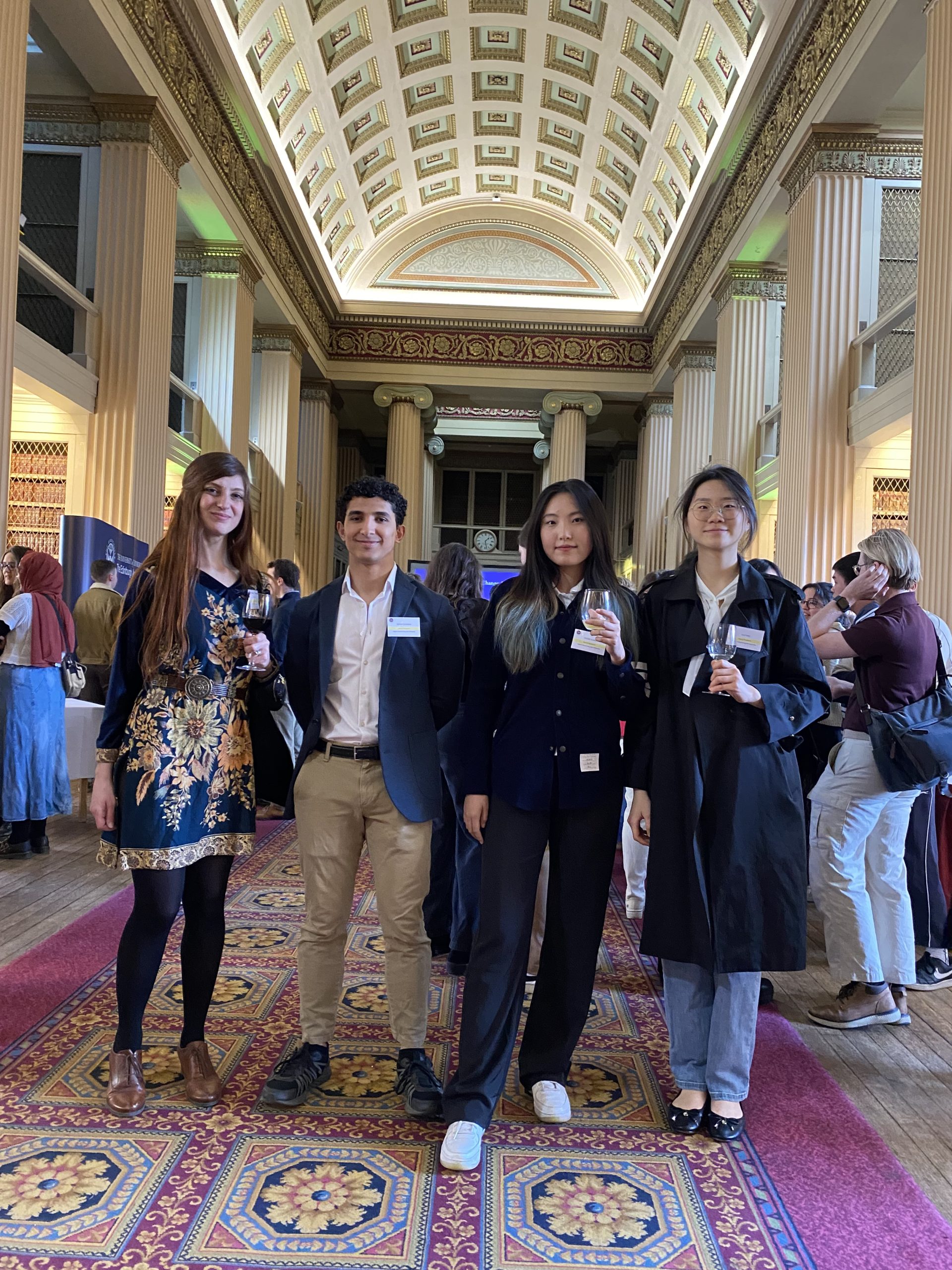
Here’s an example ‘end of award’ presentation by one of our 2023 achievers, Ana Aldazabal (pictured above on left), on her project on Latin American literature (suggested by Professor Fiona Mackintosh).

NB: If you are a member of staff at the University then you can also get involved by suggesting topic areas and/or resources (like course reading lists) that would be helpful and of interest to the students for project idea inspiration as to where they could so some good improving topic coverage on Wikipedia.

This adds to the fascinating work of our past award achievers who have helped improve global understanding on other underrepresented topics such as:

Find out more on our website.

Page 1 of 13

Powered by WordPress & Theme by Anders Norén